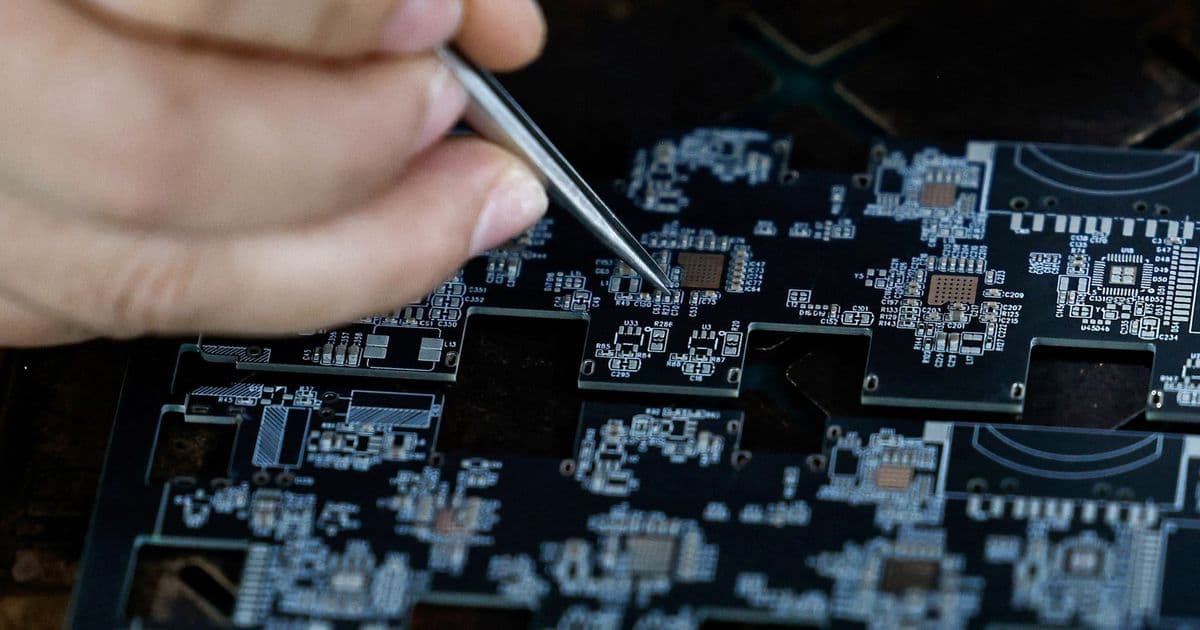
The ongoing conflict in the Middle East has disrupted critical raw materials for printed circuit boards, causing prices to surge as much as 40% in April according to Goldman Sachs analysis. The ripple effects are already impacting electronics manufacturers worldwide, with some companies reporting supply chain challenges and higher production costs.
The electronics manufacturing industry is facing a significant supply shock as geopolitical tensions in the Middle East disrupt the flow of essential raw materials used in printed circuit board (PCB) production. According to sources and executives cited by Reuters, the conflict has created bottlenecks in the supply chain that are now translating into substantial price increases, with Goldman Sachs reporting PCB prices surged as much as 40% month-over-month in April.
Printed circuit boards serve as the foundation for nearly all modern electronic devices, from smartphones and computers to automotive systems and industrial equipment. The disruption affects several critical materials, including copper, laminates, and specialty chemicals that are either mined or processed in regions affected by the conflict.
"We're seeing unprecedented volatility in material costs," said one anonymous procurement manager at a major electronics manufacturer. "Some of our suppliers are quoting lead times that have doubled, and we're being asked to accept price increases of 30-40% just to secure materials that were once readily available."
The price surge comes at a challenging time for the electronics industry, which has been recovering from pandemic-related supply chain disruptions while simultaneously facing increased demand for AI hardware, electric vehicles, and consumer electronics. Companies like Apple, Dell, and Samsung are particularly vulnerable due to their high volume production requirements.
The disruption is not uniform across all PCB types. Goldman Sachs analysts note that the price increases are most pronounced in advanced, multilayer PCBs used in high-performance computing and AI applications, while simpler boards used in less complex devices have seen more modest increases.
"This is creating a two-tier market where access to advanced PCBs is becoming a competitive advantage," explains Sarah Chen, a supply chain analyst at TechInsights. "Companies with strong supplier relationships or diversified sourcing strategies are better positioned to navigate these challenges."
Industry executives are responding with a mix of short-term mitigation strategies and long-term supply chain restructuring. Some manufacturers are stockpiling critical materials, while others are redesigning products to use simpler PCBs or alternative components. A few companies are even exploring localized manufacturing to reduce reliance on global supply chains.
"We're seeing increased interest in nearshoring and regional supply networks," said Michael Torres, CEO of PCB manufacturer Advanced Circuits. "Companies that previously optimized for lowest cost are now prioritizing supply chain resilience, which is driving significant changes in how PCBs are sourced and manufactured."
The community response within the tech industry has been mixed. While some engineers and procurement professionals express concern about the potential for product delays and increased costs, others view this as an opportunity to rethink manufacturing approaches.
"This disruption is accelerating the adoption of design-for-manufacturing principles," noted Dr. Elena Rodriguez, a hardware design engineer at a major tech firm. "We're seeing more emphasis on creating designs that can work with a broader range of materials and manufacturing processes, which ultimately makes our products more resilient to supply chain disruptions."
Counter-perspectives suggest that the current price increases may be partly driven by market speculation rather than pure supply constraints. "While the conflict has created real challenges, some of the price volatility appears to be amplified by traders anticipating further disruptions," said James Wilson, commodities analyst at Global Market Insights.
Others argue that the industry has become overly dependent on a limited number of suppliers for critical materials, making it particularly vulnerable to geopolitical shocks. "This crisis highlights the need for greater diversification in both material sourcing and manufacturing capacity," said Maria Flores, supply chain consultant at Resilient Solutions. "Companies that invest in multiple suppliers and regional manufacturing capabilities will be better positioned for future disruptions."
Looking forward, industry experts predict that the PCB supply chain will undergo significant restructuring in response to these challenges. We may see increased investment in alternative materials, more localized manufacturing capacity, and greater collaboration between electronics manufacturers and material suppliers.
The long-term implications extend beyond just electronics manufacturing. As PCBs become increasingly sophisticated and essential to more industries, supply chain resilience in this sector will have broader economic implications. Companies that successfully navigate these challenges may emerge with stronger, more diversified supply chains that can better withstand future disruptions.
For now, the immediate focus for most electronics manufacturers is on managing the current crisis while planning for a more resilient future. The 40% price surge reported by Goldman Sachs may be just the beginning of a period of significant transformation for the PCB industry and the broader electronics manufacturing ecosystem.
Comments
Please log in or register to join the discussion