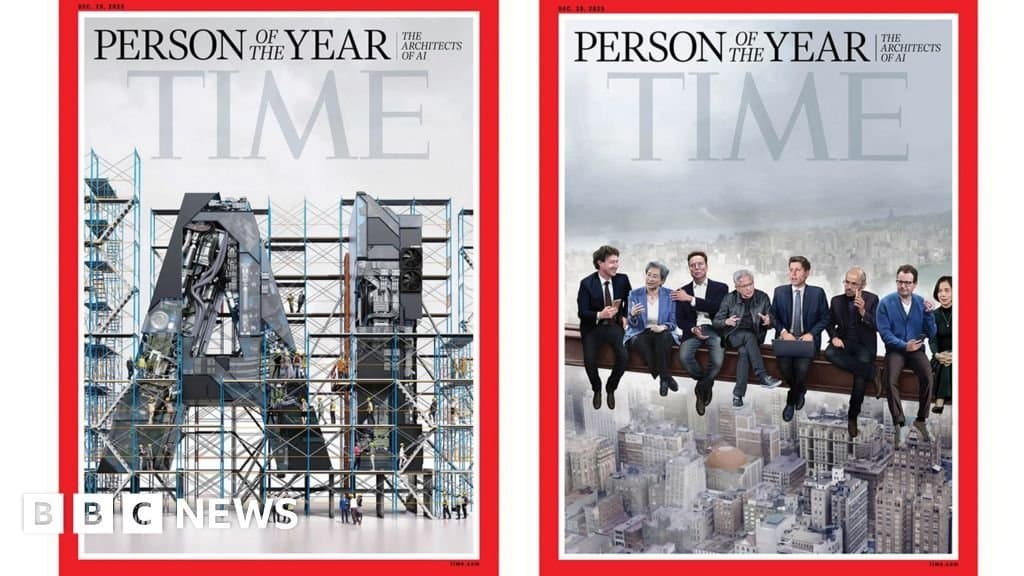
Time Magazine has named 'the architects of artificial intelligence' as its 2025 Person of the Year, highlighting how rapidly the technology and its creators are reshaping society. The dual covers feature tech industry titans including Jensen Huang, Mark Zuckerberg, Elon Musk, and Fei-Fei Li, symbolizing both the human creators and the technological force they've unleashed.
Time Magazine's Person of the Year: 'The Architects of AI' Recognize Technology's Transformative Impact
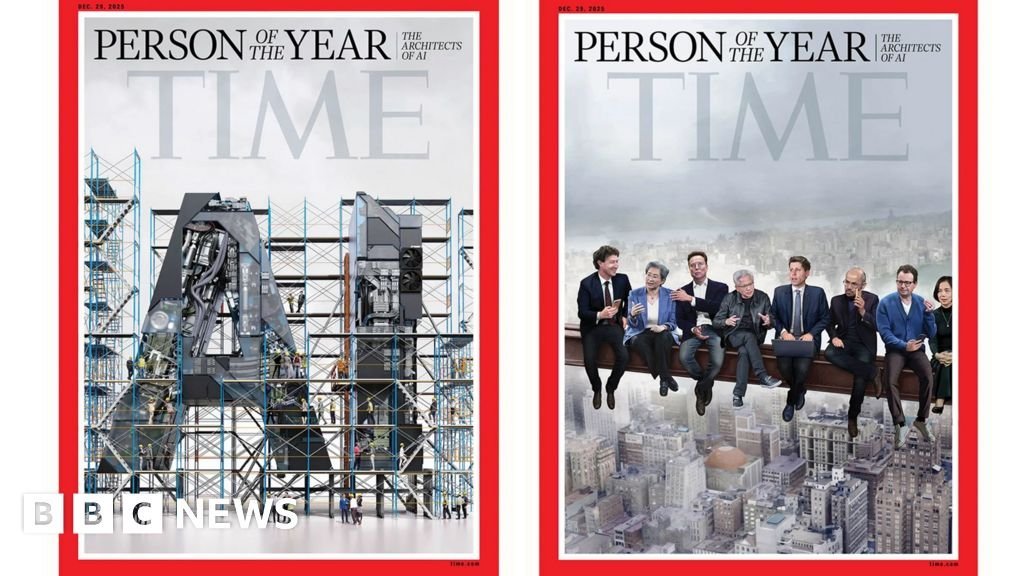
Time Magazine has made a significant statement about the state of technology in 2025 by naming "the architects of artificial intelligence" as its Person of the Year. Rather than selecting a single individual, the magazine has recognized the collective impact of those who have designed, built, and deployed AI systems that are increasingly influencing every aspect of modern life.
"The debate about how to wield AI responsibly gave way to a sprint to deploy it as fast as possible," Time explained in its announcement. "But the risk-averse are no longer in the driver's seat. Thanks to Huang, Son, Altman, and other AI titans, humanity is now flying down the highway, all gas no brakes, toward a highly automated and highly uncertain future."
Dual Covers Showcasing Human Creators and Technological Force
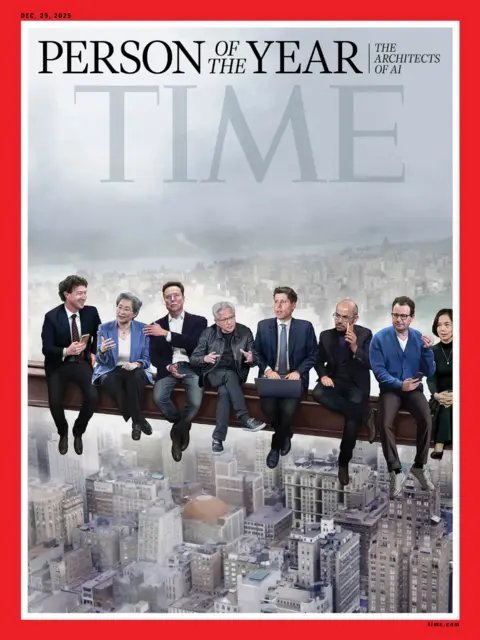
The magazine released two striking covers for this year's recognition. The first depicts eight prominent tech figures sitting on a girder high above a cityscape, a clear reference to the iconic 1932 photograph "Lunch atop a Skyscraper" but with tech leaders in place of ironworkers.
The second cover shows the letters "AI" being constructed by workers from computer parts, symbolizing the collaborative effort behind building artificial intelligence systems.
"These individuals imagined, designed, and built AI," said Time's editor-in-chief Sam Jacobs. "No one had as great an impact in 2025 than them. Humanity will determine AI's path forward, and each of us can play a role in determining AI's structure and future."
Who Are the "Architects of AI"?

The covers feature a who's who of AI leadership:
- Jensen Huang, CEO of Nvidia
- Mark Zuckerberg, CEO of Meta
- Elon Musk, owner of X (formerly Twitter)
- Fei-Fei Li, often called the "godmother of AI"
- Sam Altman, CEO of OpenAI
- Lisa Su, CEO of AMD
- Dario Amodei, CEO of Anthropic
- Demis Hassabis, head of Google's AI lab
This group represents both the hardware providers (Nvidia, AMD), the software platforms (OpenAI, Anthropic), and the major tech companies deploying AI at scale (Meta, Google).
A Tipping Point for AI Adoption
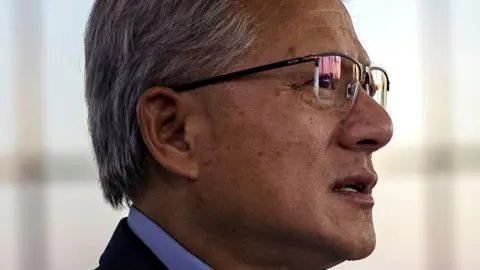
The selection comes as AI adoption accelerates at an unprecedented pace. OpenAI's Sam Altman revealed in September that ChatGPT alone is used by approximately 800 million people weekly. Meanwhile, major tech firms are investing billions in AI infrastructure and development to maintain competitive advantage.
Forrester analyst Thomas Husson described 2025 as a "tipping point" for AI integration into daily life. "Most consumers use it without even being aware of it," he told the BBC. "AI is now being crammed into hardware, software and services - meaning its uptake is much faster than during the Internet or mobile revolutions."
The practical applications are becoming increasingly mainstream. Some consumers now prefer chatbots over traditional search engines for planning holidays, finding gifts, and discovering recipes. Others, concerned about energy consumption, data privacy, and job displacement, are opting out entirely.
Recognition vs. Responsibility
Nik Kairinos, founder and CEO of Fountech AI, praised Time's choice as "an honest assessment" of AI's influence but cautioned against conflating recognition with readiness.
"At this moment, AI can still be a saviour or scourge to humanity," Kairinos noted. "We are still in the early stages of building AI systems that are dependable, accountable, and aligned with human values. For those of us developing the technology and bringing AI tools to market, there is huge responsibility."
Historical Context
Time's decision to name a group rather than an individual follows a pattern of recognizing broader forces in technology and society:
- In 1982, "The Computer" was named Person of the Year, represented by tech entrepreneurs including Steve Jobs and IBM's John Opel
- In 2006, "You" was selected, representing the power of individuals online through platforms like Wikipedia and YouTube
- In 2014, "The Ebola Fighters" were recognized
- In 2002, "The Whistleblowers" received the honor
The Road to an AI-Powered Future
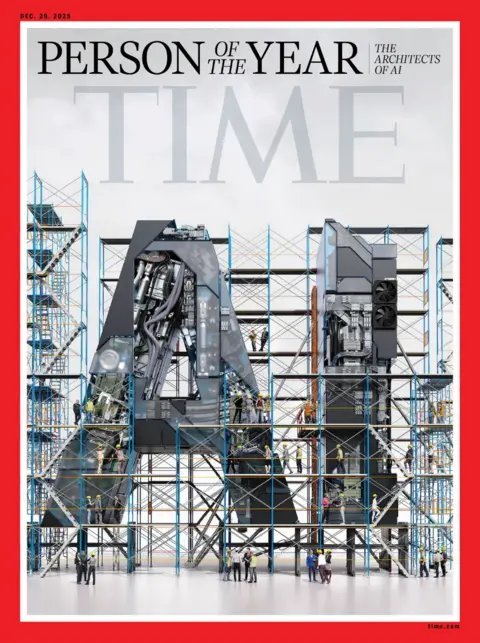
As AI becomes increasingly embedded in our infrastructure, applications, and daily routines, Time's recognition serves as both a celebration of technological achievement and a warning about the path ahead. The magazine's metaphor of "all gas no brakes" captures the industry's current momentum, while the dual covers remind us that behind every algorithm are human decisions with real-world consequences.
The question now is not whether AI will continue to transform society, but how humanity will choose to guide that transformation. As the architects of AI stand on the cover of one of the world's most influential publications, they carry not just the recognition of their achievements, but the weight of responsibility for shaping a future where AI serves humanity's best interests.
The conversation has moved from whether we should develop AI to how we should develop it. And with each line of code, each training dataset, and each deployment decision, the architects are writing the first chapters of that story.
Comments
Please log in or register to join the discussion