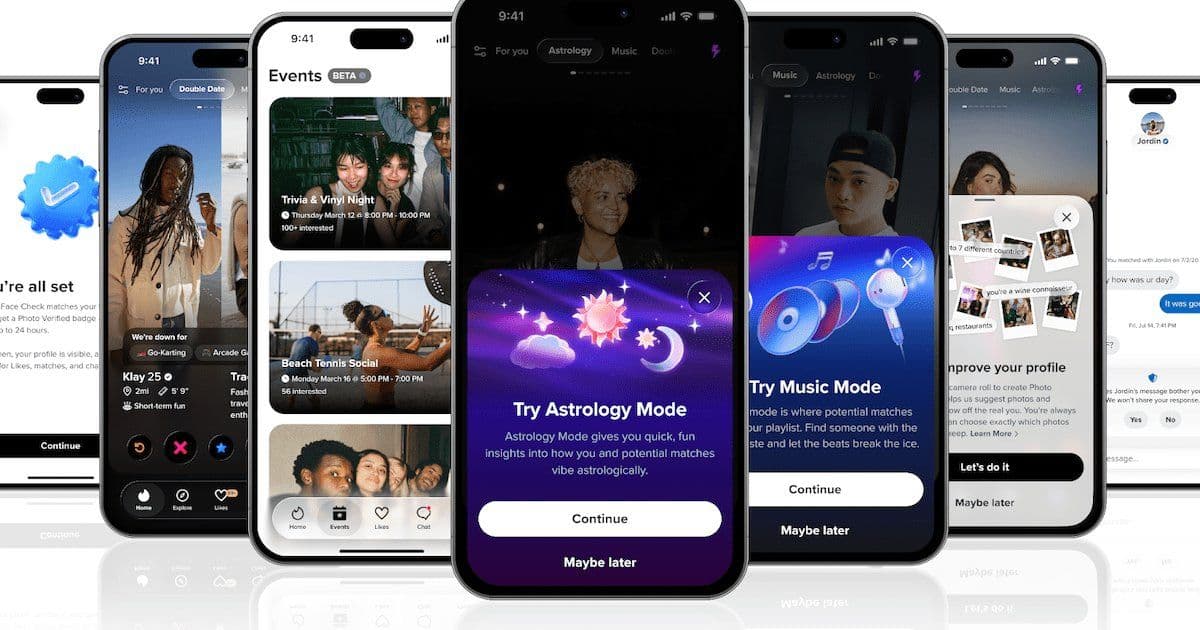
Tinder unveiled major updates including an Events tab, virtual speed dating in LA, and AI-powered safety features during its first-ever product keynote, signaling a strategic pivot to combat declining engagement.
Tinder is betting big on artificial intelligence and new social features to reverse its declining user engagement and reinvigorate its dating platform. During the company's inaugural product keynote on Thursday, Tinder unveiled a comprehensive slate of updates designed to transform how users connect, interact, and stay safe on the app.
AI-Powered Safety and Content Moderation
The most significant safety update is Are You Sure?, an AI-powered feature that will automatically detect potentially offensive messages before they're sent. The system analyzes message content and flags problematic language, giving users the option to reconsider before hitting send. This builds on Tinder's existing safety infrastructure but represents a more proactive approach to preventing harassment and inappropriate content.
Tinder is also expanding its Does This Bother You? feature, which already prompts users when potentially offensive messages are received. The enhanced version will provide more context and resources for handling uncomfortable situations, reflecting growing pressure on dating apps to create safer environments for users.
Events Tab: Bringing Real-World Connections Back
Perhaps the most ambitious new feature is the Events tab, which Tinder describes as a way to help users discover and join real-world gatherings. The tab will showcase everything from local meetups to larger social events, with Tinder facilitating connections between attendees before, during, and after gatherings.
This move represents a significant shift from Tinder's core swiping mechanism toward a more community-focused approach. By encouraging users to attend events together, Tinder aims to create more meaningful connections that extend beyond the app itself. The feature will launch in select markets initially, with plans for broader rollout later this year.
Virtual Speed Dating: Testing the LA Market
In a bold experiment, Tinder is launching virtual speed dating in Los Angeles, allowing users to participate in timed video conversations with potential matches. This feature addresses the growing fatigue with endless swiping by creating structured, time-limited interactions that mimic real-world speed dating events.
The LA test will provide valuable data on user preferences for video-based dating and could inform broader rollouts if successful. Virtual speed dating represents Tinder's attempt to bridge the gap between the convenience of app-based dating and the authenticity of in-person connections.
AI-Driven Matchmaking Enhancements
Beyond these headline features, Tinder is implementing several behind-the-scenes AI improvements to its matching algorithm. These enhancements aim to better understand user preferences, predict compatibility, and surface more relevant matches. The company claims these updates will lead to higher-quality connections and increased user satisfaction.
Strategic Context and Industry Implications
The timing of these updates is crucial. Dating apps have faced increasing scrutiny over user safety, mental health impacts, and the effectiveness of their matching algorithms. By positioning itself as a leader in AI-powered safety and community building, Tinder hopes to differentiate itself in a crowded market.
However, the success of these features remains uncertain. Virtual speed dating requires significant user buy-in and comfortable adoption of video interactions. The Events tab depends on building a critical mass of both events and interested users. And AI safety features must balance protection with user autonomy.
What This Means for Users
For existing Tinder users, these updates represent a fundamental shift in how the app functions. The addition of Events and virtual speed dating creates new pathways for connection beyond the traditional swipe mechanism. AI safety features provide additional protection but may also introduce friction in messaging.
New users will encounter a more feature-rich experience designed to facilitate both online and offline connections. The emphasis on community and shared experiences could attract users who have grown disillusioned with purely transactional dating apps.
Industry Response and Competition
Tinder's moves come as competitors like Bumble and Hinge continue to innovate in the dating space. Bumble has emphasized women-first messaging and safety features, while Hinge has focused on creating more meaningful connections through detailed profiles and prompts.
By leveraging AI across multiple aspects of its platform, Tinder is positioning itself as a technology leader in the dating industry. The success of these features could set new standards for how dating apps approach safety, community building, and user engagement.
Looking Ahead
The rollout of these features will be closely watched by industry analysts and competitors alike. If successful, Tinder's AI-powered approach could become the new standard for dating apps, influencing how other platforms approach safety, matching, and user experience.
However, Tinder faces significant challenges in execution. The company must ensure that AI features enhance rather than complicate the user experience, that new social features attract sufficient participation, and that safety measures don't create unnecessary barriers to connection.
The coming months will reveal whether Tinder's ambitious vision can translate into meaningful improvements in user engagement and satisfaction, or whether these updates will join the long list of dating app features that failed to gain traction.
Comments
Please log in or register to join the discussion