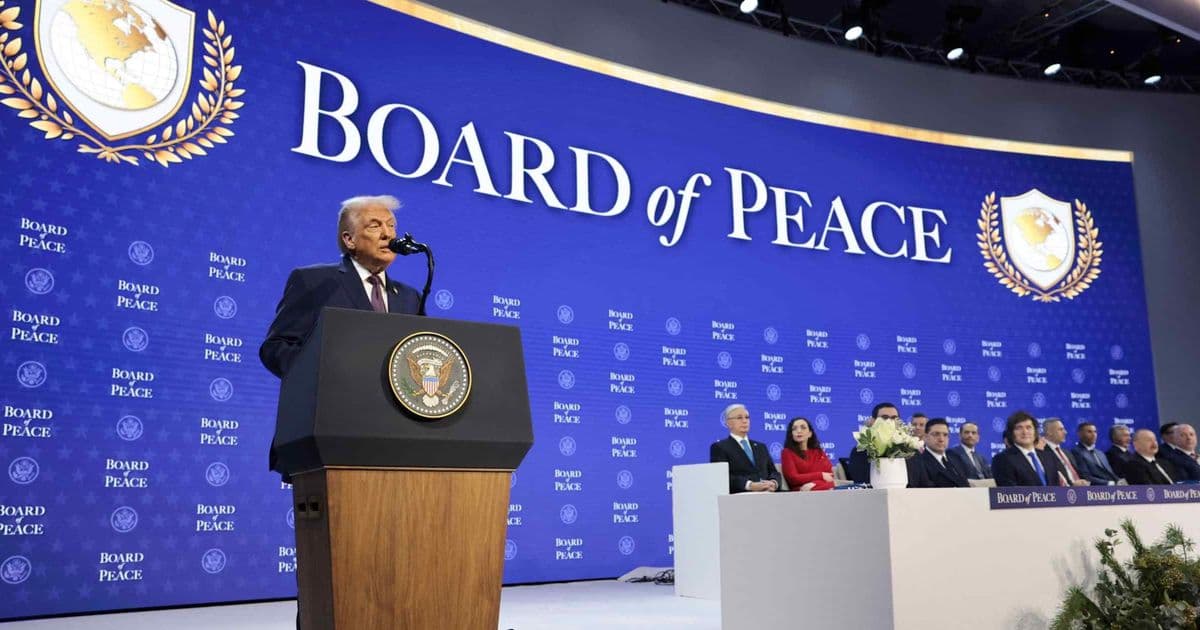
President Trump is assembling a coalition of Eurasian middle powers through his new Board of Peace initiative, creating a strategic belt of US-aligned states across the continent as Washington pivots away from traditional alliances.
President Donald Trump is orchestrating a dramatic realignment of Eurasian geopolitics through his newly announced Board of Peace initiative, creating what administration officials are calling a "big beautiful belt" of US-aligned states stretching across the continent.
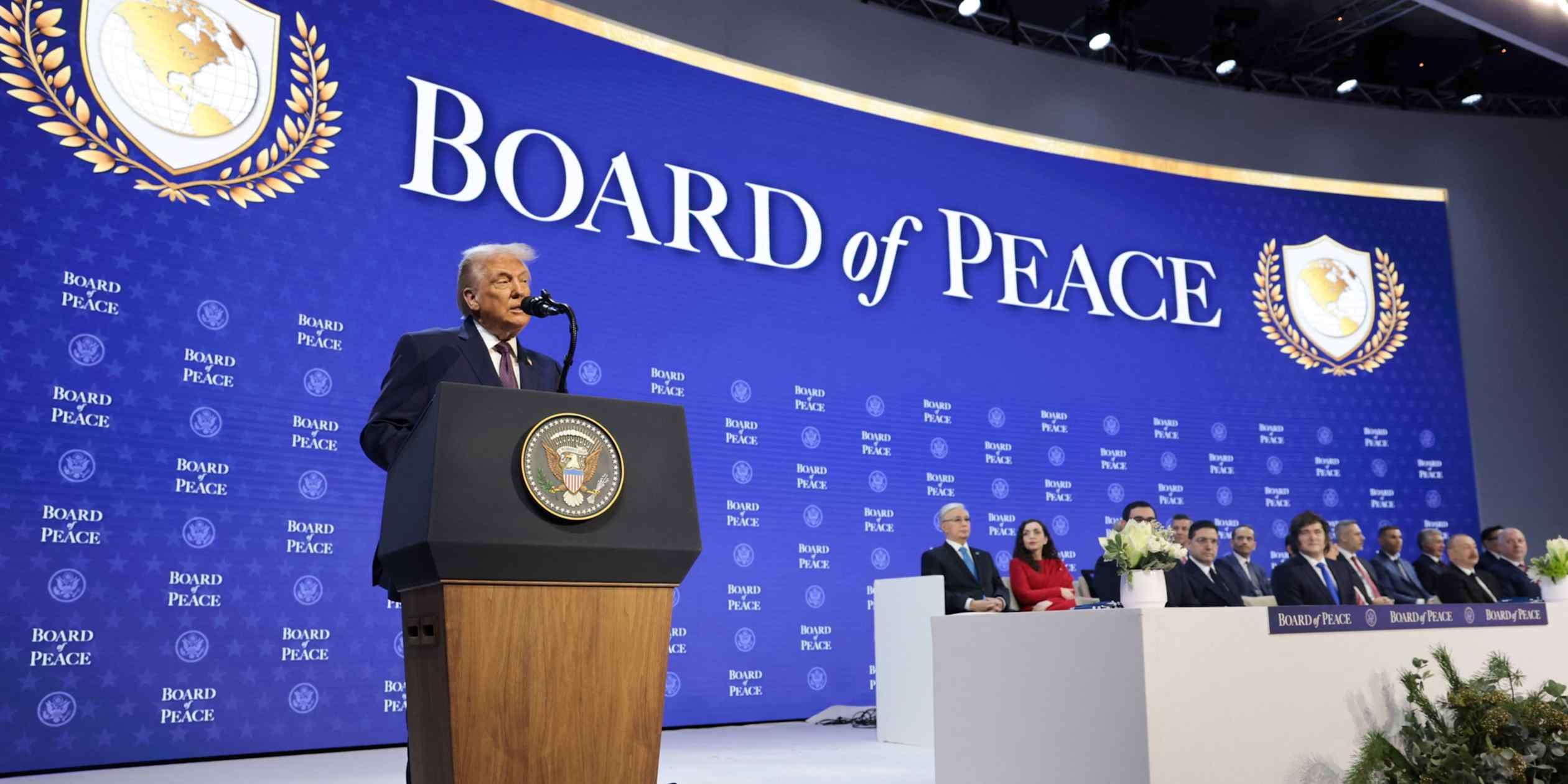
The inaugural meeting of the Board of Peace, scheduled for Thursday in Washington, will bring together middle powers from across Eurasia who are seeking closer ties to the Trump administration. The initiative represents a significant departure from traditional US foreign policy, which has historically focused on NATO and Pacific alliances.
The Strategic Geography of Trump's Belt
The emerging coalition spans from Eastern Europe through Central Asia and into Southeast Asia, creating a contiguous band of states aligned with US interests. This geographic positioning is particularly significant as it creates a buffer zone between Russia and China while establishing new supply chains for critical minerals and technology.
Administration sources indicate that the Board of Peace is designed to complement Trump's broader "Pax Silica" strategy, which aims to secure semiconductor supply chains and reduce dependence on Asian manufacturing hubs. The initiative appears to be pulling Eurasian states into this technological and economic framework.
Why Eurasian Middle Powers Are Flocking to Washington
Several factors are driving the enthusiasm for the Board of Peace among middle powers:
Strategic Autonomy: Many Eurasian states have grown frustrated with the binary choice between US and Chinese influence. The Board of Peace offers a third path that allows for economic engagement with China while maintaining security ties with the United States.
Economic Opportunities: The initiative promises access to US markets and technology, particularly in the semiconductor and critical minerals sectors. This is especially attractive to Central Asian states that have abundant mineral resources but lack advanced manufacturing capabilities.
Diplomatic Flexibility: Unlike formal alliances, the Board of Peace allows members to maintain relationships with multiple powers while benefiting from US security guarantees and economic partnerships.
The China-Russia Response
The formation of this US-aligned belt has already triggered responses from Beijing and Moscow. Chinese officials have warned participating states against "decoupling" from Chinese supply chains, while Russian diplomats have increased outreach to potential Board of Peace members.
However, many Eurasian states appear willing to risk Chinese economic retaliation in exchange for greater strategic autonomy and access to US technology and markets. The initiative comes at a time when China's economic growth is slowing and its Belt and Road Initiative has faced significant setbacks.
Implications for Global Trade and Security
The Board of Peace represents a fundamental shift in how the United States approaches Eurasian geopolitics. Rather than maintaining a heavy military presence, the initiative focuses on economic integration, technology partnerships, and diplomatic coordination among middle powers.
This approach could prove particularly effective in countering Chinese influence in Central Asia and Southeast Asia, where Beijing has invested heavily in infrastructure and economic ties over the past decade. By offering an alternative path to development and security, the United States may be able to peel away key states from China's sphere of influence.
The Technology Dimension
The Pax Silica component of the strategy is particularly noteworthy. By integrating Eurasian states into semiconductor supply chains and critical minerals networks, the United States is creating new dependencies that could prove more durable than traditional military alliances.
This technological dimension also aligns with Trump's broader economic nationalism, as it seeks to reduce US dependence on Chinese manufacturing while creating new opportunities for American companies in emerging markets.
Challenges and Uncertainties
Despite its ambitious scope, the Board of Peace faces several challenges:
- Sustainability: The initiative's success depends on continued US engagement and economic incentives, which may fluctuate with domestic politics.
- Chinese Countermeasures: Beijing has significant economic leverage over many potential Board of Peace members and may use this to discourage participation.
- Russian Opposition: Moscow views the initiative as a direct threat to its influence in its traditional sphere of influence and may respond with military or economic pressure.
What This Means for the Global Order
The emergence of the Board of Peace signals a more transactional and flexible approach to US foreign policy. Rather than maintaining permanent alliances, the United States appears to be building coalitions of convenience that can be adjusted based on changing strategic needs.
This approach may prove more adaptable to the complex geopolitical landscape of the 21st century, where traditional alliances are increasingly strained by economic interdependence and technological competition. However, it also risks creating a more unstable international system where partnerships are temporary and strategic calculations are constantly shifting.
The "big beautiful belt" of US-aligned states represents both an opportunity and a challenge for the Trump administration. If successful, it could reshape Eurasian geopolitics and create a new framework for managing competition with China and Russia. If it fails, it could leave the United States more isolated and vulnerable in a region of growing strategic importance.
As the inaugural Board of Peace meeting approaches, all eyes will be on Washington to see which states join this new coalition and what commitments they are willing to make. The outcome could determine the balance of power in Eurasia for years to come.
Comments
Please log in or register to join the discussion