TSMC may invest an additional $100 billion in Arizona fabs, bringing total US commitments to $265 billion, as part of trade deal to avoid tariffs on Taiwanese chips.
Taiwan Semiconductor Manufacturing Company (TSMC) is reportedly considering an additional $100 billion investment in its Arizona facilities, which would bring its total US commitments to $265 billion and make it one of the largest foreign investors in American history. The potential expansion comes as part of a broader trade arrangement between the US and Taiwan that grants tariff exemptions to Taiwanese companies investing heavily in American manufacturing infrastructure.
The investment discussions follow a recently concluded trade agreement where Taiwanese companies, led by TSMC, have pledged $250 billion in US investments in exchange for exemptions from potential chip tariffs. However, the limited disclosure around the agreement's terms has created significant uncertainty about TSMC's future capital spending plans, manufacturing allocation strategies, and long-term operational approach in the United States.
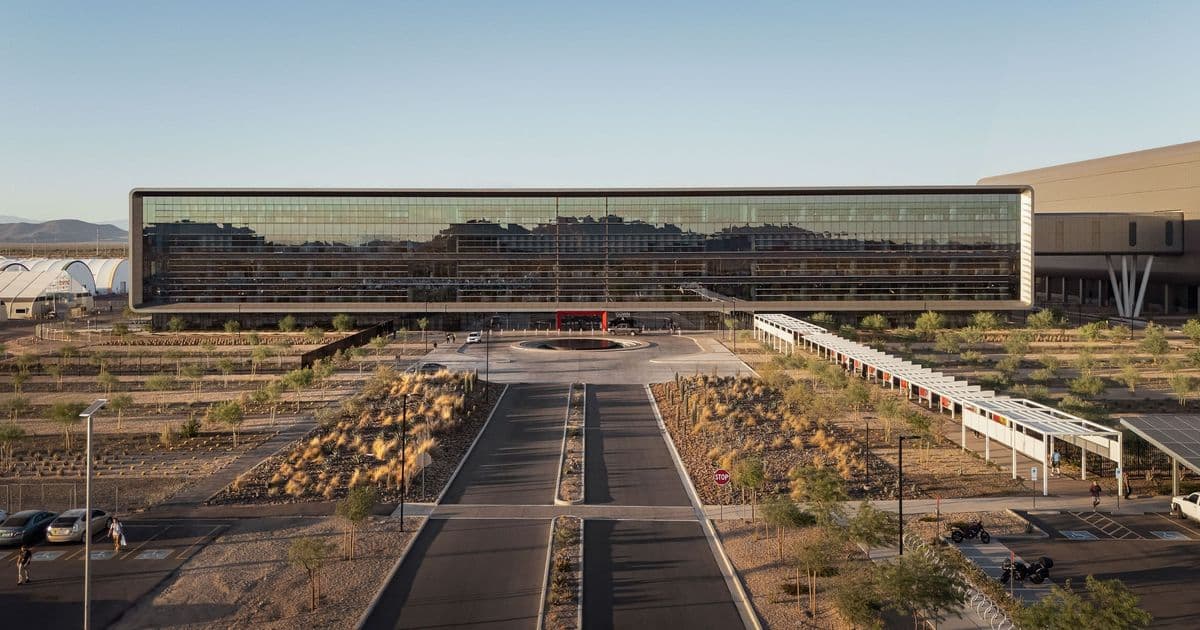
TSMC has already committed $165 billion to its Fab 21 campus in Arizona, which encompasses six fab modules, two advanced packaging facilities, and a research and development center. According to US Commerce Secretary Howard Lutnick, approximately $100 billion of TSMC's existing commitments are already factored into the investment total. The company's supply chain partners are projected to contribute an additional $30 billion to the overall initiative.
Market rumors suggest TSMC's potential $100 billion expansion would fund the construction of four additional fab modules in Arizona. This substantial investment appears strategically motivated by the company's desire to avoid tariffs on chips destined for the US market. TSMC's recent acquisition of approximately 900 acres of land adjacent to its existing 1,100-acre site in Arizona provides tangible evidence supporting the possibility of such an expansion.
Other Taiwanese companies are also expanding their US presence, though on a smaller scale. Foxconn, for instance, is increasing capacity to assemble AI servers in the United States, but these projects are considerably less capital-intensive and are expected to total no more than $20 billion collectively.
The trade arrangement includes provisions that allow companies building US facilities to import chips tariff-free at up to 2.5 times their planned capacity during construction. Once production begins, this quota reduces to 1.5 times capacity. However, analysts warn that this temporary rule allowing higher tariff-free import volumes will expire once the new fabs complete construction.
This creates a potential challenge for TSMC's long-term strategy. After 2032, the company could face insufficient US capacity to maintain tariff-free status for all shipments to American customers. To address this concern, TSMC may need to build additional fabs by around 2035 to ensure continued full tariff-free coverage for its US-bound chips.
Even if the Arizona complex ultimately reaches its theoretical maximum capacity—ten fab modules, at least two advanced packaging facilities, and an R&D center—TSMC's US operations will remain considerably smaller than its massive facilities in Taiwan. For now, the company estimates that up to 30% of its chips manufactured on N2 (2nm-class) and more advanced process technologies will be produced in America.
Taiwanese officials have pushed back against suggestions that 40% to 50% of semiconductor production on the island could shift overseas, particularly to the United States. The complexity of global semiconductor supply chains further complicates the tariff situation. Only $8.2 billion of Taiwan's $198 billion in exports to the US in 2025 consisted of standalone semiconductors. Most chips manufactured in Taiwan enter the US market installed in finished goods ranging from smartphones to AI servers, making tariff enforcement particularly challenging as importers may struggle to identify or report the value of individual chips.
This complexity has led many observers to question whether such tariffs could be practically collected, given the difficulty of tracking individual chip values within complex electronic devices. The situation highlights the intricate balance between national security concerns, economic policy, and the practical realities of modern semiconductor manufacturing and distribution.
As TSMC evaluates its expansion options, the company faces a critical decision that will shape not only its own future but also the trajectory of the global semiconductor industry. The potential $100 billion investment would represent a significant commitment to American manufacturing capabilities while simultaneously serving as a strategic hedge against potential trade restrictions.
The outcome of these deliberations will have far-reaching implications for the semiconductor supply chain, US-China relations, and the global technology landscape. With both economic and geopolitical stakes at play, TSMC's decision regarding its Arizona expansion could prove to be one of the most consequential moves in the semiconductor industry's recent history.
Comments
Please log in or register to join the discussion