
The UXG-Lite represents Ubiquiti's attempt to create an affordable entry point into their UniFi ecosystem's gateway tier. We purchased units, opened them up, and tested their performance to understand what compromises exist at this price point.
The Ubiquiti UXG-Lite occupies a specific niche in networking hardware: it's a dedicated gateway device that sits between consumer routers and enterprise-grade gateways in both price and capability. At $199, it undercuts the UDM-Pro significantly while offering UniFi Network management integration. But what exactly are you getting, and where does it fall short?
Hardware Architecture
The UXG-Lite measures 98 x 98 x 30mm, making it remarkably compact for a gateway that handles routing, firewall, and VPN functions. The exterior is entirely plastic, which initially suggests cost-cutting. However, teardown reveals a more thoughtful thermal design than expected.
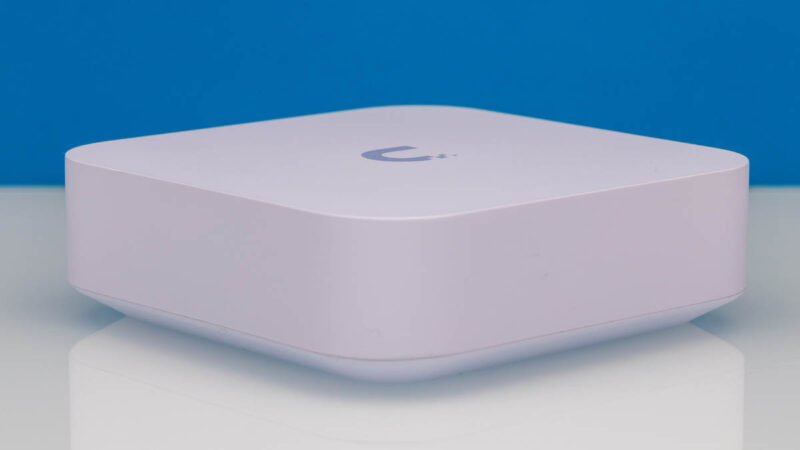
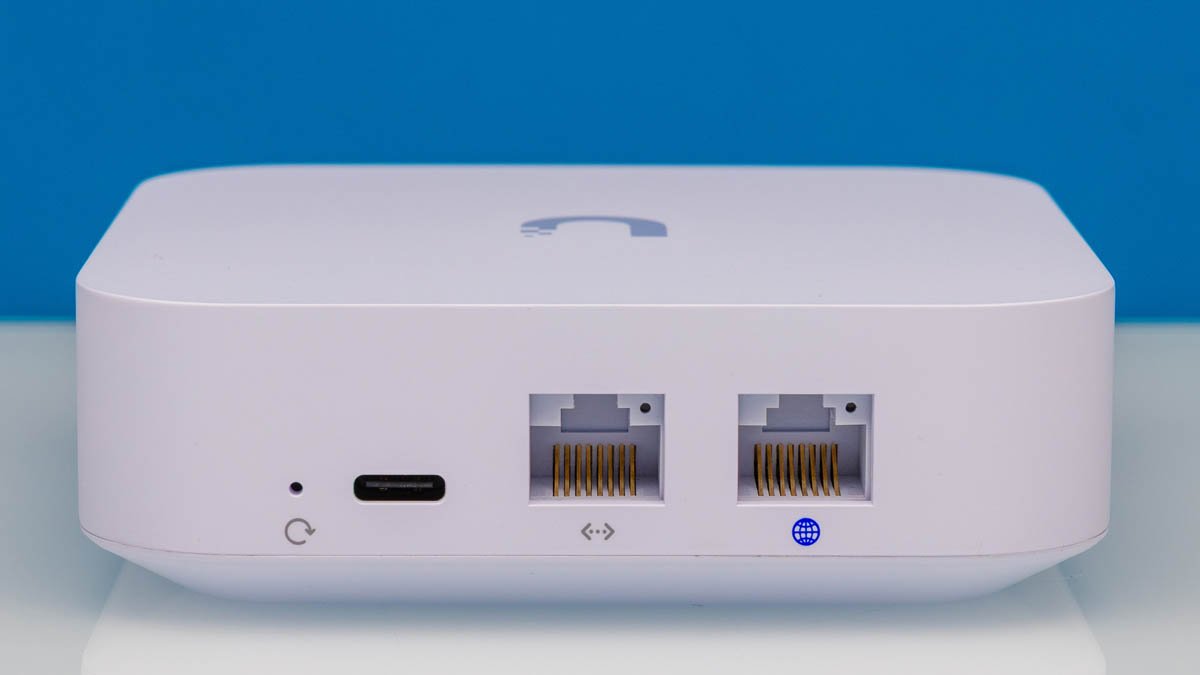
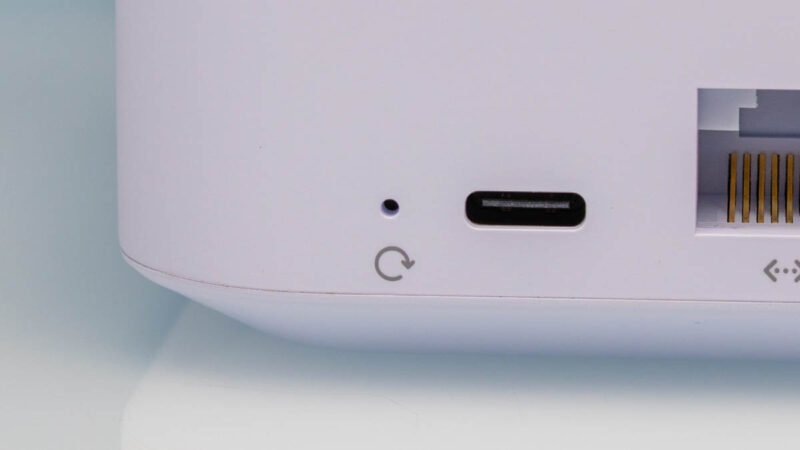
Three sides of the chassis are blank, while the fourth face contains all connectivity. The rear panel houses a USB-C power input, reset button, and dual 1GbE ports—one WAN, one LAN. This single-interface design immediately signals the device's limitations: it's intended for networks with sub-gigabit internet connections.
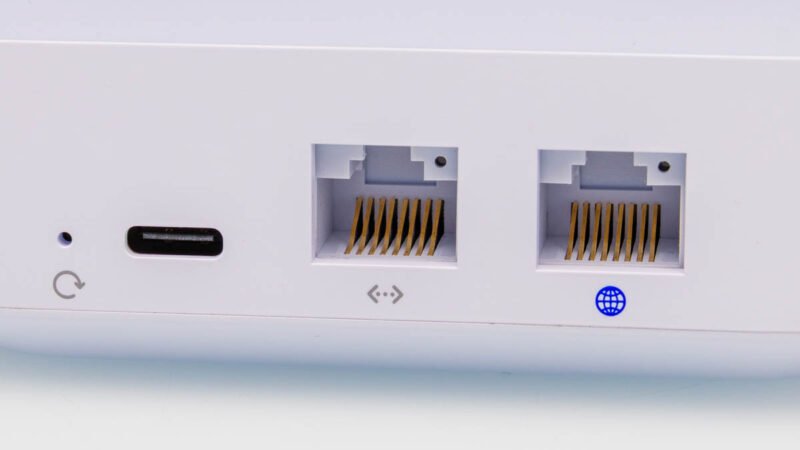
For users with 2.5GbE or 10GbE fiber connections, the UXG-Lite is automatically disqualified. Ubiquiti's product segmentation is clear here: if you need faster WAN throughput, you must step up to the UDM-Pro, UDM-SE, or UXG-Pro.
Internal Thermal Design
Despite the plastic shell, the internal construction reveals a dual-sided metal shield system. The main PCB sits between two substantial metal structures that act as heatsinks.

A thermal pad bridges the Qualcomm SoC to the upper metal shield, creating a direct conduction path for heat dissipation. This design choice indicates that Ubiquiti anticipated sustained thermal loads, even in a plastic enclosure. The metal shielding isn't just for EMI—it's integral to the thermal management strategy.
Processing Core: Qualcomm IPQ5018
The heart of the UXG-Lite is the Qualcomm IPQ5018, part of the company's N6 Dragonwing platform. This chipset was originally designed for WiFi 6 gateways, which explains its integrated networking features. The IPQ5018 includes:
- Dual-core ARM Cortex-A53 processor
- Integrated Gigabit Ethernet ports
- Hardware acceleration for packet processing
- Support for various network offloads
The choice of this SoC is pragmatic: it's a proven, cost-effective solution that handles basic routing and firewall functions efficiently. However, it lacks the computational headroom for advanced features like deep packet inspection at gigabit speeds or running multiple containers/VMs.
Performance Context
Compared to the legacy USG (UniFi Security Gateway), the UXG-Lite offers substantially better performance. The USG struggled with throughput when enabling advanced features like IDS/IPS. The IPQ5018's hardware offloading capabilities mean the UXG-Lite can maintain near-line-rate throughput for basic routing and NAT.
However, this is still a limited device. The dual-core processor and 1GbE ports create a hard ceiling. Users expecting to run UniFi's full feature set—multiple VLANs, VPN tunnels, traffic analysis—will find the UXG-Lite adequate only for small deployments.
Management and Ecosystem
The UXG-Lite requires a UniFi Network controller for configuration. Unlike the UDM series, it doesn't host the controller internally. You need either a cloud-hosted controller, a self-hosted instance, or a dedicated UniFi Cloud Key.
This architecture creates a dependency: the gateway itself is dumb without the controller. For homelabbers, this means running additional infrastructure. For businesses, it adds complexity compared to integrated solutions like the UDM-SE.
Deployment Considerations
The UXG-Lite makes sense in specific scenarios:
Appropriate use cases:
- Small office with <1Gbps internet
- Homelabbers wanting UniFi management without UDM-Pro cost
- Remote sites needing centralized management
- Upgrading from USG while maintaining UniFi ecosystem
Inappropriate use cases:
- Multi-gigabit internet connections
- Environments needing IDS/IPS at gigabit speeds
- Users wanting all-in-one (controller + gateway) hardware
- Networks requiring 2.5GbE or 10GbE internal connectivity
The Value Proposition
At $199, the UXG-Lite is priced aggressively against consumer "prosumer" routers from ASUS, Netgear, and TP-Link. Those competitors often include WiFi, more ports, and faster CPUs. However, they lack UniFi's centralized management and consistent software updates.
The real question is whether the UniFi ecosystem's benefits justify buying a separate gateway and controller. For users already invested in UniFi switches and access points, the UXG-Lite provides a logical upgrade path from the USG. For new users, the total cost of ownership (gateway + controller) may push them toward the UDM-Pro at $379.
Trade-offs Summary
The UXG-Lite embodies a specific engineering trade-off: it prioritizes low cost and low power consumption over flexibility and performance headroom. The thermal design shows careful engineering to make a plastic enclosure viable. The SoC choice reflects a focus on basic routing efficiency rather than advanced feature sets.
What you lose compared to higher-tier Ubiquiti gateways:
- No integrated controller
- No 2.5GbE or 10GbE ports
- Limited CPU for advanced features
- No integrated WiFi
- No hard drive for Protect or Talk
What you gain:
- Low power consumption (typically 5-7W)
- Compact physical footprint
- UniFi Network integration
- Hardware offloading for basic tasks
- Lower purchase price
Final Assessment
The UXG-Lite is a competent but constrained device. It successfully replaces the USG with better performance and modern hardware. However, Ubiquiti's product segmentation means it's intentionally hobbled to protect sales of higher-margin products.
For networks that fit its limitations, it's a solid choice. For everyone else, the UDM-Pro or UDM-SE remains the better value despite the higher upfront cost. The UXG-Lite's existence primarily benefits existing UniFi users who need a USG replacement without paying for capabilities they won't use.
The teardown confirms this is a properly engineered device, not a cheaply made product. The metal shielding and thermal management show Ubiquiti didn't cut corners on reliability, just on features and connectivity.
Comments
Please log in or register to join the discussion