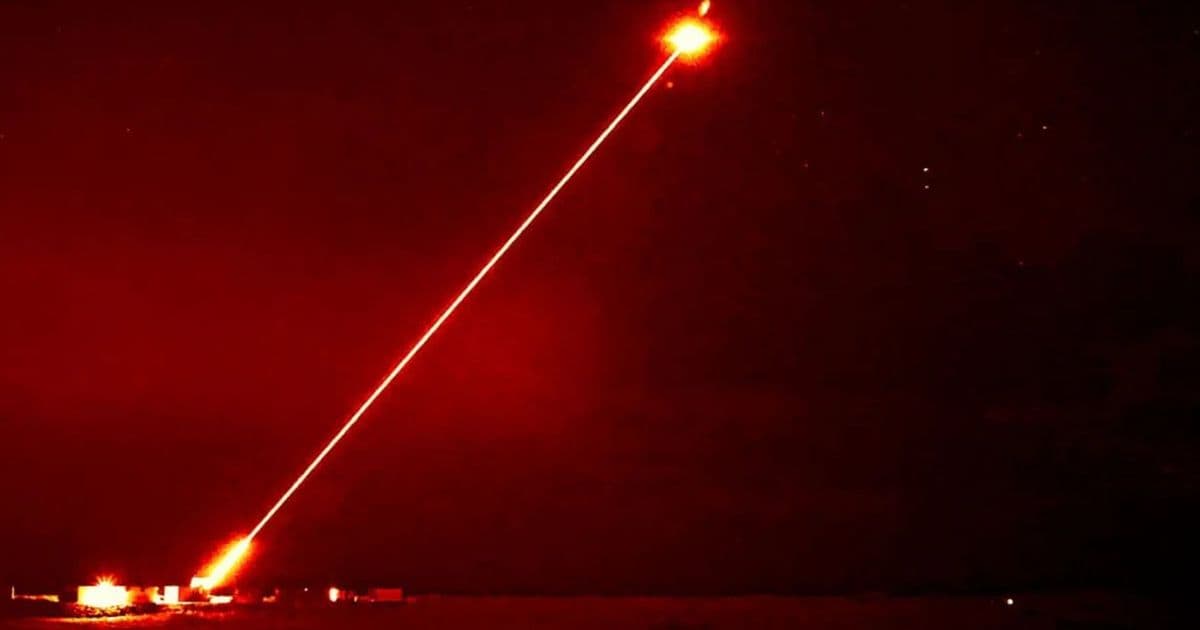
The UK Ministry of Defence confirms DragonFire high-energy laser weapon will be installed on Royal Navy Type 45 destroyers by 2027, five years ahead of schedule, making Britain the first European NATO member to field operational shipborne laser weaponry.
The UK Ministry of Defence has confirmed that the DragonFire high-energy laser weapon will be installed on Royal Navy Type 45 destroyers by 2027, five years ahead of the original schedule. Defence Minister Lord Coaker confirmed the accelerated timeline following a £316 million ($414 million) contract awarded to MBDA UK in November for the first two production systems. The deployment of DragonFire will make the UK the first European NATO member to field an operational shipborne laser weapon.
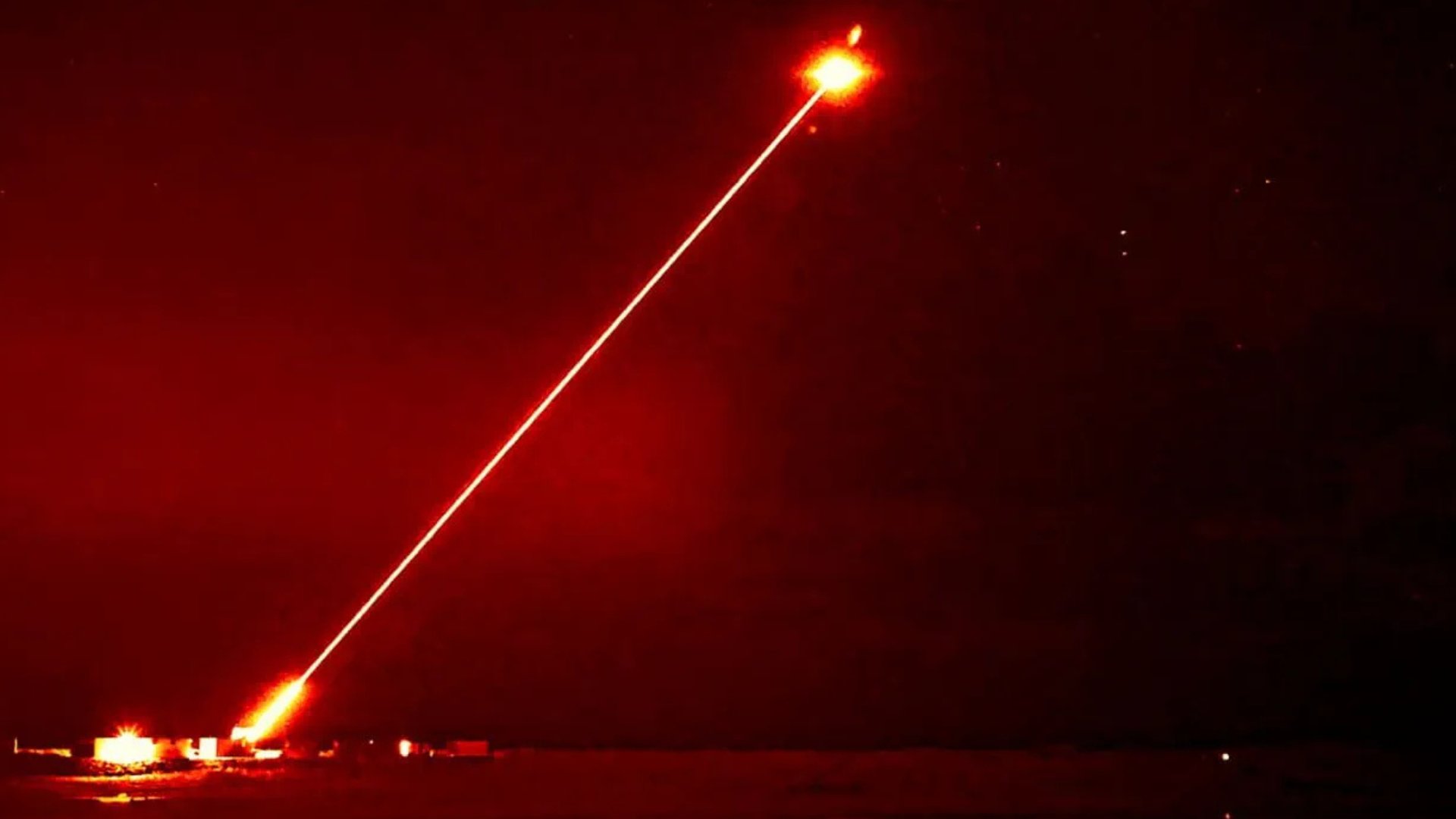
(Image credit: UK Ministry of Defence)
DragonFire, which the MoD states can strike a coin-sized target from one kilometer away, is a 50 kW-class fiber-combined laser developed by MBDA UK in partnership with Leonardo UK, QinetiQ, and the Defence Science and Technology Laboratory (DSTL). The system uses a spectral beam-combining architecture that merges multiple glass-fiber laser sources into a single beam with near diffraction-limited quality. A stabilized turret houses the beam director, electro-optical sensors, and a secondary tracking laser for continuous target illumination.
The MoD has claimed that each shot costs approximately £10 in energy consumption. In contrast, Aster interceptor missiles fired from the Type 45's existing Sea Viper system cost hundreds of thousands of pounds per round, making the laser a far cheaper option against low-cost drone threats. Because the system runs on electrical power rather than stored munitions, engagement capacity is limited by onboard power generation and cooling.
Two full-scale firing campaigns completed in 2025 at the MoD's Hebrides range in Scotland validated the system under operationally representative conditions. During those trials, DragonFire shot down drones traveling at speeds up to 650 km/h (approximately 400 mph) and achieved a UK first for above-the-horizon tracking and interception of high-speed aerial targets. The trials included detection, tracking, beam handoff, and sustained engagement sequences against unmanned systems and representative projectiles, and their results supported the decision to accelerate the program's timeline.
Meanwhile, the £316 million contract covers two DragonFire units, with the first scheduled for installation on a Type 45 destroyer in 2027. Government planning documents reference a broader goal to equip up to four ships by 2027, but any follow-on procurement will depend on performance during early deployment. The UK's Strategic Defence Review backed directed-energy weapon work with nearly £1 billion in additional investment this Parliament.
Beyond the naval program, the MoD is exploring land-based and air-based applications, including integration on Wolfhound armored vehicles and future GCAP fighter jets. The accelerated deployment timeline represents a significant shift in the UK's approach to counter-drone warfare, moving from experimental testing to operational deployment in just a few years.
The technical specifications of DragonFire demonstrate the maturity of directed-energy weapons for naval applications. The 50 kW-class fiber-combined laser represents a significant engineering achievement, as combining multiple laser sources while maintaining beam quality requires precise optical alignment and control systems. The spectral beam-combining architecture allows for efficient power scaling while maintaining the near diffraction-limited quality necessary for precision targeting at range.
For naval applications, the power requirements and cooling systems represent critical design considerations. Modern destroyers like the Type 45 have substantial electrical generation capacity, but dedicating significant power to a laser weapon system requires careful integration with existing ship systems. The electrical nature of the weapon also means that engagement capacity is theoretically unlimited, constrained only by the ship's ability to generate and dissipate power.
The cost comparison between laser and missile systems is particularly striking. At approximately £10 per shot for the laser versus hundreds of thousands of pounds for an Aster missile, the economic case for directed-energy weapons against certain threats becomes compelling. This cost differential becomes even more significant when considering that many modern drone threats are relatively inexpensive compared to traditional munitions.
The successful trials against 400 mph drones demonstrate the system's capability against current threats. The above-the-horizon tracking capability is particularly important for naval applications, where threats can approach from any direction across the open ocean. The ability to maintain lock and engage targets at high speeds represents a significant advance in defensive capabilities.
The accelerated timeline from experimental system to operational deployment in just a few years reflects both the maturity of the technology and the urgency of addressing drone threats. The UK's position as the first European NATO member to field such a system could provide valuable operational experience and potentially influence future NATO doctrine regarding directed-energy weapons.
Looking forward, the exploration of land-based and air-based applications suggests a broader transformation in how the UK approaches directed-energy weapons. The potential integration with Wolfhound armored vehicles could provide mobile air defense capabilities, while integration with future fighter jets could offer new offensive and defensive options. These developments indicate that DragonFire may be just the beginning of a wider adoption of laser weapon systems across UK defence capabilities.
Comments
Please log in or register to join the discussion