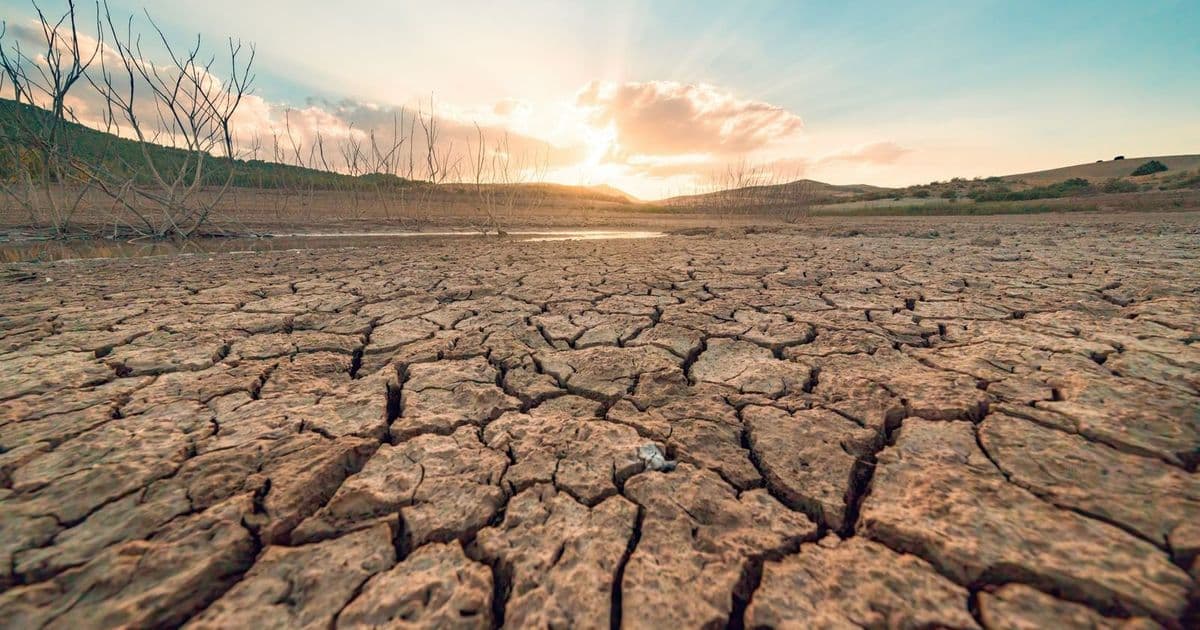
A landmark United Nations report introduces the concept of 'global water bankruptcy,' arguing that many regions have spent beyond their hydrological means for so long that they can no longer satisfy water demands without causing irreversible damage to nature. The report identifies hotspots from Iran to India to the American Southwest, calling for a fundamental shift in how the world manages water resources.
The concept of bankruptcy typically applies to financial systems—when debts exceed assets, and recovery becomes impossible without restructuring. Now, the United Nations is applying this framework to our planet's most critical resource. A report released on January 20 by the U.N. University's Institute for Water, Environment and Health argues that humanity has entered an era of "global water bankruptcy," where many regions have spent beyond their hydrological means for so long that they can no longer satisfy water demands without causing irreversible damage to nature.
Kaveh Madani, the report's lead author and director of the institute, contrasts this with the term "water crisis," which he argues is better suited for sudden, short-lived events. "The bitter reality for many water systems worldwide is that they are facing both insolvency and irreversibility," Madani writes in a paper published January 19 in the journal Water Resources Management. The formal definition of water bankruptcy describes "a state in which a human-water system has spent beyond its hydrological means for so long that it can no longer satisfy the claims upon it without inflicting unacceptable or irreversible damage to nature."
The scale is staggering. Four billion people face severe water scarcity for at least one month each year, and almost 75 percent of the global population lives in water-insecure or critically water-insecure countries. The report identifies several critical hotspots where this bankruptcy is most acute.
The Middle East and North Africa: A Region on the Brink
In the Middle East and North Africa, high water stress intersects with complex political economies and climate vulnerability. Tehran, Iran's capital, recently came dangerously close to running out of water. "Water plays a major role in economies … because it puts people [in] jobs," Madani tells New Scientist. "If they lose their jobs, what happens is what you see in Iran today."
The region faces a perfect storm of challenges: rapid population growth, agricultural demands in arid environments, and climate change reducing already limited rainfall. The political dimensions compound the technical challenges—water management becomes intertwined with regional conflicts, migration patterns, and economic stability.
South Asia: Groundwater Depletion and Global Food Security
South Asia faces chronic declines in water tables due to groundwater-dependent agriculture and urbanization. The region's Green Revolution, while dramatically increasing food production, relied heavily on pumping groundwater at unsustainable rates. In India alone, the central groundwater authority reports that 17 percent of the country's groundwater blocks are over-exploited.
These shortages create ripple effects that extend far beyond regional borders. "Millions of farmers are trying to grow more food from shrinking, polluted or disappearing water sources," Madani says. "Water bankruptcy in India or Pakistan, for example, also means an impact on rice exports to a lot of places around the world."
The connection to global food security is direct and measurable. South Asia produces approximately 30 percent of the world's rice and 20 percent of its wheat. As water tables drop, farmers face impossible choices: reduce crop yields, switch to less water-intensive crops (potentially affecting global supply chains), or abandon farming altogether.
The American Southwest: A Cautionary Tale
The American Southwest represents a developed nation's struggle with water bankruptcy. The Colorado River, which supplies water to 40 million people and irrigates 5.5 million acres of farmland across seven states, has seen its flow drop by approximately 20 percent in the 21st century compared with the previous century's average, according to a 2017 study.
This decline has triggered ongoing conflicts between Western states over how to manage the river's dwindling supply. The crisis reached a tipping point in 2021 when the federal government declared the first-ever water shortage on the Colorado River, triggering mandatory cuts for Arizona, Nevada, and Mexico. In 2023, the seven basin states agreed to unprecedented voluntary cuts, but these measures remain temporary solutions to a structural problem.
The region exemplifies the challenges of managing water in an era of climate change. Decades of overallocation, combined with a 23-year megadrought, have revealed that the historical water rights system—based on assumptions of stable water availability—is no longer viable. The situation raises fundamental questions about property rights, agricultural practices, and urban development in water-scarce regions.
The Broader Pattern: A Global Phenomenon
"The global scope of the report is useful in showing repeat patterns," says Melissa Scanlan, director of the Center for Water Policy at the University of Wisconsin-Milwaukee. "It’s not just the Southern Hemisphere; it’s not just the Middle East. There is something larger at play in terms of how we’re treating water across the world."
This pattern recognition is crucial. Water bankruptcy isn't isolated to specific regions or development levels. It manifests in different ways—groundwater depletion in agricultural areas, surface water scarcity in urban centers, pollution rendering existing supplies unusable—but the underlying dynamic is consistent: human water demands have exceeded natural renewal rates for so long that systems have crossed irreversible thresholds.
Beyond Traditional Solutions
The report argues that current water management approaches are fundamentally inadequate. While the global water agenda has focused on drinking water, sanitation, and efficiency improvements, these measures address symptoms rather than the structural problem of bankruptcy.
"The report rightly centers on long-term recovery as opposed to firefighting water crises," says Richard Allan, a climate scientist at the University of Reading. Traditional crisis management—responding to droughts with temporary restrictions or emergency supplies—doesn't address the underlying insolvency.
Instead, the U.N. calls for elevating water issues in negotiations on climate, biodiversity, finance development, and peace-building processes. This represents a significant shift from treating water as a sectoral issue to recognizing it as a cross-cutting challenge that intersects with virtually every aspect of human development.
Transformative Actions Required
The report outlines several transformative actions needed to address water bankruptcy:
Agricultural Transformation: This involves crop shifts toward less water-intensive varieties, irrigation reforms that prioritize efficiency over expansion, and potentially reducing water-intensive agriculture in regions where it's no longer sustainable. The challenge is balancing food security with water sustainability.
Better Water Monitoring: Current water data is often incomplete, outdated, or inaccessible. The report calls for improved monitoring systems that provide real-time data on water availability, usage, and quality. This transparency is essential for making informed decisions about allocation and conservation.
Institutional Redesign: Perhaps most significantly, the report argues for redesigning institutions to live within new hydrological limits. This includes rethinking water rights systems, creating mechanisms for water trading and allocation, and establishing governance structures that can adapt to changing conditions.
Honest Accounting: The concept of water bankruptcy itself represents a form of honest accounting—acknowledging that current water use patterns are unsustainable and that difficult choices lie ahead. This honesty extends to recognizing that some water systems may never recover to their previous states.
The Limits of Recovery
Madani emphasizes a crucial distinction: "We cannot rebuild vanished glaciers or reinflate acutely compacted aquifers. But we can prevent further losses and redesign institutions to live within new hydrological limits."
This acknowledgment of irreversible damage is both sobering and necessary. Some water systems have crossed thresholds where natural recovery is impossible on human timescales. Ancient aquifers that took millennia to fill cannot be replenished in decades. Glaciers that have retreated beyond certain points may not regrow even if temperatures stabilize.
The focus, therefore, shifts from restoration to adaptation and prevention. The goal becomes managing water systems within their new, reduced capacities rather than attempting to return to historical baselines that no longer exist.
Political and Social Dimensions
Water bankruptcy is not merely a technical or environmental issue—it's deeply political. Water allocation decisions determine which communities thrive and which decline, which industries expand and which contract, and ultimately, who has access to the basic resource necessary for life.
In Iran, water scarcity has contributed to social unrest and economic instability. In the American Southwest, water rights disputes pit states against each other and urban against agricultural interests. In South Asia, groundwater depletion threatens the livelihoods of millions of smallholder farmers.
Addressing water bankruptcy therefore requires not just technical solutions but political courage. It means making difficult decisions about water allocation that may disadvantage powerful interests. It means acknowledging that some current uses of water are no longer sustainable and may need to be phased out.
A New Framework for Action
The U.N. report's introduction of "water bankruptcy" as a formal concept represents more than semantic change. It provides a framework for understanding the severity and irreversibility of the current situation. Like financial bankruptcy, water bankruptcy implies that the current system is not just strained but fundamentally broken, requiring restructuring rather than minor adjustments.
This framework could reshape how governments, businesses, and communities approach water management. Instead of asking "How can we get more water?" the question becomes "How can we thrive with the water we have?" This shift in perspective is essential for developing sustainable solutions.
The report's call to action is clear: water issues must be elevated to the highest levels of policy-making, integrated across sectors, and addressed with the urgency and seriousness that a global bankruptcy deserves. The alternative—continuing to live beyond our hydrological means—risks not just environmental collapse but economic and social instability on a global scale.
As Madani states, addressing water bankruptcy requires "honesty, courage and political will." The report provides the honest assessment; the courage and political will must come from societies worldwide.
For more information on the U.N. University's Institute for Water, Environment and Health, visit https://unu.edu/inweh. The full report and related research can be found through the U.N. University's publications portal.
Comments
Please log in or register to join the discussion