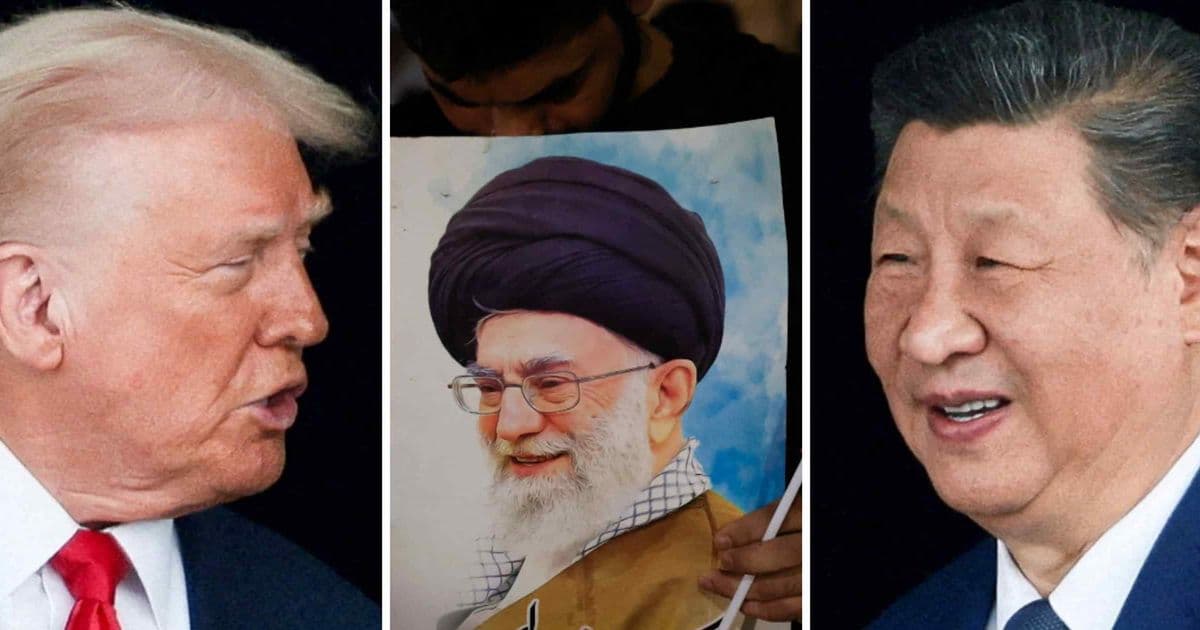
The US-Iran conflict risks diverting American attention and resources from the more consequential long-term competition with China in the Indo-Pacific region.
The United States faces a critical strategic choice as military tensions with Iran escalate: whether to allow the Middle East crisis to consume American attention and resources, or to maintain focus on the more consequential long-term competition with China in the Indo-Pacific region.
Recent developments underscore Beijing's relentless global ambitions. China's diplomatic maneuvering has effectively isolated Japan, demonstrating the sophisticated nature of its regional strategy. This isolation of a key US ally comes at a time when American military assets are being redirected toward the Persian Gulf, potentially creating a strategic vacuum in East Asia that Beijing could exploit.
The timing is particularly concerning given the current leadership dynamics. Under Xi Jinping's centralized authority, China has accelerated its military modernization, expanded its economic influence through initiatives like the Belt and Road, and increasingly challenged the US-led international order. The Iranian crisis threatens to divert American attention precisely when China is making its most significant moves to reshape the regional balance of power.
Historical precedent suggests that Middle East conflicts have repeatedly drawn US focus away from Asia. The wars in Iraq and Afghanistan consumed over two decades of American strategic attention and resources, during which China modernized its military, expanded its economic reach, and strengthened its position in the Western Pacific. The current crisis risks repeating this pattern at a potentially more critical juncture.
Economic considerations compound the strategic risks. While the US confronts Iran over nuclear ambitions and regional influence, China continues to deepen economic ties throughout Asia, Africa, and Latin America. Beijing's economic statecraft provides it with tools of influence that don't require military confrontation, allowing it to advance its interests while the US is preoccupied elsewhere.
The technological dimension of US-China competition adds urgency to maintaining strategic focus. China's advances in artificial intelligence, quantum computing, and other critical technologies represent fundamental challenges to American economic and military advantages. These competitions require sustained attention and investment that could be compromised by a prolonged Middle East crisis.
Regional allies in Asia are watching these developments with growing concern. Countries from Japan to Australia worry that American distraction in the Middle East could leave them vulnerable to Chinese coercion or even military pressure. This anxiety could lead some to hedge their bets, potentially undermining the unified front needed to counter Chinese ambitions.
Military planners in Beijing are likely calculating how to exploit any American distraction. The People's Liberation Army has been developing capabilities specifically designed to counter US forces in the Western Pacific, including anti-ship missiles, cyber warfare tools, and space-based assets. A US military preoccupied with Iran would be less prepared to respond to Chinese provocations or aggression in the South China Sea or toward Taiwan.
The information warfare aspect cannot be overlooked. China has demonstrated sophisticated capabilities in shaping global narratives and exploiting divisions in Western societies. While the US focuses on Iran, Beijing could intensify efforts to undermine American alliances, influence global public opinion, and create confusion about American commitments and capabilities.
Energy security considerations add another layer of complexity. While Iran's oil exports are a concern for global markets, China's growing energy relationships throughout the Middle East and Central Asia represent a longer-term strategic challenge. Beijing's ability to secure energy supplies while building influence with resource-rich nations contrasts with America's more confrontational approach.
The diplomatic dimension is equally critical. US-China competition extends far beyond military matters to include development finance, technology standards, international institutions, and global governance. Success in this competition requires sustained diplomatic engagement that could be compromised by a Middle East crisis demanding constant high-level attention.
For American policymakers, the challenge is maintaining strategic balance. This means ensuring that responses to Iranian provocations don't consume the bandwidth needed for Asia strategy, that military resources remain positioned to deter Chinese aggression, and that diplomatic efforts continue to strengthen alliances in the Indo-Pacific.
The stakes are particularly high given China's current trajectory. Under Xi Jinping's leadership, Beijing has abandoned previous strategies of patient accumulation in favor of more assertive policies. This shift suggests that China sees a narrowing window of opportunity to reshape the regional order before potential economic or demographic challenges emerge.
Economic competition adds urgency to maintaining strategic focus. China's efforts to achieve technological self-sufficiency, dominate key supply chains, and establish alternative financial systems represent fundamental challenges to American economic leadership. These competitions require sustained attention that could be compromised by Middle East crises.
Regional security architectures are also at risk. The network of alliances and partnerships that has underpinned stability in Asia since World War II requires constant nurturing and adaptation. American distraction could lead allies to question US commitments, potentially triggering arms races or accommodation with China that would be difficult to reverse.
The technological competition between the US and China extends across multiple domains. From 5G telecommunications to artificial intelligence, quantum computing to biotechnology, the countries are racing to establish dominance in technologies that will shape economic and military power in coming decades. This competition requires sustained investment and attention that could be compromised by Middle East crises.
Intelligence and surveillance capabilities in the Indo-Pacific require constant maintenance and upgrading. The vast distances involved, the sophistication of Chinese military capabilities, and the importance of early warning all demand resources that could be diverted to Middle East operations.
Human capital considerations add another dimension. The US military and intelligence communities need personnel with deep expertise in Asian languages, cultures, and strategic thinking. Prolonged focus on the Middle East has historically led to shortages in these critical areas, potentially compromising America's ability to compete effectively with China.
For US allies in Asia, the message is clear: they need reassurance that American attention and resources won't be permanently diverted from their region. This requires not just rhetorical commitments but demonstrable actions that show the US can walk and chew gum simultaneously – managing Middle East crises while maintaining focus on the more consequential long-term competition with China.
The bottom line is that while Iran poses real challenges, the US-China strategic competition represents the more fundamental challenge to American interests and global stability. Policymakers must ensure that responses to Iranian provocations don't compromise America's ability to compete effectively in the Indo-Pacific, where the balance of power in coming decades will be decided.
The current crisis therefore represents not just a test of American resolve in the Middle East, but a critical moment for maintaining strategic focus on the competition that will likely define the 21st century. Success requires resisting the temptation to allow immediate crises to obscure longer-term strategic imperatives.
Comments
Please log in or register to join the discussion