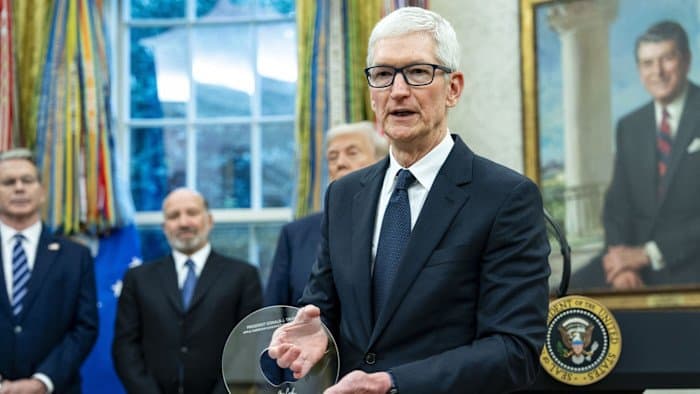
Federal Trade Commission chair Lina Khan has requested Apple CEO Tim Cook to review Apple News' terms and curation practices after a study claimed the platform favored 'leftist outlets' while suppressing conservative voices, with the request coming amid broader scrutiny of tech platforms' content moderation practices.
The US Federal Trade Commission has formally requested Apple CEO Tim Cook to review Apple News' terms of service and content curation practices, following a controversial study that alleged political bias in the platform's news selection.
In a letter obtained by the Financial Times, FTC Chair Lina Khan expressed concerns about Apple News' editorial processes after researchers from the Media Research Center published a report claiming the app consistently promoted 'leftist outlets' while suppressing conservative ones. The request comes amid heightened scrutiny of content moderation practices across major tech platforms.
The Study and Its Claims
The Media Research Center's analysis examined Apple News' front page and 'For You' section between January and March 2026, finding that left-leaning publications received significantly more prominence than conservative outlets. The study claimed that:
- Progressive outlets appeared 3.2 times more frequently on the front page
- Conservative sources were 42% less likely to appear in the 'For You' recommendations
- Certain conservative publications were completely absent from featured sections
However, the methodology has faced criticism from media researchers who note that the study didn't account for audience engagement metrics, regional news preferences, or Apple's stated algorithmic factors like source diversity and content quality.
Apple's Position and Response
Apple has consistently maintained that Apple News operates with a neutral algorithm designed to surface content based on user preferences, engagement metrics, and editorial guidelines rather than political affiliation. In a statement provided to the Financial Times, Apple emphasized:
"Apple News is designed to provide a diverse range of high-quality journalism from thousands of publishers worldwide. Our algorithms are designed to be neutral, focusing on what users engage with and what publishers produce, rather than any political bias."
The company highlighted that Apple News includes over 5,000 publications across the political spectrum and provides users with tools to customize their news feed based on their interests.
FTC's Regulatory Concerns
The FTC's intervention raises significant questions about the intersection of algorithmic curation and potential anti-competitive practices. While the agency hasn't formally accused Apple of wrongdoing, the request for review signals growing regulatory interest in how tech platforms shape information flow.
In her letter, Khan specifically asked Apple to:
- Review its content curation policies for potential political bias
- Examine how its algorithms might amplify certain viewpoints over others
- Assess whether its terms of service adequately address transparency in news selection
- Consider publishing more detailed information about content ranking factors
The FTC's involvement comes at a time when the agency has increasingly turned its attention to the power of major tech platforms to influence public discourse through their content curation decisions.
Broader Context and Implications
This development occurs amid several related trends:
- Increased political polarization has intensified scrutiny of tech platforms' content moderation
- The FTC has been actively investigating potential anti-competitive practices across the tech industry
- Apple has faced growing regulatory pressure in multiple jurisdictions over its App Store policies and data practices
- News consumption patterns continue to shift toward algorithmically curated feeds
The outcome of this review could have significant implications not just for Apple News, but for the broader ecosystem of algorithmically curated content platforms. If the FTC determines that Apple's news curation practices constitute unfair or deceptive practices, it could lead to:
- Increased transparency requirements for content ranking algorithms
- Potential restrictions on how platforms can prioritize certain content types
- New guidelines for algorithmic fairness in news distribution
- Requirements for regular audits of content diversity
Industry Response
The tech and media industries are watching this case closely, with potential implications for similar platforms like Google News, Microsoft Start, and Flipboard. Some industry experts suggest this could lead to a broader reevaluation of how algorithmic curation impacts media diversity and democratic discourse.
Meanwhile, media organizations have expressed mixed reactions. Some conservative outlets have welcomed the FTC's intervention, while others caution against potential government overreach into editorial processes. Progressive media organizations generally defend the current system, arguing that algorithmic curation naturally reflects user preferences and content quality.
As this investigation unfolds, it represents a critical moment in the ongoing debate about the role of technology companies in shaping the information ecosystem and the appropriate balance between algorithmic efficiency, content diversity, and free expression.
Comments
Please log in or register to join the discussion