
Bipartisan lawmakers urge Commerce Department to halt AI chip exports to China and Southeast Asia, citing evidence of $2.5 billion in smuggling and contradicting Nvidia CEO's claims about diversion.
U.S. Senators Jim Banks (R-Ind.) and Elizabeth Warren (D-Mass.) have issued an urgent call for the Commerce Department to suspend all active export licenses for advanced Nvidia AI chips and server systems destined for China and intermediary countries in Southeast Asia, following revelations of a major smuggling operation that allegedly diverted $2.5 billion worth of American hardware to Chinese entities.
The bipartisan letter, addressed to Commerce Secretary Howard Lutnick, comes in the wake of federal charges against three Super Micro employees, including co-founder Yih-Shyan "Wally" Liaw, for their alleged involvement in smuggling Nvidia hardware through complex supply chain routes designed to circumvent U.S. export controls.
Contradicting Corporate Claims
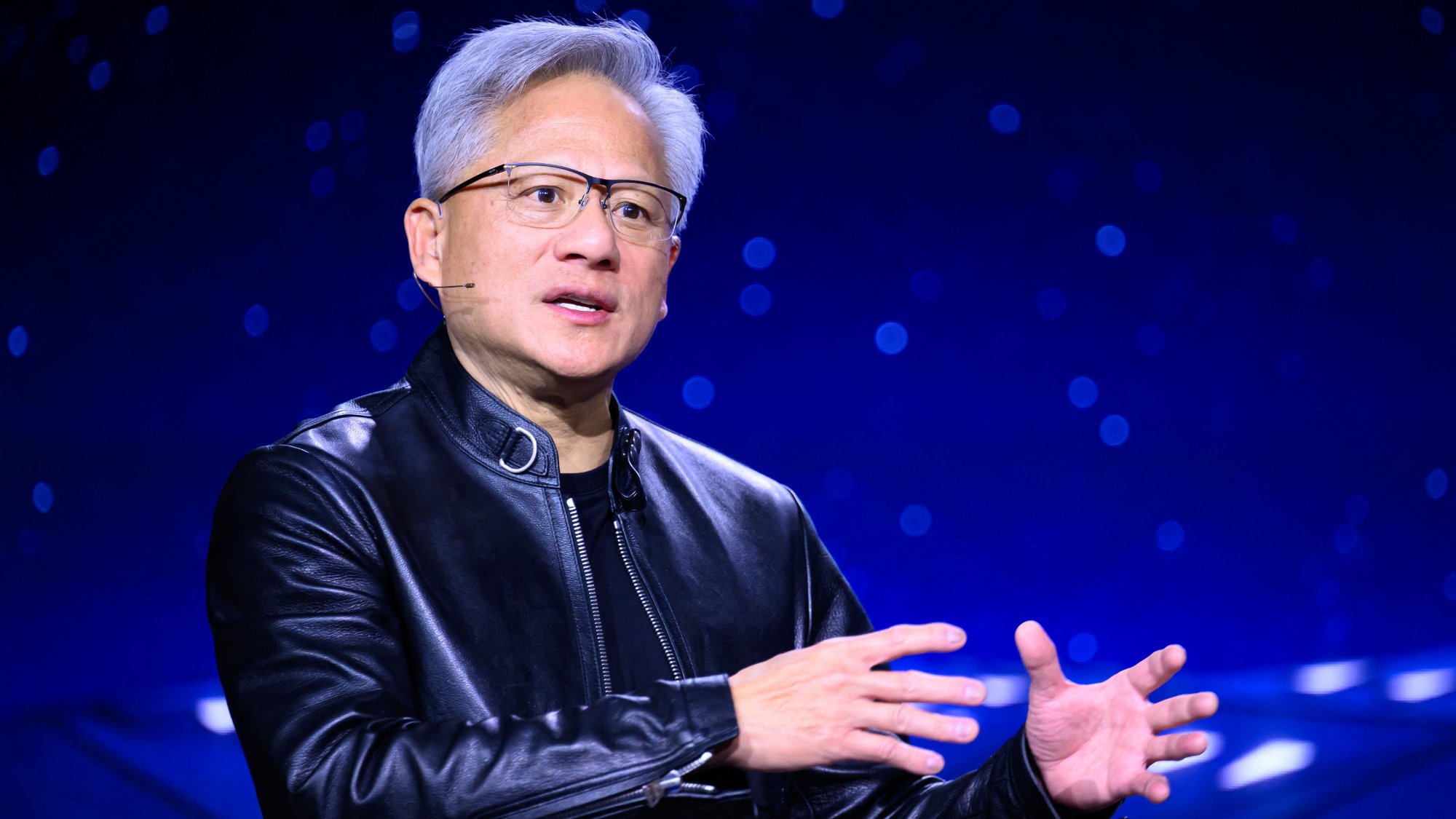
The senators' correspondence directly challenges statements made by Nvidia CEO Jensen Huang regarding the company's ability to prevent chip diversion. "These statements were not simply wrong in hindsight," the lawmakers wrote. "They were contradicted by reporting available at the time and potentially misled U.S. officials."
This rebuke follows Huang's repeated lobbying efforts to maintain Nvidia's business relationships with Chinese technology companies, arguing that American technological influence in China serves national interests. The CEO's position appeared to gain traction in December 2025 when President Donald Trump reversed previous restrictions, allowing Chinese companies to acquire Nvidia's H200 chips.
However, the recent smuggling allegations have reignited concerns about the effectiveness of existing export control mechanisms and the potential for sophisticated diversion schemes to undermine U.S. technology restrictions.
Geographic Scope of Concerns
The senators' request extends beyond direct exports to China, encompassing intermediary nations including Malaysia, Thailand, Vietnam, and Singapore. These countries have emerged as critical nodes in global semiconductor supply chains, where advanced American technology can potentially be rerouted to restricted destinations.
This expanded geographic focus reflects growing awareness among U.S. policymakers about the complexity of modern technology supply chains and the challenges of maintaining effective export controls in an interconnected global economy.
Industry Response and Technical Countermeasures
Nvidia has pushed back against the allegations while emphasizing its commitment to compliance. "Strict compliance is a top priority for Nvidia," a company spokesperson told Tom's Hardware. "We continue to work closely with our customers and the government on compliance programs as export regulations have expanded."
The company maintains that unlawful diversion represents a losing proposition for bad actors, citing the lack of service and support for diverted systems and the existence of "rigorous and effective" enforcement mechanisms.
However, the smuggling case suggests these mechanisms may have significant vulnerabilities. In response to mounting pressure, Nvidia has developed software tracking solutions designed to provide operators with rough location data for Blackwell GPUs, though the company remains opposed to more invasive geo-tracking mandates.
Legislative Push for Enhanced Tracking
House Foreign Affairs Committee members are reportedly preparing to vote on legislation that would require chipmakers to incorporate geo-tracking technology into their high-end gaming and AI GPUs. This proposed mandate represents a significant escalation in export control technology, moving beyond current compliance measures.
Technology security expert Ryan Fedasiuk of the American Enterprise Institute provided context for the proposed tracking requirements: "Amazon can tell you where a package is at any given moment. There is no reason the most powerful AI hardware on earth should have a less sophisticated chain-of-custody system than a pair of sneakers."
Market and Supply Chain Implications
The potential suspension of export licenses could have far-reaching consequences for Nvidia's business operations and the broader AI hardware market. The company's recent confirmation of an order for H200 chips and the restart of manufacturing for these older AI processors demonstrates the complex interplay between regulatory decisions, market demand, and supply chain logistics.
Industry analysts note that any suspension would likely create immediate supply constraints for Chinese AI developers and data center operators, potentially accelerating China's domestic semiconductor development efforts while simultaneously impacting Nvidia's revenue streams and market positioning.
Historical Context and Export Control Evolution
The current controversy emerges against a backdrop of increasingly stringent U.S. export controls on advanced computing technology. Since 2022, the Commerce Department has progressively tightened restrictions on AI chip exports, particularly those involving advanced manufacturing processes and high-performance computing capabilities.
These controls reflect broader U.S. strategic concerns about maintaining technological superiority in artificial intelligence and related fields, where computing power directly correlates with research and development capabilities.
Technical Specifications Under Scrutiny
The chips at the center of this debate represent the cutting edge of AI processing technology. Nvidia's H200 and upcoming Blackwell and Vera Rubin architectures incorporate advanced features including enhanced tensor cores, increased memory bandwidth, and specialized AI acceleration capabilities that make them particularly valuable for machine learning workloads.
These technical specifications also make the chips attractive targets for diversion, as their performance characteristics cannot be easily replicated by domestically produced alternatives in restricted markets.
Enforcement Mechanisms and Compliance Challenges
The smuggling case highlights the limitations of current enforcement mechanisms, which rely heavily on documentation, end-user verification, and post-shipment monitoring. The alleged involvement of Super Micro employees suggests that even companies with established compliance programs may face insider threats and sophisticated circumvention schemes.
This raises questions about the adequacy of existing due diligence requirements and whether more intrusive monitoring technologies are necessary to ensure compliance with export controls.
International Trade Relations Impact
The senators' letter and potential export license suspensions could further strain U.S.-China technology trade relations, which have already been significantly impacted by previous export control measures. Chinese officials have consistently characterized such restrictions as economic coercion aimed at containing China's technological development.
Any suspension of Nvidia exports would likely prompt retaliatory measures from Beijing and accelerate China's efforts to achieve semiconductor self-sufficiency, potentially reshaping global technology supply chains over the long term.
The Commerce Department's response to the senators' request will likely determine the immediate trajectory of U.S. AI chip export policy and could set precedents for how the government addresses similar compliance concerns in other technology sectors.
Comments
Please log in or register to join the discussion