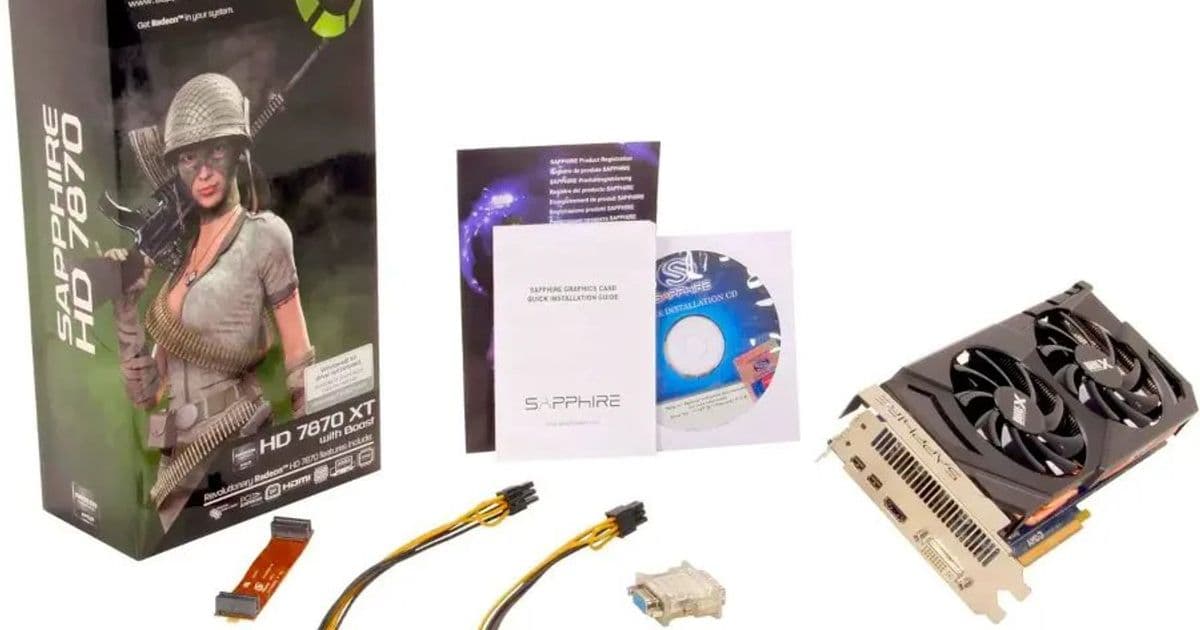
Timur Kristóf of Valve's Linux graphics team has solved a decade-old compatibility issue, bringing official AMDGPU driver support to the rare Radeon HD 7870 XT graphics card.
After nearly 14 years of incompatibility, Valve's Linux graphics developer Timur Kristóf has finally enabled proper support for the Radeon HD 7870 XT graphics card under Linux. The breakthrough comes as part of Valve's ongoing efforts to improve AMD GPU support in the open-source AMDGPU driver, marking a significant milestone for owners of this rare graphics card.
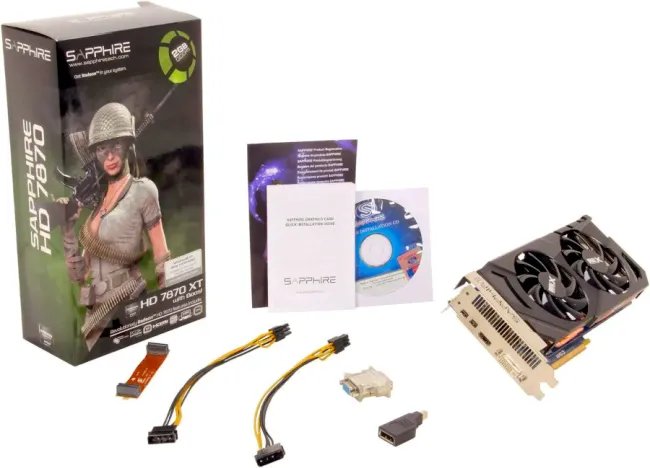
The Radeon HD 7870 XT represents a unique challenge in the GPU world. Unlike standard graphics cards, these were "harvested" from higher-tier models - specifically cut-down versions of more premium Tahiti-based GPUs that were then reconfigured to HD 7870 XT specifications. This manufacturing process created a hardware configuration that the AMDGPU driver simply couldn't handle properly.
The core issue stemmed from the card's TCC (Texture Channel Cache) configuration. When AMD created these harvested GPUs, they partially disabled or fused off certain TCC cache configurations. The AMDGPU driver lacked the necessary logic to properly handle hardware with these partially disabled TCCs and to optimally utilize the remaining cache resources.
Valve's Timur Kristóf, who has been instrumental in improving support for older AMD GCN 1.0/1.1 graphics cards, identified and solved this problem. His work has been part of a broader initiative to transition Southern Islands and Sea Islands GPUs from the legacy Radeon kernel driver to the modern AMDGPU driver. This transition brings significant benefits including better performance, out-of-the-box RADV Vulkan support, and overall improved compatibility.
The journey to fix HD 7870 XT support has been long and frustrating for Linux users. Bug reports date back to 2013, with users reporting that the graphics block on Sapphire Radeon HD 7870 XT "Tahiti LE" cards failed to work properly. Another user reported similar issues as recently as 2023, highlighting how persistent this compatibility problem had become.
What makes this achievement particularly noteworthy is the context of Valve's broader Linux graphics efforts. Kristóf has been systematically improving support for older AMD hardware, recently completing AMDGPU improvements for Kaveri and other GCN 1.1 era APUs. The HD 7870 XT fix represents another piece in the puzzle of making Linux a viable gaming platform for users with older hardware.
For Linux gamers and professionals still using these cards, this development means they can finally take advantage of the modern AMDGPU driver stack rather than being forced to use the legacy Radeon driver. This transition typically results in better performance, more reliable operation, and access to newer graphics APIs and features.
The fix itself involved changes to how the AMDGPU driver handles hardware with partially disabled cache configurations. By properly detecting and adapting to these harvested GPU configurations, the driver can now make optimal use of the available hardware resources, finally unlocking the full potential of these cards under Linux.
This accomplishment underscores the importance of continued investment in open-source graphics drivers. While the HD 7870 XT may be considered old hardware by today's standards, many users still rely on such cards for various computing tasks. Valve's commitment to improving Linux graphics support, even for aging hardware, demonstrates the company's dedication to making Linux a competitive gaming platform.
For those interested in the technical details, the patch series implementing these changes is now available, bringing official HD 7870 XT support to the AMDGPU driver. This means users can expect these cards to work out-of-the-box with modern Linux distributions that include the updated driver.
The resolution of this long-standing compatibility issue is a testament to the persistence of the open-source community and the value of having dedicated developers like Timur Kristóf working on these challenges. It also highlights how even seemingly minor hardware variations can create significant compatibility hurdles that require deep technical expertise to overcome.
Comments
Please log in or register to join the discussion