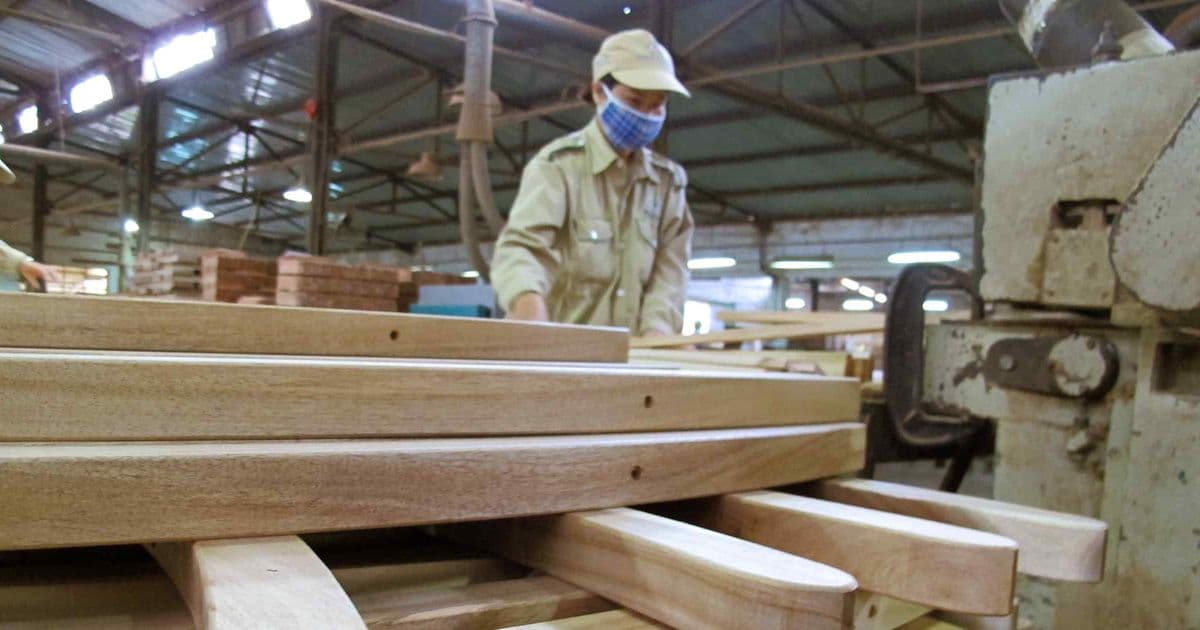
Vietnam's wood furniture industry, a key supplier to major U.S. retailers like Wayfair and Ashley Furniture, is aggressively expanding into the Middle East and India as U.S. tariffs erode margins and EU deforestation rules add compliance costs. The shift reflects a broader realignment in global supply chains, with Vietnamese firms adopting Chinese manufacturing technology to maintain competitiveness while navigating geopolitical trade barriers.
Vietnam's wood furniture manufacturing sector, which has grown into a critical hub for U.S. retailers such as Wayfair and Ashley Furniture, is undergoing a strategic pivot. The industry is now actively seeking new markets in the Middle East and India as U.S. tariffs and stringent EU environmental regulations squeeze profitability and complicate export logistics.
The primary driver is the persistent impact of U.S. tariffs on Chinese goods, which have inadvertently affected Vietnamese producers. While Vietnam has benefited from trade diversion—where Chinese goods are routed through Vietnam to avoid U.S. duties—this has also drawn increased scrutiny and, in some cases, direct tariff threats from Washington. The U.S. has imposed tariffs on specific Vietnamese products, and the broader uncertainty has forced Vietnamese manufacturers to diversify their customer base to reduce dependency on the American market.
Compounding the tariff pressure are new EU rules designed to combat deforestation. The European Union Deforestation Regulation (EUDR), which requires companies to prove their products are not linked to deforestation, imposes significant compliance costs on Vietnamese exporters. This regulation, effective from 2025, mandates rigorous supply chain traceability, adding administrative burdens and potentially disqualifying some producers who cannot meet the stringent documentation requirements. For an industry already grappling with labor shortages and rising input costs, these regulatory hurdles have further tightened margins.
In response, Vietnamese furniture makers are looking eastward. The Middle East, particularly the Gulf Cooperation Council (GCC) countries, presents a growing market for high-quality furniture, driven by urbanization, real estate development, and increasing consumer spending. Similarly, India's expanding middle class and booming housing market offer substantial opportunities. These regions are less exposed to U.S.-China trade tensions and have more flexible regulatory environments compared to the EU, making them attractive alternatives.
To remain competitive in these new markets, Vietnamese firms are increasingly adopting Chinese manufacturing technology. This includes advanced woodworking machinery, automated finishing systems, and digital design tools that improve precision and reduce waste. By leveraging Chinese tech, Vietnamese manufacturers can lower production costs, enhance product quality, and shorten lead times—key factors in winning contracts in price-sensitive markets like India and the Middle East. However, this reliance on Chinese technology also introduces risks, including potential supply chain vulnerabilities if geopolitical tensions between China and other nations escalate.
The strategic shift has broader implications for global supply chains. As Vietnamese producers diversify, the traditional flow of goods from China to Vietnam to the U.S. may weaken, potentially altering trade patterns. This could lead to increased competition in Asian and Middle Eastern markets, driving down prices but also spurring innovation as manufacturers differentiate their products. For U.S. retailers, the diversification of Vietnamese suppliers might reduce the risk of supply disruptions but could also lead to higher costs if tariffs remain in place and new markets command premium pricing.
Looking ahead, the Vietnamese furniture industry's success in the Middle East and India will depend on several factors: the ability to navigate local regulations and consumer preferences, the sustainability of cost reductions through technology, and the geopolitical stability of these new markets. While the current pivot is a defensive move against U.S. tariffs and EU rules, it also represents an opportunity for Vietnamese firms to build more resilient, multi-market supply chains that can withstand future trade shocks. The industry's adaptation underscores a broader trend in global manufacturing: as trade wars and environmental regulations reshape the competitive landscape, companies must continuously innovate and diversify to survive and thrive.
Comments
Please log in or register to join the discussion