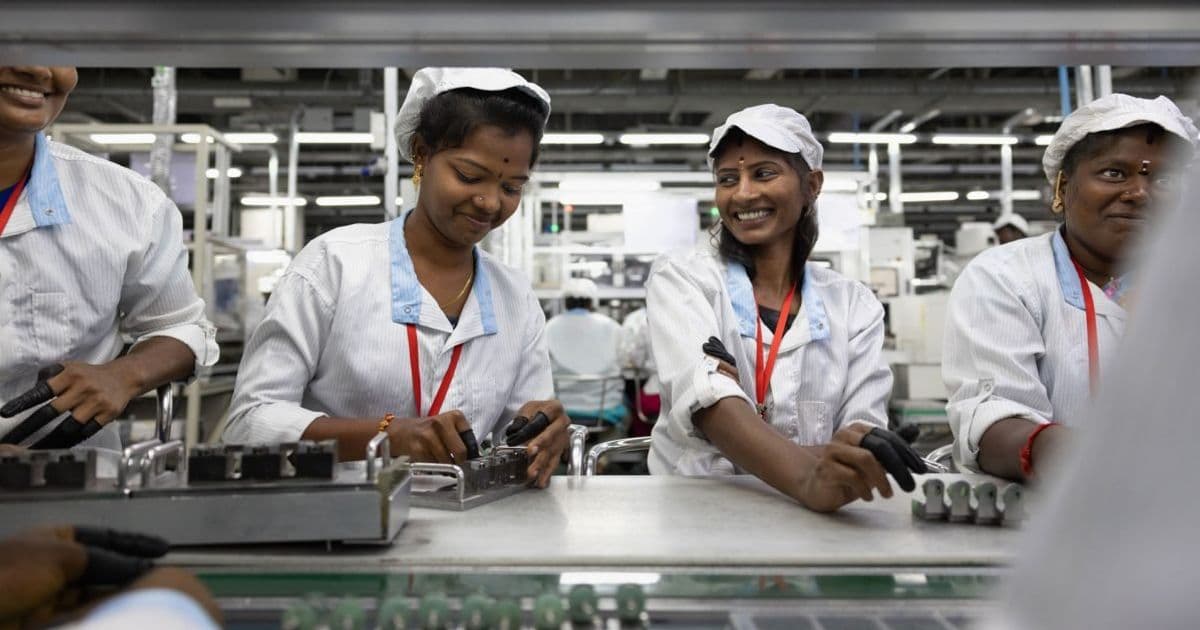
India is planning fresh manufacturing incentives to keep iPhone production growing as Apple aims to move half its production to the country within a year.
As India's current phone manufacturing incentive program is about to expire, the country is planning fresh incentives to keep production growing. Here are the details.
India Doubles Down on Recent Manufacturing Surge
While Apple has diversified its production away from China over the years, its efforts intensified last year as President Trump started his global tariff war. As a result, India emerged as one of Apple's new manufacturing hubs, reaching the milestone of assembling about a quarter of the company's iPhones, per a report released earlier this week.
Part of this successful shift was due to India's Production-Linked Incentive (PLI) Scheme, which offers financial incentives to companies that manufacture smartphones locally. Now, as reported by Reuters, India is planning fresh incentives set to kick in after the current PLI scheme expires later this month.
New Incentives Tied to Export Performance
The Indian government is reportedly considering linking incentives to export performance. This could be an effective way to encourage companies to use the country as their global manufacturing hub, rather than just for domestic sales.
The timing is notable: Apple is reportedly aiming to move about half of its iPhone production to India within a year, even as a U.S. court ruling invalidating Trump's fentanyl-related tariff on China could reduce India's leverage.
India's Manufacturing Growth Trajectory
According to Reuters, India "produced nearly $60 billion worth of mobiles in the 2024-25 fiscal year, a 28-fold jump over a decade," adding that as part of "Prime Minister Narendra Modi's agenda to bolster domestic manufacturing," the country "aims to expand its electronics manufacturing to $500 billion by the fiscal year 2030."
The report also claims that the country's "Ministry of Electronics and Information Technology has held consultations with the industry on designing the scheme," but declined to comment when contacted.
Strategic Implications for Apple's Supply Chain
This move represents a significant shift in Apple's global manufacturing strategy. The company has been gradually reducing its dependence on Chinese manufacturing for years, but recent geopolitical tensions have accelerated this transition.
India's new incentive structure, particularly the potential export-linked component, aligns well with Apple's need to establish India as a true alternative manufacturing base rather than just a supplementary production site. This approach could help India compete more effectively with other manufacturing destinations in Southeast Asia.
Industry Context and Future Outlook
The electronics manufacturing sector in India has grown exponentially, with the 28-fold increase over a decade demonstrating the country's manufacturing capabilities. The new incentives could help India capture an even larger share of global electronics production as companies continue to diversify their supply chains.
For Apple, achieving the goal of moving half of iPhone production to India within a year would represent a major milestone in the company's supply chain transformation. This shift would not only reduce Apple's exposure to potential tariffs and trade restrictions but also position the company to better serve growing markets in Asia and potentially reduce shipping times to European markets.
The success of India's new incentive program could have broader implications for the global technology manufacturing landscape, potentially establishing India as a major competitor to China in high-tech electronics production.
Comments
Please log in or register to join the discussion