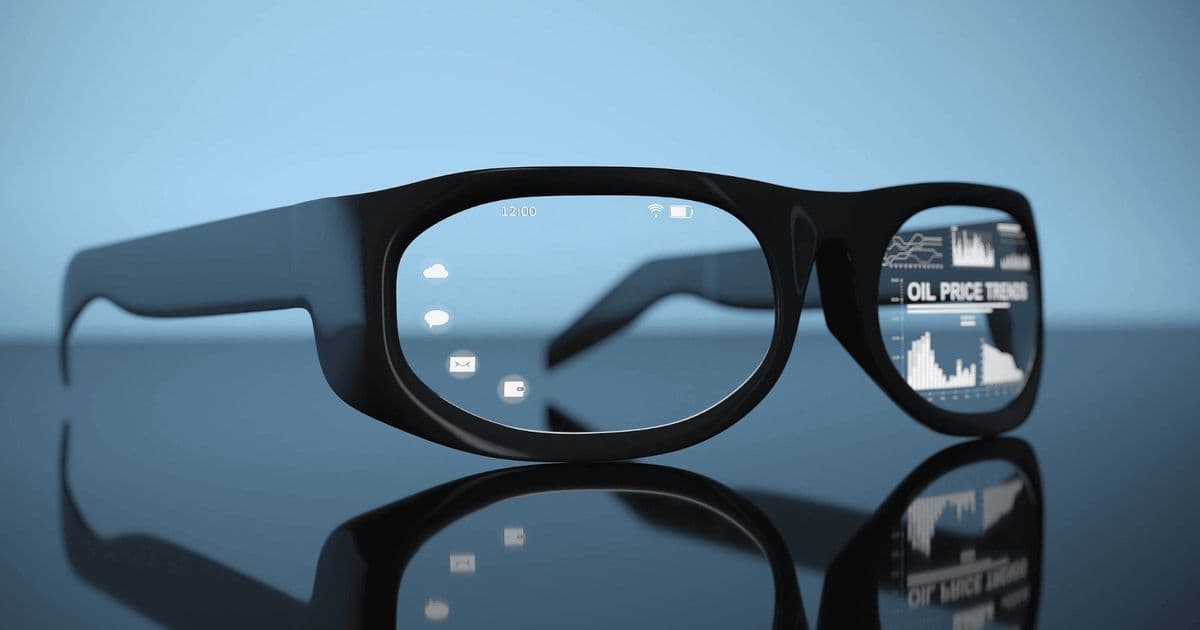
vivo has shelved its AI glasses project after six months of development, citing an inability to differentiate its product in a crowded, homogenized market. The decision reflects broader challenges facing the AI eyewear category, including high hardware thresholds, unproven use cases, and a supply chain that largely follows the Ray-Ban Meta blueprint.
vivo has paused its AI glasses project after concluding that meaningful differentiation remains out of reach, highlighting the growing realism settling over the AI eyewear industry. The smartphone maker had developed the project in stealth for around six months and entered the demo stage in collaboration with multiple ODM partners, including Goertek and ThunderSoft.
According to a source familiar with the matter, vivo had explored several AI glasses concepts, including audio-video-focused designs and models with single-color display modules. However, before a final direction was set, the project was shelved. The key reason, the source said, was a judgment by senior executives—including Executive Vice President Hu Baishan—that vivo’s AI glasses would be "very difficult to differentiate under current conditions." vivo has not publicly commented on the decision.
The company’s rapid entry and exit reflect broader challenges facing the AI glasses sector. While widely viewed as a potential successor to smartphones, the category faces significant real-world constraints.
The Hardware Reality Check
Despite being a wearable device, AI glasses have one of the highest hardware thresholds in consumer electronics. Even minor flaws can critically undermine the user experience, leaving little room for compromise. Several early attempts have already served as cautionary examples.
AI glasses maker Shanjing suffered a wave of returns for its first-generation "Paipai Glasses" due to issues such as poor call quality and weak video resolution stemming from chip selection. Baidu’s Xiaodu AI glasses reportedly scrapped and restarted their first-generation product for similar reasons. As one AI glasses startup CEO put it, "At present, almost no AI glasses product in the market truly meets usability standards—including our own."
The Homogenization Problem
Homogenization has emerged as another major pain point. A review of AI glasses launched last year shows that most closely follow the Ray-Ban Meta design language, with overlapping core use cases centered on first-person photography, translation, and note-taking.
At its core, this sameness stems from domestic manufacturers largely following a product path already validated by Ray-Ban Meta, while relying on highly overlapping supply chains and near-identical reference designs. This creates a vicious cycle where manufacturers compete on price rather than innovation, making differentiation nearly impossible.
The Software Gap
On the software side, the content ecosystem for AI glasses remains thin, and the category has yet to identify a truly indispensable use case beyond smartphones. While Ray-Ban Meta has shown some traction with its social media integration and camera functionality, most AI glasses still struggle to justify their existence as standalone devices.
Industry observers believe that AI glasses will require another three to five years of exploration in areas such as core technology and content ecosystems. This timeline suggests that the current generation of products may be premature, serving more as market experiments than viable consumer devices.
Industry-Wide Caution
Against this backdrop, some players are becoming more cautious. Beyond vivo, Xiaomi—one of the earliest domestic adopters of AI glasses—has reportedly revised down its expected annual shipments for its second-generation model from 300,000 units to around 120,000 units, according to supply chain sources. Xiaomi has not responded publicly.
This scaling back indicates that even manufacturers with significant resources and distribution channels are finding the AI glasses market more challenging than anticipated. The gap between initial enthusiasm and practical market realities appears to be widening.
vivo's Strategic Pivot
Shelving the project does not mean vivo has abandoned the category entirely. Company executives are reportedly maintaining a wait-and-see stance, particularly as rumors suggest Apple may launch its own AI glasses around 2027, according to MacRumors. This suggests vivo is positioning itself to learn from Apple's approach rather than racing to market first.
More broadly, vivo continues to explore new hardware entry points. In August 2025, the company unveiled the vivo Vision Exploration Edition, an MR device emphasizing lightweight design and natural interaction. The product was not commercially released but made available for user trials.
Hu Baishan has previously framed these efforts as part of vivo’s pursuit of a "second growth curve." In his view, mixed reality serves as a long-term data and scenario validation tool for future robotics ambitions. MR devices require high-precision spatial scanning and modeling, with collected data forming the foundation for robots to understand home environments.
In March last year, vivo also established a Robotics Lab, formally entering the robotics space. This strategic pivot suggests vivo is looking beyond immediate consumer hardware to build capabilities for longer-term opportunities in automation and robotics.
The Smartphone Maker Advantage
For smartphone makers, the advantage in pursuing next-generation hardware platforms lies in their deep hardware expertise, mature distribution channels, and integrated supply chains—capabilities built during the smartphone era that can be carried forward. At the same time, they may also have a clearer understanding than most of how unforgiving new hardware categories can be.
The smartphone industry has trained consumers to expect rapid iteration, high reliability, and seamless integration. These expectations create a high bar for any new hardware category, particularly wearables where comfort, battery life, and usability are paramount.
vivo's decision to pause its AI glasses project represents a pragmatic response to market realities rather than a strategic retreat. By waiting for clearer differentiation opportunities and more mature ecosystems, the company may be positioning itself better for the long term, even if it means missing the initial wave of AI glasses adoption.
The broader lesson for the industry is clear: hardware innovation alone is insufficient. Success in AI glasses will require not just better technology, but a compelling use case that justifies the form factor, a robust software ecosystem, and a supply chain capable of delivering consistent quality at scale. Until these pieces align, the AI glasses market will likely remain a landscape of cautious experimentation rather than explosive growth.
Comments
Please log in or register to join the discussion