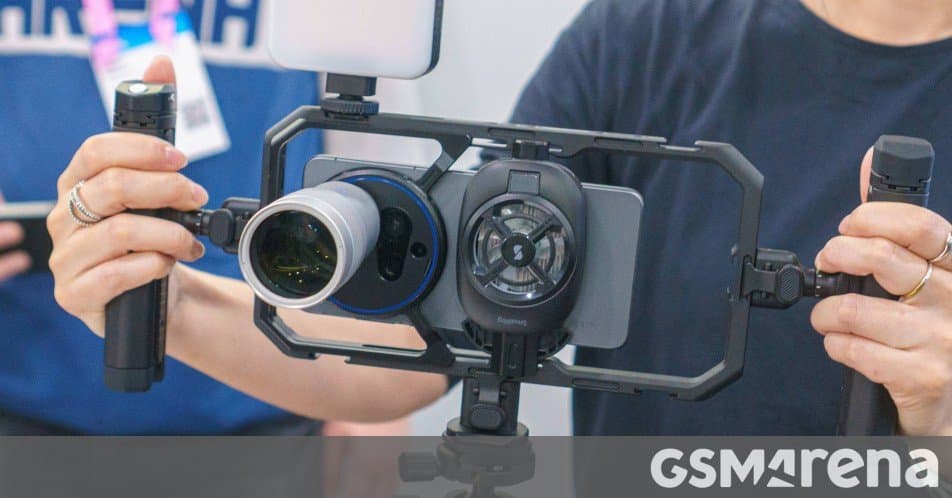
vivo's X300 Ultra takes mobile photography and videography to new heights with Zeiss teleconverter lenses and a SmallRig video cage, offering unprecedented zoom capabilities and professional video controls.
vivo is making a bold statement with the X300 Ultra, positioning it as the ultimate mobile camera for both photographers and videographers. The company has partnered with Zeiss and SmallRig to create comprehensive accessory kits that transform the phone into a professional-grade imaging tool.
Photography Kit: Zooming Beyond Limits
The photography kit includes two new teleconverter lenses that attach to the X300 Ultra's native 85mm periscope camera. The star of the show is the new 400mm equivalent telephoto extender, which pushes mobile zoom capabilities further than ever before. This lens, developed in collaboration with Zeiss, is joined by a redesigned 200mm lens that's more compact than its predecessor.
Interestingly, despite doubling the focal length, the 400mm lens isn't twice as large as the 200mm version. Side-by-side, it's only slightly longer but noticeably wider. The 200mm lens now looks remarkably compact, promising better balance when mounted on the phone. However, the 400mm setup creates a front-heavy configuration that will need real-world testing to evaluate how well the photography kit case handles the weight distribution.
The camera grip has also been upgraded with additional controls including a function button and flash button, joining the existing shutter button, scroll wheel, zoom lever, and video record button.
Video Rig Kit: Professional Filmmaking on the Go
For videographers, vivo partnered with SmallRig to create the Pro Video Rig Kit - a comprehensive cage system that turns the X300 Ultra into a serious video camera. The cage features two ergonomic handles with Bluetooth-controllable shutter buttons and zoom levers for stable handheld shooting.
The rig is highly expandable with multiple cold shoe mounts and quick-release ports, allowing users to attach accessories like the included adjustable LED light and active cooling fan. Additional mounting points enable the use of external SSDs, microphones, and monitors, creating a complete mobile production setup.
Enhanced Video Capabilities
The X300 Ultra itself brings significant video improvements. It offers native 10-bit Log support across all three cameras, with vivo optimizing the video output for smooth tonal roll-off and film-like texture. The company calls this "4K Master Color Video," emphasizing a less digital, more cinematic look compared to typical smartphone video.
Audio has also been refined, with the pro video app capable of focusing on sound from your subject. While external microphone connectivity hasn't been confirmed, the comprehensive accessory ecosystem suggests it's likely.
Technical Specifications
At the heart of the X300 Ultra is a substantial upgrade to the main camera: a 1/1.12-inch 200MP sensor, representing a significant leap from the 1/1.28-inch 50MP shooter in the previous X200 Ultra. This larger sensor should deliver improved low-light performance and greater detail capture.
The device is finally coming to global markets, though pricing and exact availability remain undisclosed. Both the photography kit and video rig kit prices are also yet to be announced.
Reader Reactions
The announcement has sparked debate among photography enthusiasts. Some argue that for point-and-shoot scenarios, traditional cameras with superior image processing still outperform phone sensors. Others point out that "real cameras" are significantly more expensive - you could buy two X300 Ultras for the price of a single good APS-C camera body.
Critics call the X300 Ultra "gimmicky," suggesting that at its likely premium price point, a proper camera would be the better investment. However, the convenience of having professional-grade imaging capabilities in a single device continues to appeal to many users who value portability and versatility over absolute image quality.
As vivo prepares for the global launch, the X300 Ultra represents the company's most ambitious attempt yet to blur the lines between smartphone and professional camera, potentially setting a new standard for what mobile devices can achieve in photography and videography.
Comments
Please log in or register to join the discussion