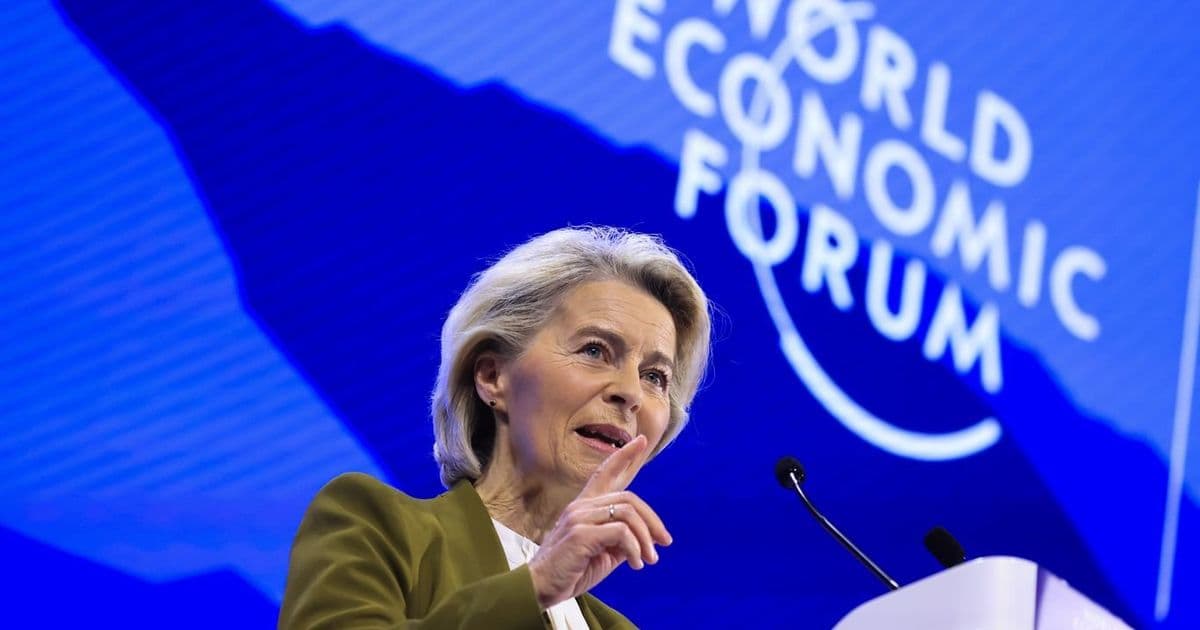
European Commission President Ursula von der Leyen declared at Davos that former President Trump's renewed threats toward Greenland represent an irreversible fracture in US-EU trust, with profound implications for tech supply chains and Arctic resource development.
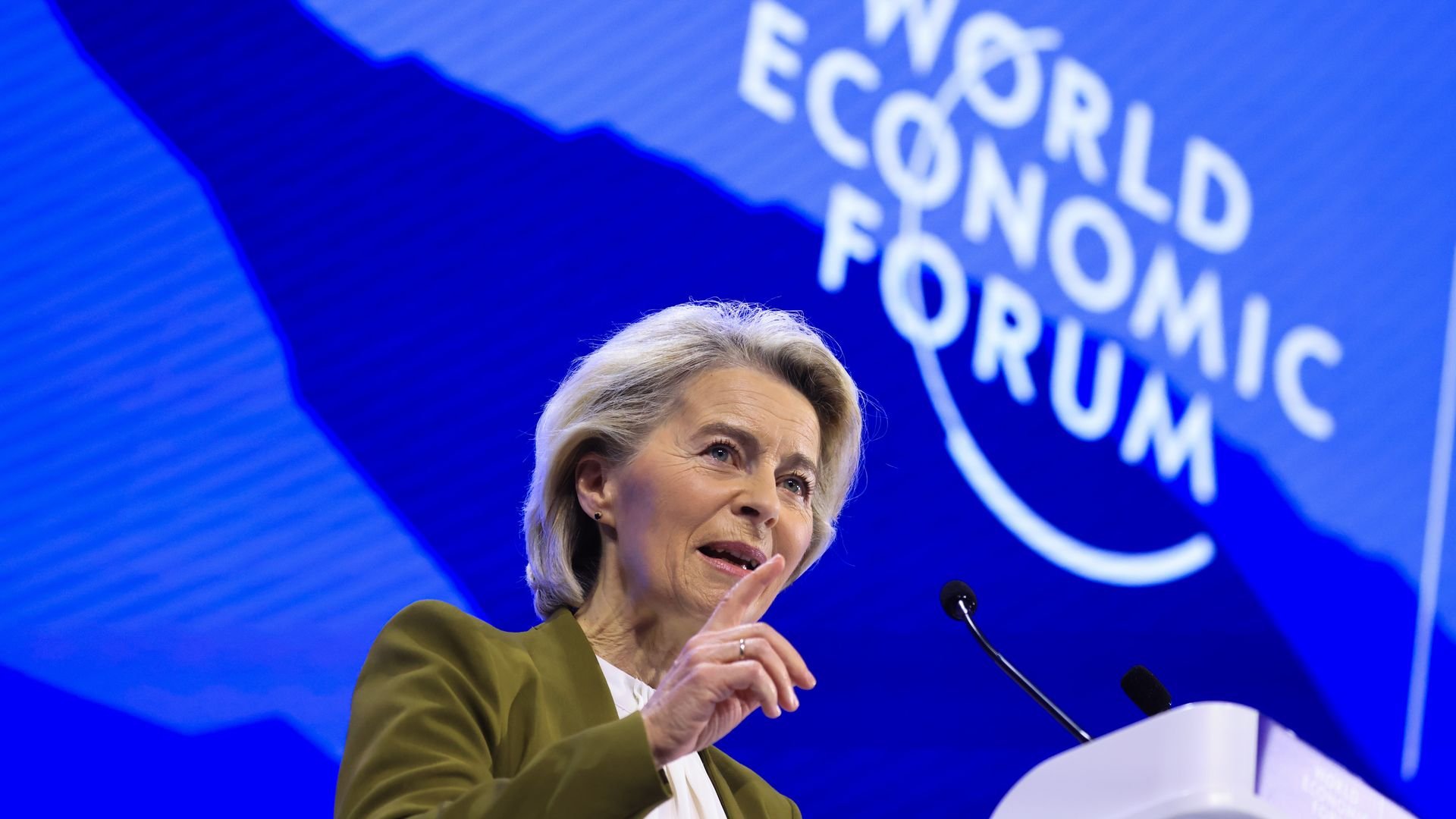
European Commission President Ursula von der Leyen delivered a stark assessment at the World Economic Forum in Davos this week, stating that former U.S. President Donald Trump's renewed threats regarding Greenland have fundamentally altered transatlantic relations. Speaking to global business leaders, von der Leyen emphasized that these developments signal "no going back" to previous diplomatic norms, with immediate consequences for technology investments and resource security.
Trump's latest comments—reiterating his administration's controversial interest in purchasing Greenland while threatening trade sanctions against Denmark—arrive amid heightened competition for Arctic resources critical to technology manufacturing. Greenland holds an estimated 38.5 million tons of rare earth elements (nearly 50% of global reserves), essential for producing semiconductors, electric vehicles, and renewable energy infrastructure. The EU currently imports over 98% of its rare earth minerals, primarily from China.
Market analysts project immediate fallout for European tech firms, with the EURO STOXX Technology Index already down 2.3% since the remarks. "This isn't about real estate—it's about control over the mineral supply chains powering the Fourth Industrial Revolution," stated Clara Voss, lead strategist at Bernstein Research. "Von der Leyen's warning reflects hard calculations: Europe must accelerate its €2.1 billion Critical Raw Materials Act implementation or face permanent strategic vulnerability."
The Commission President outlined three concrete business impacts: First, accelerated reshoring of tech component manufacturing, with the EU's semiconductor self-sufficiency target moving from 20% to 35% by 2030. Second, binding requirements for European battery manufacturers to source at least 30% of lithium and cobalt from EU-aligned partners by 2028. Third, new screening mechanisms for U.S. investments in European tech infrastructure, particularly submarine cable networks and satellite systems traversing Arctic routes.
Financial markets reacted swiftly, with Nordic mining stocks surging 5.7% while U.S. clean-tech firms with European exposure saw $1.2 billion in market capitalization evaporate. The volatility underscores how geopolitical tensions are rewriting risk assessments: Credit Suisse now assigns a 68% probability premium to Arctic-facing tech projects, up from 42% in 2025.
Von der Leyen's declaration marks a pivotal recalibration. As Arctic ice retreat opens new shipping lanes and resource access, Europe is strategically decoupling from U.S. unpredictability through raw material alliances with Canada and Norway. For global tech supply chains already strained by chip shortages, this geopolitical rupture introduces costly new fault lines at the precise moment industries seek stability.
Comments
Please log in or register to join the discussion