
Warp's transition to open-source with an agent-first development model represents a fundamental reimagining of how collaborative software can be built, combining human creativity with AI-powered implementation at scale.
In a significant departure from traditional software development models, Warp has announced the open-sourcing of its terminal client, accompanied by an innovative agent-first workflow managed by their Oz platform. This move, with OpenAI as the founding sponsor and GPT models powering the agentic workflows, signals a bold vision for the future of collaborative software development.
The core of this announcement lies in Warp's novel approach to development: humans managing agents at scale to build production-grade software. This model addresses a critical bottleneck in modern development—the human-in-the-loop activities around code, including speccing products and verifying behavior. By leveraging agents for implementation heavy lifting, Warp aims to free human contributors to focus on higher-leverage work: shaping what gets built and ensuring its correctness.
This agent-first approach represents a significant evolution from traditional open-source development. Rather than relying solely on human contributors writing code directly, Warp envisions a future where community members provide ideas, direction, and verification while agents handle the technical implementation. The company expresses confidence in code generated by Oz with proper rules, context, and verification, suggesting a structured approach that maintains quality despite involving AI in the development process.
The technical infrastructure behind this model is Oz, Warp's cloud agent orchestration platform. While the article doesn't provide extensive technical details about Oz's architecture, it hints at sophisticated capabilities including orchestration, memory management, handoff mechanisms, and verification loops. These components are crucial for making agentic engineering practical at scale, suggesting that Warp has developed substantial technical infrastructure to support this model.
The timing of this announcement is particularly noteworthy. Warp mentions having debated open-sourcing annually, with this year being the first time the balance clearly shifted due to the rise of agents. This suggests that recent advances in AI capabilities have finally made this model viable, enabling agents to handle implementation tasks reliably enough to support community-driven development.
From a business perspective, this strategy allows Warp to compete more effectively with well-funded closed-source competitors. Rather than attempting to match them on resources or marketing spend, Warp leverages the collective intelligence of its nearly million-strong user base. This approach aligns with their stated goal of building the best possible product for the most excited community, rather than competing on price or massive subsidies.
The product improvements accompanying this launch further demonstrate Warp's commitment to openness and customization. Support for a wider range of open-source models, including Kimi, MiniMax, and Qwen, along with a new "auto (open)" model-routed version, positions Warp as a versatile platform that doesn't lock users into specific AI providers. The enhanced customization options and settings file provide additional flexibility for users to tailor their experience.
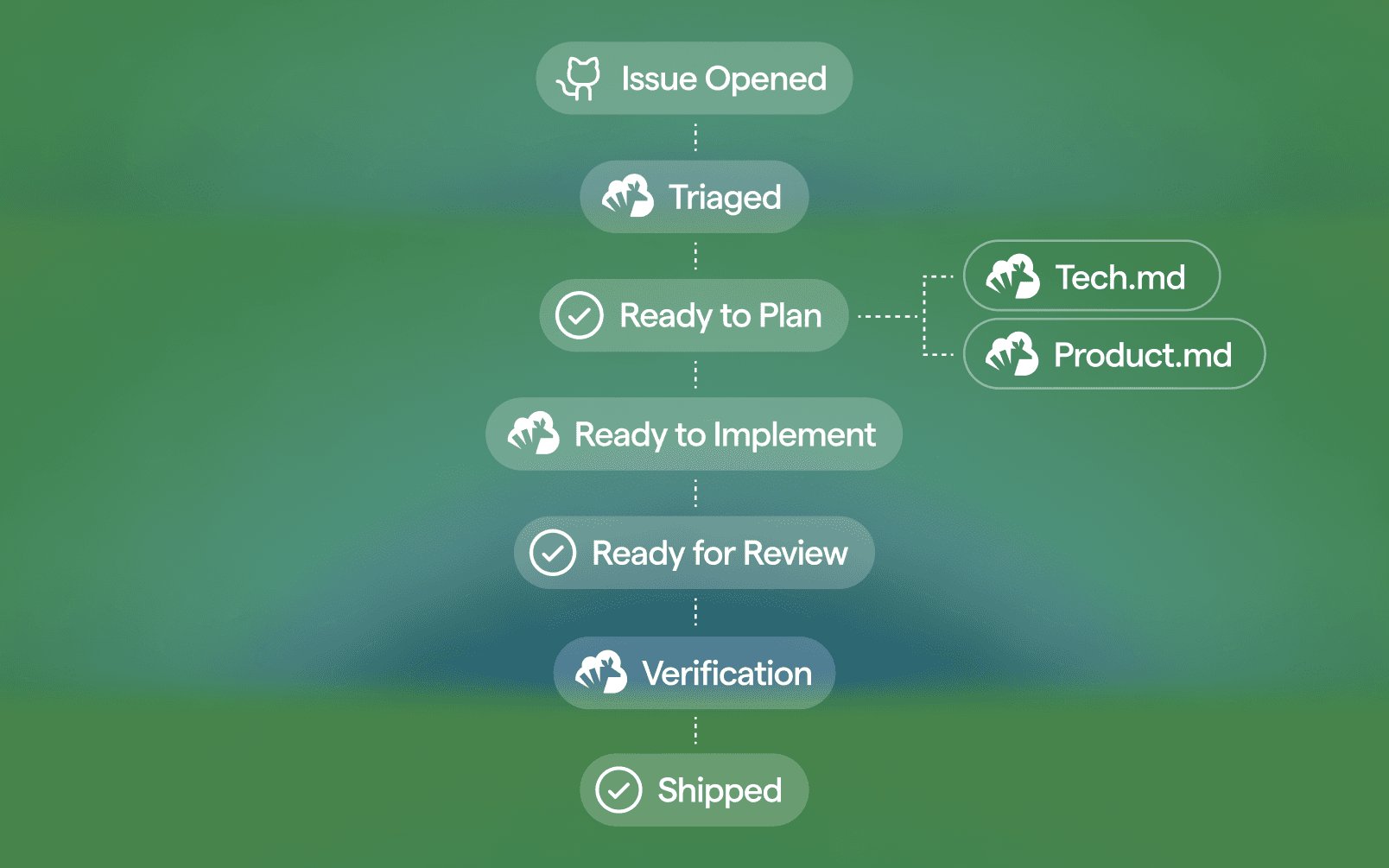
The contribution process, as outlined in the repository's CONTRIBUTING.md, establishes a clear division of labor between agents and humans. Agents handle coding, planning, testing, and other implementation tasks, while community members focus on ideas, direction, and verification. This structured approach aims to ensure that community contributions maintain quality while providing meaningful opportunities for participation.
This model raises interesting questions about the future of open-source development. Traditional open-source projects have relied on transparent code review and human collaboration. Warp's approach introduces a new paradigm where transparency extends to the process of how AI agents are managed and directed, rather than focusing solely on human-written code. This could represent a significant evolution in how collaborative development works in an AI-augmented world.
The public shift from closed product development to open processes—with GitHub issues becoming the source of truth for tracking features and roadmap discussions happening in the open—further emphasizes Warp's commitment to transparency. This approach not only builds trust with the community but also allows for more rapid iteration based on collective input.
However, this model is not without potential challenges. Ensuring that agents follow project guidelines and maintain code quality at scale will require sophisticated verification systems. The reliance on OpenAI models, while currently providing strong capabilities, could create dependencies that limit the project's openness. Additionally, the balance between agent-generated code and human oversight will need careful calibration to maintain the project's direction and quality.
Warp's announcement also reflects a broader industry trend toward AI-augmented development tools. By positioning themselves as an "open agentic development environment," they're creating a distinct niche in a market increasingly crowded with AI-powered coding assistants. Their multi-model and multi-harness approach suggests an awareness that the future of development will likely involve multiple AI tools working in concert, rather than a single dominant solution.
The historical context provided—mentioning that the plan was always to open source the client, as indicated in their original Show HN post—adds credibility to this move. It suggests that this isn't a reactive decision but part of a long-term vision that has matured alongside the capabilities of AI systems.
As the software development landscape continues to evolve with AI capabilities, Warp's experiment in open-source, agent-first development could provide valuable insights into how human creativity and AI implementation can be combined at scale. The success of this approach will depend on multiple factors, including the sophistication of their agent orchestration, the quality of community participation, and their ability to maintain project coherence while embracing diverse contributions.
Ultimately, Warp's open-source shift represents more than just a licensing change—it's a fundamental reimagining of how collaborative software can be built in an AI-augmented world. By combining human direction with AI implementation at scale, they're attempting to create a virtuous loop that accelerates development while maintaining quality. Whether this model proves sustainable and scalable remains to be seen, but it certainly pushes the boundaries of what's possible in collaborative software development.
Comments
Please log in or register to join the discussion