The Web Directions Dev Summit 2025 in Sydney featured critical discussions on framework fatigue, CSS scroll-driven animations, and accessibility gaps, signaling a shift toward leveraging native browser capabilities.
The Web Directions Dev Summit 2025 in Sydney became a focal point for rethinking modern web development practices, with organizer John Allsopp setting a provocative tone by declaring frontend development had reached a "local maximum." This calculus term describes how current tools limit innovation despite productivity gains, particularly as frameworks obscure modern browser capabilities like the View Transitions API.
Framework Fatigue Takes Center Stage
Jono Alderson's keynote, "The Browser Strikes Back: Rethinking the Modern Dev Stack," confronted framework overuse head-on. He compared React-heavy projects to "Netflix's DVD-by-mail era," arguing that dependencies create unnecessary complexity when browsers now natively support many SPA features. Alderson highlighted overlooked 2025 browser capabilities, including scroll-driven animations—a direct segue into Lee Meyer's session.
Scroll-Driven Animations Gain Momentum
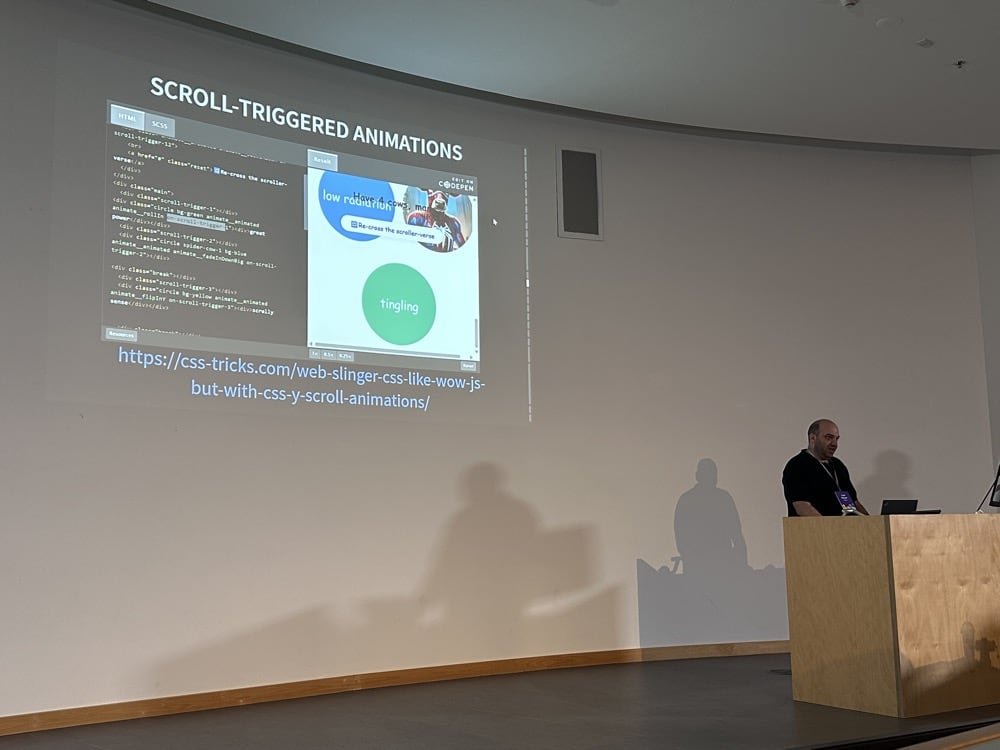
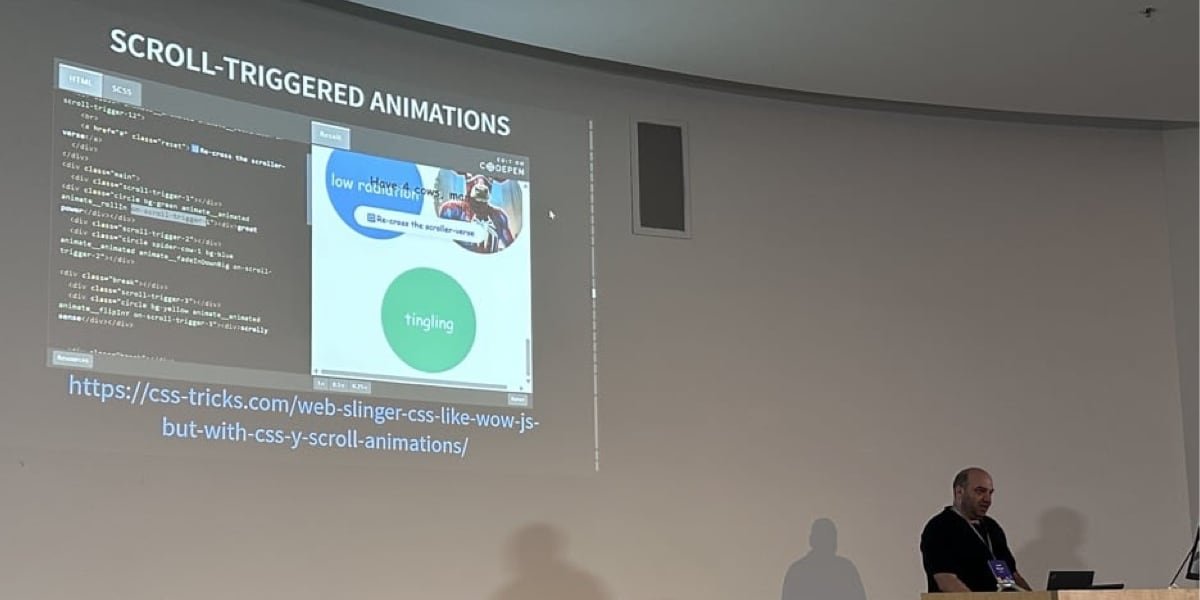
Lee Meyer's "Supercharged Scrolling With CSS" demonstrated practical applications of CSS Scroll-Driven Animations through interactive demos. Using reveal.js for live coding transitions, Meyer showcased how modern syntax reduces animation code by up to 70% compared to legacy approaches. His scrollytelling examples—including a responsive pixel-art game controlled by scroll direction—illustrated narrative possibilities without JavaScript frameworks. Meyer emphasized progressive enhancement: "These techniques work in all modern browsers, but degrade gracefully where unsupported."
Beyond the Browser and Accessibility Realities
Rupert Manfredi explored post-browser paradigms with "Telepath," a prototype AI system that dynamically assembles UI fragments without traditional browsers or apps. He contended that developer value lies in problem-solving skills rather than framework-specific knowledge.
Meanwhile, Beau Vass's accessibility talk exposed critical flaws in automated tools. Lighthouse audits often miss actual barriers while flagging irrelevant issues, Vass explained, noting that adding alt text to decorative images can actively harm screen reader users. He advocated for manual testing and regulatory pressure, stating: "Accessibility isn't a froghurt topping—it can't be sprinkled on at the end."
The Path Forward
The summit consistently circled back to Allsopp's opening challenge: Are frameworks trapping us in outdated patterns? With browser support for scroll timelines, container queries, and view transitions now widespread, the consensus urged developers to audit dependencies and prioritize platform features. As Alderson noted: "Our tools should solve user problems, not become the problem."
Explore Meyer's scroll-driven animations demo and Web Directions' full talk recordings.
Comments
Please log in or register to join the discussion