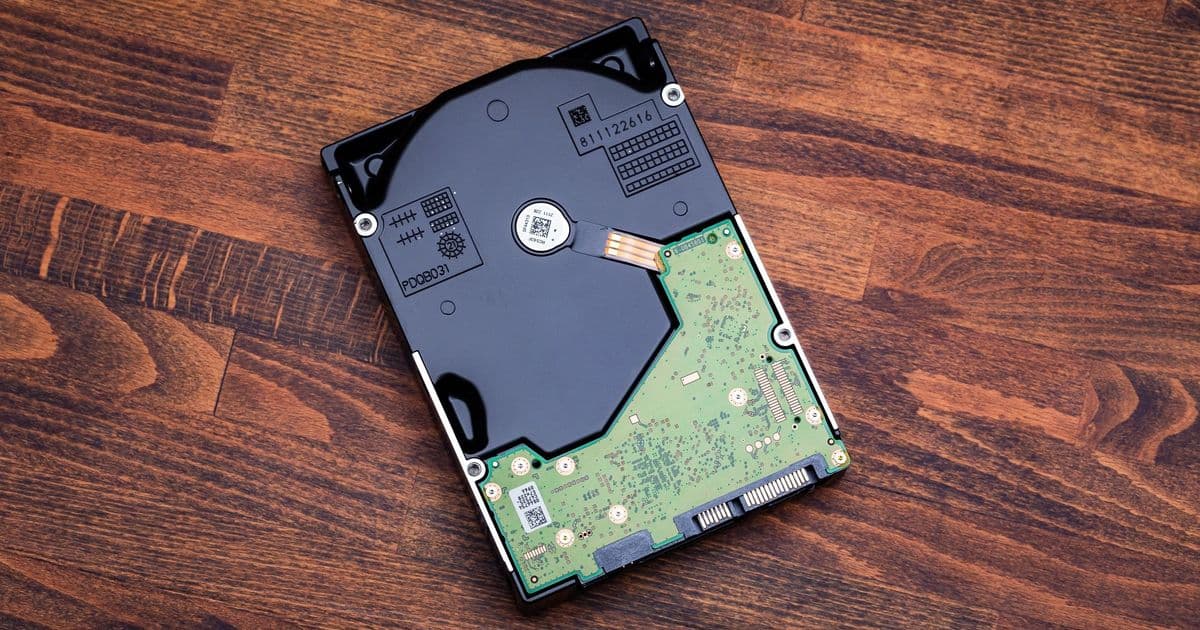
Western Digital unveils High-Bandwidth HDDs with dual-actuator technology delivering up to 8X performance gains and Power-Optimized HDDs reducing energy consumption by 20% for AI workloads.
Western Digital has unveiled two groundbreaking hard drive families that could extend the relevance of HDD technology well into the AI era: High-Bandwidth HDDs promising up to 8X performance improvements through dual-actuator designs, and Power-Optimized HDDs that slash energy consumption by 20% for "active cold" storage applications.
Dual-Actuator Technology Delivers Massive Performance Gains
At its Innovation Day event, Western Digital showcased its High-Bandwidth HDD architecture that fundamentally reimagines how hard drives access data. The company demonstrated two distinct approaches to achieving unprecedented performance gains.
Original Dual-Actuator Design The first approach uses multiple heads on multiple tracks to read and write data simultaneously, exploiting internal parallelism to deliver 2X bandwidth compared to conventional 3.5-inch HDDs. This architecture is already being validated by Western Digital's clients and represents the company's first step toward dramatically improving HDD performance.
Dual-Pivot Architecture Western Digital's next-generation solution takes the dual-actuator concept further by adding a second, fully independent actuator on a separate pivot inside the same 3.5-inch drive enclosure. Each actuator controls its own set of heads, enabling two completely independent read/write operations to occur simultaneously. This design delivers up to 2X sequential I/O performance without any reduction in storage capacity.
The Dual-Pivot HDDs are currently in the laboratory phase and targeted for commercial availability in 2028. Over time, Western Digital plans to combine both architectures within a single drive, ultimately achieving 4X higher I/O performance compared to traditional hard drives and 8X improvements in overall bandwidth.
Power-Optimized HDDs Target AI Workloads
Complementing the performance-focused High-Bandwidth drives, Western Digital introduced Power-Optimized HDDs designed specifically for "active cold" storage applications. These drives reduce power consumption by 20% for workloads that require quick data access but cannot justify the cost of traditional high-capacity HDDs or SSDs.
The target market includes AI workloads that generate massive volumes of data such as datasets, checkpoints, and logs. These applications must maintain rapid accessibility—ruling out tape storage—while avoiding the expense of flash-based solutions. Western Digital's power-optimized 3.5-inch HDDs achieve their efficiency through "minimal random IO" operations, reducing ownership costs and making "active cold" storage more economical to operate.
The first power-optimized HDDs are expected to enter customer qualification in 2027, positioning Western Digital to address the growing storage demands of AI infrastructure.
Competing with QLC NAND-Based SSDs
Paradoxically, both High-Bandwidth and Power-Optimized HDDs are designed to compete against the same product category: data center-grade 3D QLC NAND-based SSDs. While QLC SSDs can offer storage density and performance that current HDDs cannot match, Western Digital believes that by tailoring hard drive features and performance for specific applications, it can deliver better value than QLC NAND solutions.
This strategy represents a significant bet on the continued relevance of mechanical storage technology in an era increasingly dominated by solid-state solutions. By focusing on application-specific optimizations rather than competing directly with SSDs on raw performance metrics, Western Digital aims to carve out sustainable market niches for HDD technology.
Industry Implications
The announcements signal Western Digital's commitment to evolving hard drive technology rather than conceding the data center market entirely to SSDs. As AI workloads continue to explode and data center operators seek cost-effective storage solutions, the combination of dramatically improved performance and reduced power consumption could make HDDs viable for use cases previously dominated by flash storage.
With High-Bandwidth HDDs already in client validation and Power-Optimized drives entering qualification in 2027, Western Digital is positioning itself to address both ends of the data center storage spectrum—high-performance applications and cost-sensitive "active cold" storage—while maintaining the cost advantages that have historically made HDDs attractive for bulk data storage.
The success of these technologies will depend on whether the performance and efficiency gains can offset the inherent limitations of mechanical storage compared to solid-state alternatives, particularly as QLC NAND technology continues to evolve and improve.
Comments
Please log in or register to join the discussion