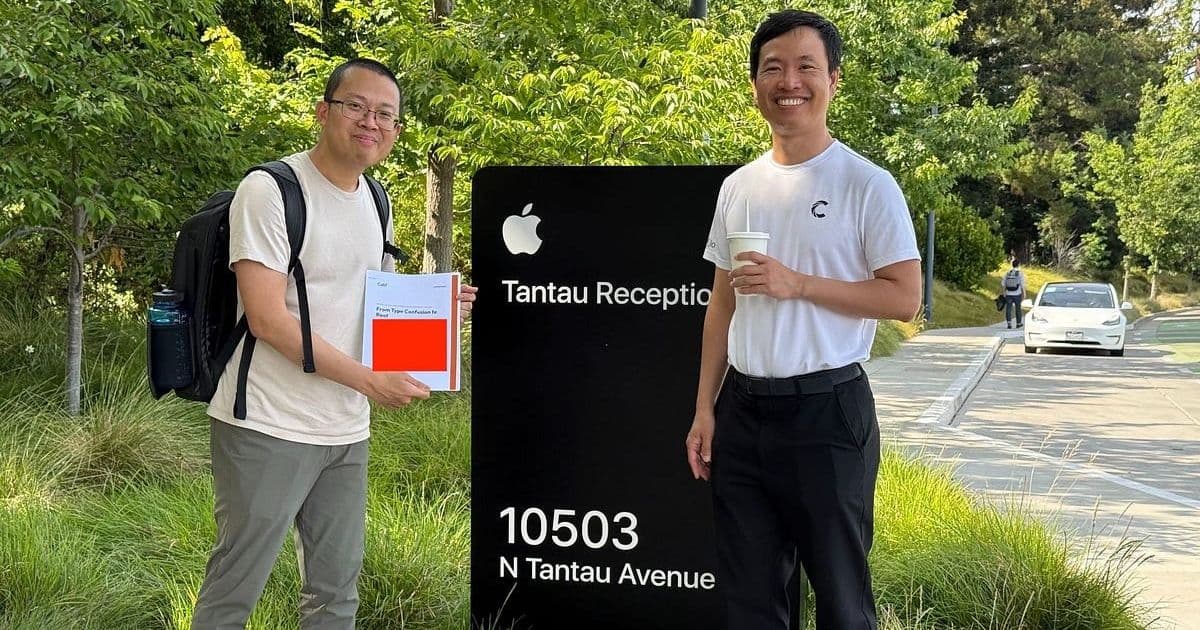
Calif’s team, together with Mythos Preview, built a data‑only kernel privilege‑escalation exploit for macOS 26.4.1 on Apple’s M5 silicon, bypassing the hardware‑assisted Memory Integrity Enforcement (MIE). The five‑day effort illustrates how AI‑augmented research can erode even the most expensive mitigations, and it foreshadows a new era of vulnerability discovery.
When Apple’s MIE Met AI‑Assisted Exploit Crafting
Apple invested half a decade and billions of dollars into a suite of mitigations that make memory‑corruption attacks on its devices appear almost impossible. The centerpiece of that effort for the M5 and A19 silicon is Memory Integrity Enforcement (MIE), a hardware‑assisted system built on ARM’s Memory Tagging Extension (MTE). MIE tags each allocation with a random identifier and checks that identifier on every memory access, turning many classic exploitation techniques into dead ends.
In early May 2026 a small research group from Calif, supported by the AI‑driven platform Mythos Preview, demonstrated that even MIE can be circumvented. Within five days they produced a working, data‑only kernel local‑privilege‑escalation chain for macOS 26.4.1 (build 25E253) running on bare‑metal M5 hardware. The exploit starts from an unprivileged user, uses only ordinary system calls, and ends with a root shell. The full 55‑page technical report will be released after Apple ships a fix, but the public announcement already raises several important points.
Core Argument
The central claim of Calif’s disclosure is that advanced AI‑assisted vulnerability research can defeat the most expensive hardware mitigations in a matter of days. The team’s success does not invalidate MIE as a concept; rather, it shows that when a novel class of bugs is discovered, the cost of bypassing the mitigation drops dramatically if the search space is explored with a model that has already learned the structure of similar problems.
Key Technical Elements
- Two‑stage vulnerability chain – The exploit hinges on a use‑after‑free in the kernel’s handling of a specific I/O control request and a separate out‑of‑bounds write in a network driver. Both bugs belong to well‑studied classes, which explains why Mythos could locate them quickly.
- Data‑only payload – Instead of injecting shellcode, the attackers manipulate kernel data structures to flip the credentials of the current process to UID 0. This approach sidesteps the need for executable‑memory bypasses, which MIE already blocks.
- MTE tag manipulation – The exploit deliberately corrupts the tag field of a heap object to match the expected tag of a later read, allowing the corrupted pointer to pass the hardware check. The technique leverages a subtle race condition in the tag‑allocation routine that was not covered by Apple’s threat model.
- AI‑driven bug discovery – Mythos Preview, after being trained on a corpus of known memory‑corruption patterns, generated candidate fuzzing inputs that exercised the vulnerable paths. Human researchers then validated and refined the findings, illustrating a productive human‑AI partnership.
Implications for Security Practice
- Mitigation is a moving target – Even the most costly hardware defenses can be rendered ineffective when new bug classes emerge that were not anticipated during design. Security teams must therefore adopt a layered strategy that includes rapid patch cycles and robust monitoring.
- AI as a double‑edged sword – Tools like Mythos can accelerate discovery of both defensive and offensive techniques. Organizations should consider integrating similar models into their own vulnerability‑management pipelines to stay ahead of adversaries.
- Economic shift in exploit development – Historically, building a kernel exploit for a flagship platform required large, well‑funded teams. The Calif episode suggests that a small, well‑coordinated group equipped with the right AI can achieve comparable results, potentially lowering the barrier to entry for sophisticated attackers.
Counter‑Perspectives
Some analysts argue that the impact of a single exploit chain is limited because Apple can issue a patch within weeks, and the exploit relies on a specific kernel version and hardware configuration. Moreover, the requirement for a local, unprivileged user means that the attack surface is narrower than a remote code‑execution scenario. Nonetheless, the fact that any kernel‑level breach is possible on a platform marketed as the most secure consumer device is a signal that the security community must reassess assumptions about hardware‑only defenses.
Looking Ahead
Calif’s forthcoming report will detail the exact sequence of system calls, the layout of the corrupted structures, and the precise timing windows exploited. Until then, the security community can draw two lessons: first, that continuous investment in detection and rapid response remains essential, and second, that AI‑augmented research will become a standard part of both offensive and defensive arsenals. Companies that treat AI as merely a productivity tool may find themselves outpaced by adversaries that treat it as a core capability for discovering the next class of vulnerabilities.
The story behind the meeting at Apple Park underscores a cultural shift as well. While many elite researchers prefer to remain anonymous, Calif chose a face‑to‑face handoff, hoping to cut through the noise of automated vulnerability submission pipelines. Whether that strategy will become more common remains to be seen, but it highlights the human element that still matters even in an increasingly automated security ecosystem.
Comments
Please log in or register to join the discussion