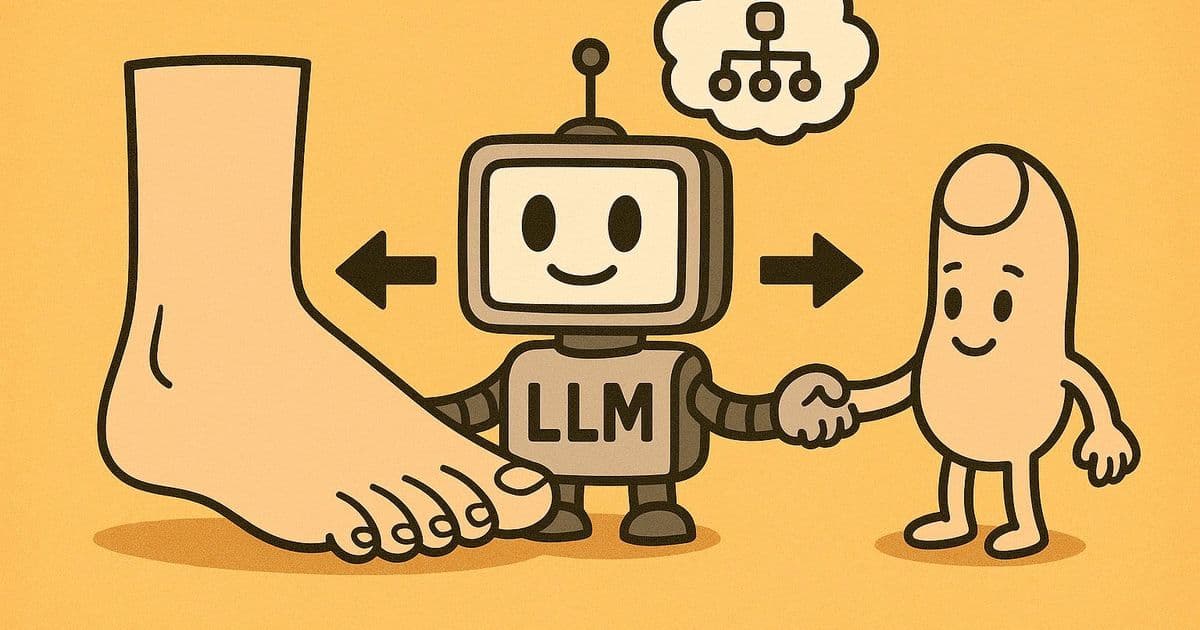
A tech executive leveraged ChatGPT as a real-time decision engine to challenge his father's emergency amputation prognosis. By extracting clinical data, decoding medical jargon, and identifying specialized clinics under time constraints, the LLM enabled a high-risk revascularization that saved the foot—at the cost of one toe. This case study reveals a 'Good Practice Loop' for augmenting human judgment with AI under pressure.
When Sebastian Galonska’s father faced emergency amputation due to an arterial blockage, the clinical team delivered a terminal prognosis: “The leg isn’t salvageable.” No alternatives, no explanations—just an imminent surgery. But Galonska, a CTO and systems thinker stationed 10,000 kilometers away, refused to accept the verdict without scrutiny. What followed was a real-world stress test for large language models (LLMs) in life-or-death decision-making.
The Diagnostic Black Box
With his brother on-site in Germany, Galonska orchestrated a tactical discharge to access the full diagnostic report. After OCR’ing the paper-based scans (a necessity in Germany’s medical bureaucracy), one critical phrase emerged: “lack of runoff.” The clinicians hadn’t explained it. ChatGPT decoded it instantly:
“In vascular medicine, ‘lack of runoff’ means no viable distal vessels exist to receive blood flow. This typically makes revascularization procedures like bypass or thrombectomy futile.”
This wasn’t just jargon translation—it exposed an unspoken assumption. While true for general practice, specialized centers often challenge this dogma. Galonska’s next prompt became urgent: “Identify clinics with published success in limb salvage despite no-runoff scenarios.”
The Constraint-Driven Triage
ChatGPT cross-referenced medical literature, hospital capabilities, and geolocation data under brutal constraints:
- ≤4 hours travel time
- On-site cardiac/vascular diagnostics
- Peer-reviewed salvage protocols
Within minutes, it filtered thousands of options into a prioritized shortlist—a task Galonska estimates would’ve taken days manually. One clinic agreed to attempt revascularization. With no time for formal transfers, the family assumed the risk: Galonska coordinated remotely while his brother raced across Germany with their father.
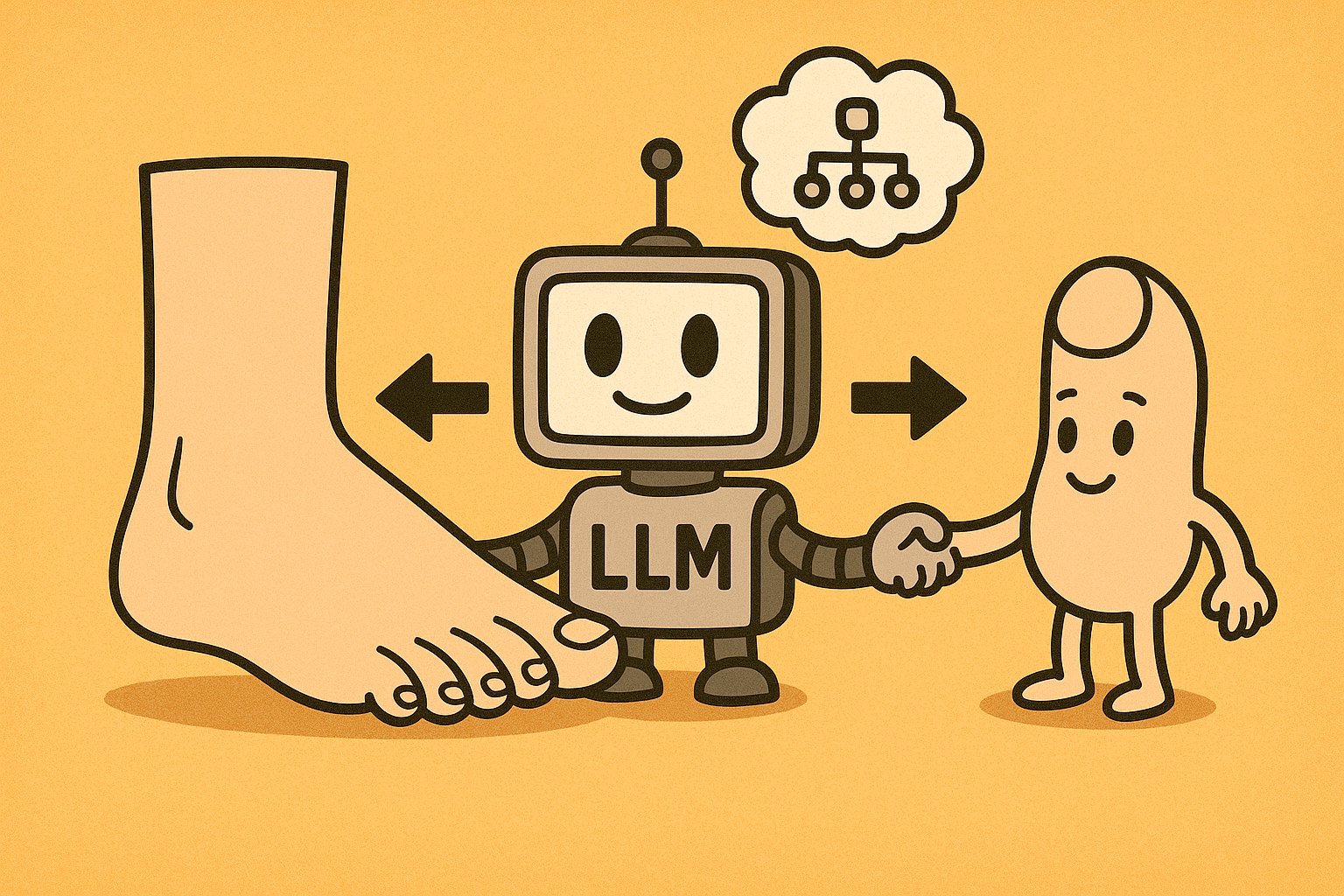
The result? Surgeons restored partial blood flow, saving the foot but sacrificing one toe. The limb—and future recovery options—remained intact.
The Good Practice Loop: Beyond Medical Emergencies
Galonska’s methodology mirrors robust LLM interaction patterns applicable to engineering and product design:
- Broad Exploration: “What’s possible?” (Identify salvage clinics)
- Constraint Injection: “Narrow by real-world limits.” (Travel time, facilities)
- Assumption Interrogation: “What’s being overlooked?” (Challenge ‘no-runoff’ fatalism)
- Alternative Scenarios: “What if X changes?” (If comorbidities worsen)
- Human Verification: Independent cross-checks for critical outputs
“This wasn’t about replacing doctors with AI,” Galonska notes. “It was about augmenting human reasoning under time compression. LLMs don’t give 100% answers—but they compress weeks of research into minutes when the clock is your enemy.”
The Engineering Parallel
Just as surgeons traded a toe for a foot, developers constantly sacrifice scope for time or perfection for viability. Galonska’s ordeal is a visceral reminder: all technical decisions are optimization problems under constraints. Whether saving limbs or shipping software, success hinges on rapidly accessing specialized knowledge, challenging defaults, and embracing calculated risks.
The real breakthrough? Demonstrating LLMs as crisis copilots—tools that parse ambiguity, optimize paths through chaos, and expand agency when systems fail. Not magic, but a hard-won collaboration between human intuition and machine scalability.
Source: How an LLM Traded a Toe for a Foot by Sebastian Galonska
Comments
Please log in or register to join the discussion