Chargeback rates are a narrow view of fraud loss. Alexander Hall of IPQS explains how hidden fraud impacts revenue, operations, and brand trust, and offers a set of broader metrics and practical steps to build a fraud program that protects growth.
Why Chargebacks Are Just One Piece of the Fraud Puzzle
Sponsored by IPQualityScore (IPQS) – May 22, 2026
For most teams, the health of a fraud program is reduced to a single number: the chargeback rate. The metric is visible, painful, and tied directly to card‑network thresholds, so it naturally becomes the north star. But focusing only on chargebacks hides a much larger set of risks that erode revenue, increase operational costs, and damage brand trust.
The hidden cost of “non‑chargeback” fraud
Alexander Hall, VP of Fraud Strategy at IPQS, recently sat down with Jordan Harris of The Fraud Boxer to discuss why chargebacks are only the tip of the iceberg. He points out that many loss events never surface as a dispute:
- Account takeovers (ATOs) on e‑commerce and airline sites lead to churn, higher acquisition costs, and stolen loyalty points.
- Synthetic identity fraud is rising in banking, allowing criminals to open accounts with fabricated data that later generate large losses.
- Fraudulent withdrawals on iGaming platforms occur after attackers change account details, bypassing traditional payment‑screening.
- Identity theft on money‑movement services fuels the creation of bogus businesses that siphon funds.
These scenarios eat into margins just as much as a disputed charge, yet they rarely appear in chargeback reports. When they’re invisible, they can’t inform future risk decisions.
Opportunity cost: the revenue you never earn
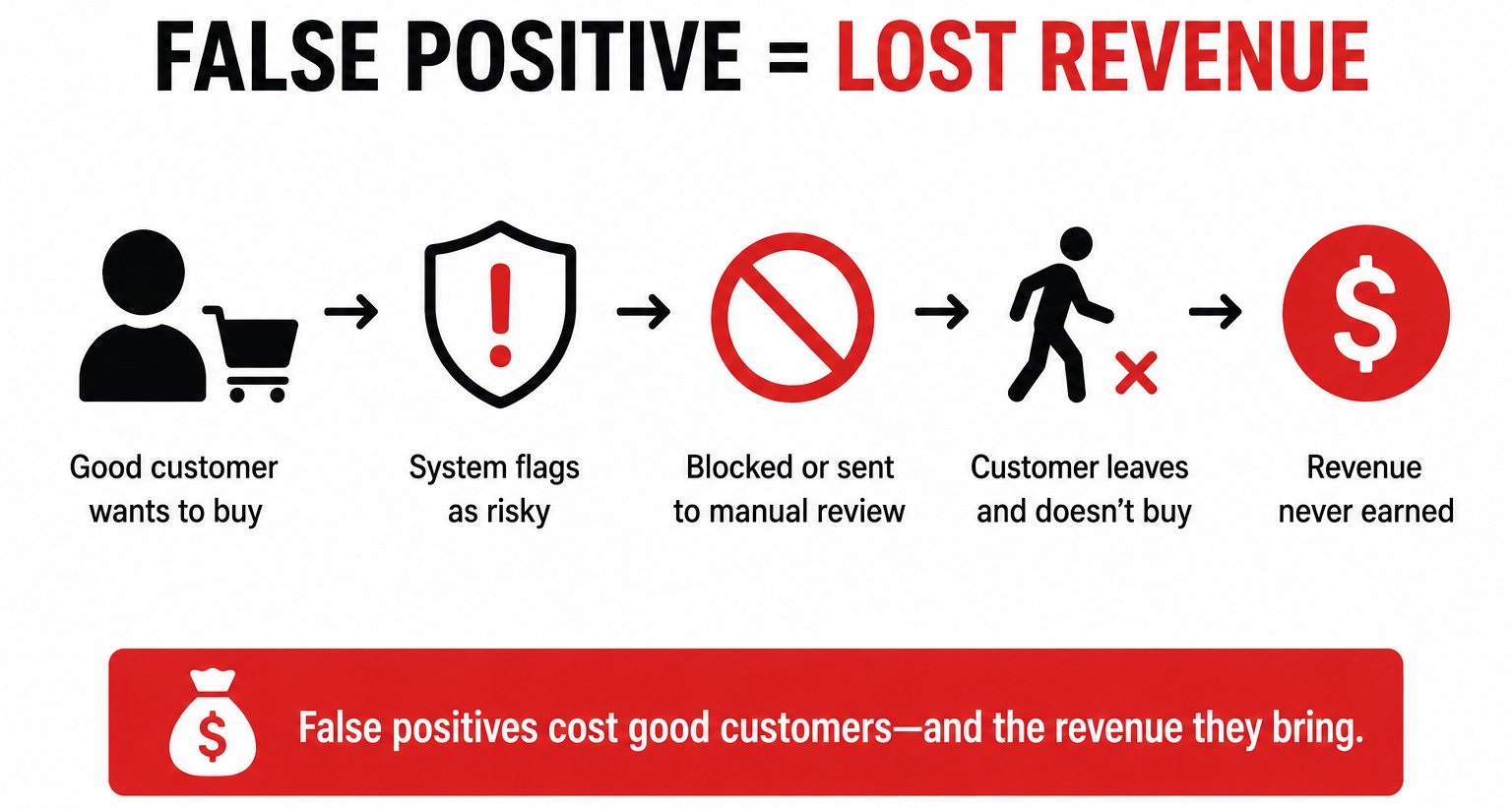
A strict rule set may keep fraudsters out, but it also blocks legitimate shoppers. False positives—legitimate customers declined because their IP, device, or email looks “risky”—are a silent revenue drain. A shopper who abandons a cart after a hard decline is unlikely to return, and the loss is never captured in a chargeback metric.
“Accurate risk scoring is as valuable as catching fraud itself,” Hall says. “If you can shave even a fraction of a percent off false positives, you’ll see a measurable lift in top‑line revenue.”
Operational drag: manual reviews and support tickets
Every order that lands in a manual‑review queue adds labor cost, slows fulfillment, and creates friction for the buyer. Support teams also see a surge in tickets related to:
- Refund requests for fraudulent purchases
- Account lockouts after ATO attempts
- Disputes over promotional abuse
For high‑volume merchants, the cumulative cost of these activities can rival the direct loss from fraud.
Brand and customer‑experience risk
When users see spam, scams, or repeated login problems, confidence erodes. A compromised account can turn a loyal customer into a vocal critic, and negative word‑of‑mouth can throttle organic growth.
Looking beyond chargebacks: metrics that matter
IPQS recommends treating chargebacks as one outcome among many. A mature fraud program tracks the following alongside chargebacks:
| Metric | Why it matters |
|---|---|
| Good‑customer approval rate | Shows how many legitimate shoppers are getting through. |
| False‑positive (good‑customer decline) rate | Directly ties to lost revenue and churn. |
| Manual‑review rate & average decision time | Highlights operational efficiency and friction points. |
| Value of fraud‑related refunds or credits | Captures losses that never become chargebacks. |
| Abuse rate for promotions, referrals, loyalty programs | Prevents revenue leakage from coupon‑stacking or fake referrals. |
| Account‑takeover incidents & new‑account abuse volume | Early indicator of credential‑stuffing attacks. |
By visualizing these metrics together, teams can see whether their controls are truly supporting growth or simply shifting loss from one bucket to another.
How IPQS measures fraud impact
IPQS positions itself as a visibility layer rather than a blunt‑force blocklist. Its risk engine evaluates a user across multiple signals—IP reputation, device fingerprint, email history, and historic abuse patterns—before a payment is even processed.
Key benefits for a fraud team:
- Catch fraud earlier – Identify risky behavior before a charge is authorized, reducing the chance of a dispute.
- Reduce friction – Accurate scores let you pass low‑risk shoppers without extra steps, lowering false positives.
- Expose abuse patterns – Detect coordinated attacks on accounts, promotions, or traffic sources that would otherwise be invisible.
- Feed data back into decisioning – Align external risk scores with internal outcomes to evolve a holistic fraud‑impact model.
“When risk scores and internal outcomes line up, you move from ‘chargebacks this month’ to ‘total impact on revenue, costs, and growth,’” Hall explains.
Questions to spark an internal conversation
If you’re ready to broaden your view of fraud, start with these prompts:
- Where are we writing off loss that isn’t labeled as fraud?
- How many legitimate orders are delayed or declined by current controls?
- Which marketing or growth programs see the highest abuse rate?
- How often do fraud cases generate support tickets or manual work for other teams?
- Do risk, product, finance, and marketing share a common view of fraud impact?
Answering these questions helps shift the focus from reactive dispute handling to proactive risk strategy.
Turning broader insight into better decisions
Recognizing that chargebacks are only one symptom allows you to redesign the fraud program around outcomes that matter to the business:
- Protect the customer experience – Keep checkout fast for low‑risk shoppers.
- Enable safe scaling – Give marketing confidence to invest in growth channels without fearing hidden abuse.
- Provide leadership with a full‑picture KPI set – Show how risk controls affect revenue, cost, and brand health.
Take the next step
Ready to see the difference when you prevent fraud before it starts? Try IPQS’s easy‑to‑integrate API and explore the full suite of risk signals.
Sponsored and written by IPQS.
Comments
Please log in or register to join the discussion