An examination of why OpenAI might consider developing a Slack-like communication platform, analyzing the market opportunity, technical feasibility, and strategic alignment with OpenAI's existing products and vision.
The recent discourse around OpenAI's potential product direction, particularly Sam Altman's public invitation for suggestions on what to build next, presents an interesting opportunity to evaluate strategic possibilities. Among the various suggestions, the proposal for OpenAI to develop a Slack-like communication platform warrants careful consideration given the current market dynamics and OpenAI's existing capabilities.
Market Opportunity: Slack's Struggles
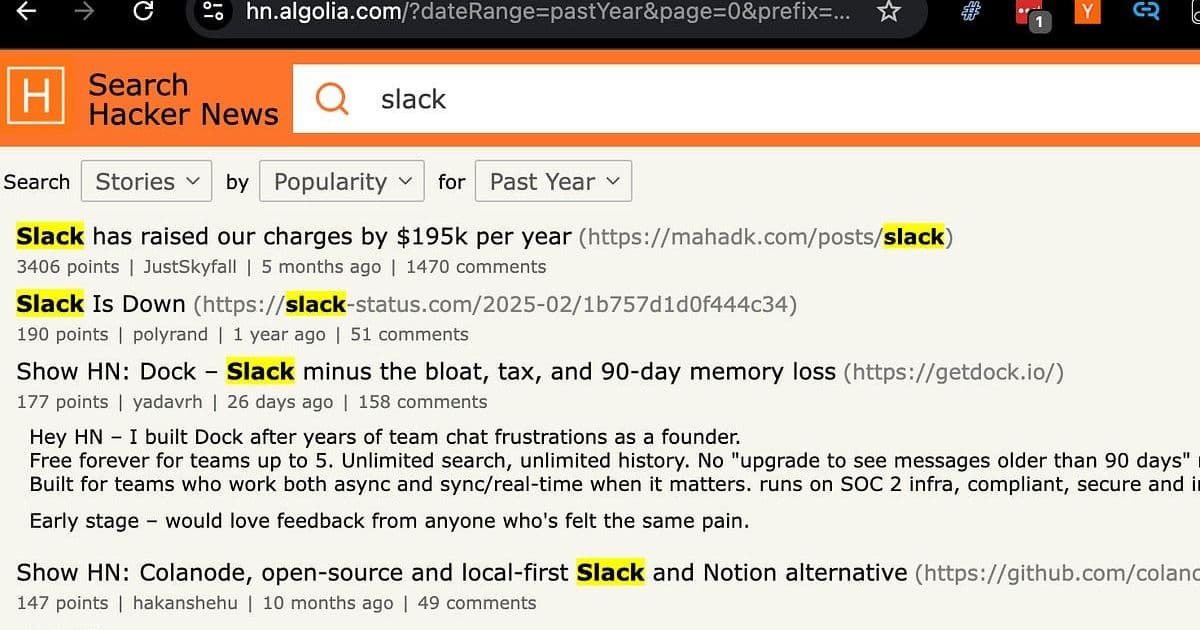
Slack, since its acquisition by Salesforce for $27.7 billion in 2021, has faced numerous challenges that have created an opening for competitors. The platform has experienced:
- Gradual price increases with limited corresponding value additions
- Difficulty implementing compelling AI features (Slack AI remains difficult to discover and personalize)
- Frequent service outages affecting reliability
- Persistent complaints from developers about API costs and restrictive permissions
- User dissatisfaction with channel fatigue and inadequate notification management
These issues have created a market opportunity despite Slack's ubiquity in tech organizations. The combination of widespread adoption and growing dissatisfaction presents an attractive entry point for a well-designed alternative.
Strategic Alignment with OpenAI's Capabilities
Building a Slack-like platform aligns strategically with OpenAI's existing product portfolio and technical strengths:
1. Natural Extension of ChatGPT
OpenAI has already experimented with group chat functionality in ChatGPT. A dedicated workplace communication platform would allow for deeper integration of these capabilities into a professional context. The transition from consumer chat to workplace collaboration represents a logical progression.
2. Enterprise and Coding Synergies
The proposal particularly resonates with OpenAI's push into enterprise solutions and coding assistance. A workplace communication platform would:
- Provide an ideal interface for AI coding assistants to collaborate with human developers
- Enable better context sharing between team members and AI agents
- Create a natural environment for multi-agent workflows
3. Competitive Positioning Against Anthropic
Anthropic has pursued a more cohesive strategy with its unified app approach (Chat, Cowork, and Claude Code). OpenAI currently maintains separate applications for different functions, creating a fragmented user experience. A unified workplace platform would allow OpenAI to retake the initiative in this space.
Technical Implementation Considerations
The technical feasibility of OpenAI building a Slack-like platform is strengthened by several factors:
1. Existing Infrastructure
OpenAI already possesses the foundational technologies needed:
- Language models for understanding and generating natural language
- API development capabilities
- Authentication and user management systems
- Real-time communication protocols
2. AI-Enhanced Features
OpenAI could differentiate through AI-powered features that Slack has struggled to implement effectively:
- Intelligent conversation summarization and prioritization
- AI-powered meeting notes and action item extraction
- Context-aware suggestions and recommendations
- Multi-agent collaboration interfaces
3. Integration with Existing Products
The platform could seamlessly integrate with OpenAI's existing products:
- Direct access to GPT models within conversations
- Code sharing and execution environments
- File processing and analysis capabilities
- Custom agent workflows
Potential Challenges and Limitations
Despite the strategic appeal, several challenges should be considered:
1. Market Saturation and Switching Costs
The workplace communication market is already crowded with established players like Slack, Microsoft Teams, and Discord. Organizations may be reluctant to switch due to:
- Existing integrations and workflows
- Data migration challenges
- User familiarity with current platforms
2. Operational Complexity
Building and maintaining a real-time communication platform at scale presents significant operational challenges:
- Infrastructure reliability requirements
- Real-time performance guarantees
- Security and compliance considerations
- Global deployment and latency optimization
3. Differentiation Beyond AI Features
While AI capabilities provide a strong differentiator, OpenAI would need to address fundamental workplace communication challenges to succeed:
- Channel organization and information overload
- Search and discoverability
- Integration with existing tools and workflows
- Mobile experience and reliability
Conclusion
The proposal for OpenAI to build a Slack-like platform represents a strategically coherent opportunity that leverages the company's existing strengths while addressing real market needs. The combination of Slack's market struggles, OpenAI's technical capabilities, and the natural synergy between workplace communication and AI assistants creates a compelling case for exploration.
However, success would require more than just AI features—it would necessitate a thoughtful approach to workplace communication fundamentals, user experience design, and operational excellence. The potential rewards include deeper customer relationships, expanded enterprise presence, and a platform for future AI agent collaboration, but the challenges should not be underestimated.
For OpenAI, this represents an opportunity to not just build another product, but to potentially redefine workplace communication in the age of AI. The question is whether the company has the organizational focus and long-term commitment to see such an ambitious project through to success.
Comments
Please log in or register to join the discussion