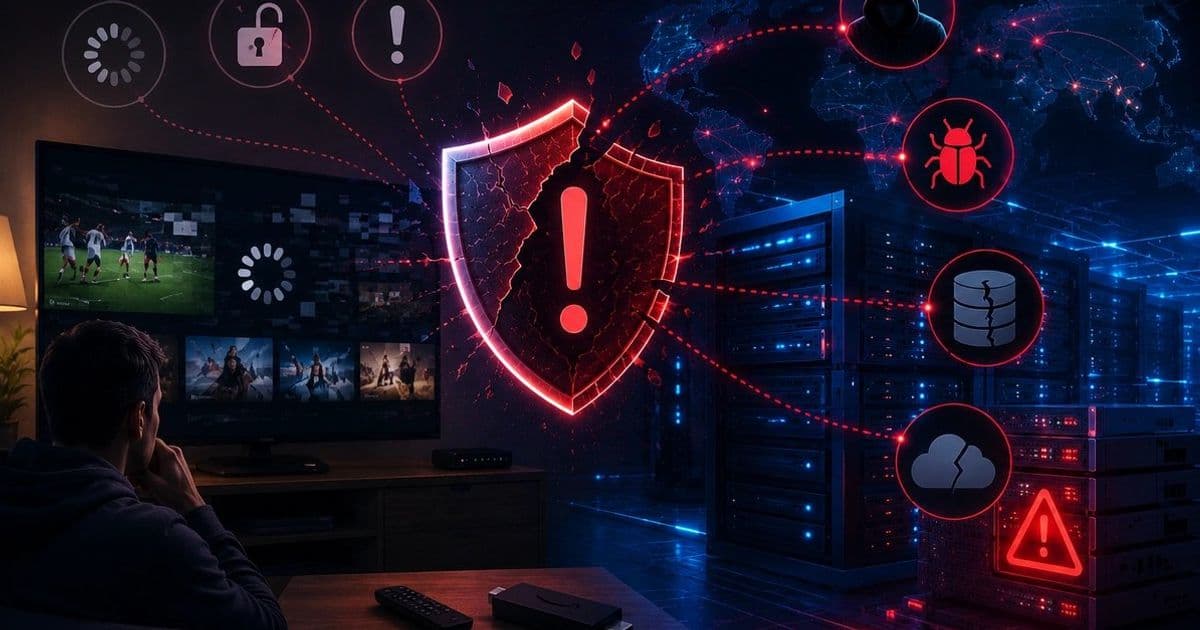
As IPTV systems grow more complex, security vulnerabilities in backend infrastructure increasingly impact user experience through buffering, outages, and service failures. This article examines the fragile chain of components that make modern streaming platforms vulnerable and the operational trade-offs operators face when balancing security with uptime.
Why Security Vulnerabilities Are Becoming a Bigger Problem for IPTV Infrastructure
Many IPTV users attribute reliability problems to overloaded servers or poor internet connections. However, over the past few years, a more insidious issue has quietly gained prominence: infrastructure security. When critical server vulnerabilities emerge—particularly those affecting Linux systems, web panels, or streaming middleware—IPTV platforms experience immediate consequences. Users typically notice these issues as buffering, authentication failures, or complete service outages. Recent discussions around CVE-2026-31431 highlight how dependent modern streaming platforms are on backend stability, even when users never interact with that layer of the stack.
The Fragile Chain of IPTV Components
People often simplify IPTV to "just a playlist," but the reality involves a complex ecosystem of interconnected systems. A typical IPTV deployment includes:
- Reverse proxies
- Load balancers
- Transcoding nodes
- Authentication APIs
- CDN routing
- Database servers
- Stream caching systems
- Reseller panels
- Custom middleware
When a single critical component becomes vulnerable, the entire ecosystem can destabilize rapidly. This vulnerability is amplified when providers delay patching systems due to prioritizing uptime over maintenance windows.
How Security Issues Manifest to End Users
A common user perspective is: "I'm just watching streams—why should I care about server CVEs?" The answer lies in how infrastructure problems eventually become user problems. Security incidents typically surface through these customer-facing symptoms:
| User Symptom | Possible Backend Cause |
|---|---|
| Random buffering | Overloaded mitigation systems |
| Login failures | Disrupted authentication services |
| Channels disappearing | Backend routing issues |
| Playback instability | Emergency infrastructure changes |
| Entire provider offline | Compromised server/network |
Users rarely receive technical explanations, but the effects become visible quickly. The connection between backend vulnerabilities and front-end experience is direct and often immediate.
Aging Infrastructure Challenges
The IPTV ecosystem is unique in its reliance on aging deployments. It's common to find providers using:
- Older Ubuntu versions
- Outdated PHP panels
- Legacy Xtream-style middleware
- Unmanaged dedicated servers
- Poorly isolated containers
This creates a larger attack surface than many mainstream SaaS platforms. Unlike enterprise streaming companies, smaller IPTV operators often lack:
- Dedicated security teams
- Automated patch management
- Incident response workflows
- Proper staging environments
As a result, updates frequently happen late—or not at all. The security debt accumulates silently until a vulnerability is exploited.
The "Always Online" Dilemma
Streaming services exhibit unusual resistance to downtime. Even brief maintenance windows can trigger:
- Customer complaints
- Refund requests
- Reseller pressure
- Subscriber churn
Consequently, some providers postpone critical updates simply to avoid interruptions. This creates a dangerous operational tradeoff: patch now and risk temporary instability, or delay updates and risk compromise later. Many operators choose the latter, inadvertently increasing the probability of larger outages when vulnerabilities are eventually exploited.
Beyond Traditional Hacking Threats
Modern infrastructure attacks are often less dramatic than commonly portrayed. The most significant operational risks today include:
- Service degradation
- Resource exhaustion
- Network abuse
- Credential leaks
- API exploitation
- Bot traffic amplification
For streaming systems, even partial instability can severely impact playback quality. Users don't necessarily need a "catastrophic breach" to detect something is wrong. Subtle performance degradation often indicates underlying security issues that haven't yet been fully exploited.
Operational Priorities for IPTV Providers
From an operational perspective, several areas are consistently underestimated across smaller streaming platforms:
Patch Management
Many vulnerabilities become dangerous simply because updates are delayed too long. Establishing a regular patch cadence—even for minor updates—can significantly reduce risk. The challenge lies in balancing patch testing with the need for continuous availability.
Infrastructure Segmentation
Authentication systems, panels, and stream nodes shouldn't all reside in the same exposed environment. Network segmentation can contain breaches and prevent lateral movement. This requires careful planning during initial setup but pays dividends during security incidents.
Rate Limiting & Abuse Protection
A surprising number of IPTV APIs remain overly exposed. Implementing proper rate limiting, authentication, and input validation can prevent many common attacks. This includes protecting against credential stuffing attacks that target authentication endpoints.
Monitoring and Detection
Providers often discover problems only after users report outages. Implementing comprehensive logging, monitoring, and alerting can identify suspicious activity before it impacts service. Key metrics include authentication failures, unusual API patterns, and resource utilization anomalies.
User Considerations
While regular users can't patch backend infrastructure themselves, several practical measures can improve their experience:
- Avoid sharing credentials publicly
- Use strong passwords on IPTV panels/apps
- Be cautious with unofficial APKs
- Keep Firestick/Android apps updated
- Use VPNs when privacy matters
- Expect instability from providers with poor operational practices
Reliability is often closely tied to how professionally the backend infrastructure is maintained. Users may not understand the technical details, but they can recognize providers that maintain stable, secure services.
The Evolving Threat Landscape
As IPTV systems continue to evolve, new challenges emerge. The increasing use of:
- Cloud-based streaming infrastructure
- Multi-CDN architectures
- AI-powered content recommendation
- Decentralized streaming protocols
Each of these technologies introduces new security considerations. For example, cloud environments require careful configuration to avoid misconfigured storage buckets, while multi-CDN setups increase the attack surface through additional endpoints.
Conclusion
Streaming reliability and infrastructure security are becoming increasingly intertwined. As IPTV systems grow more complex, vulnerabilities affecting Linux servers, middleware, APIs, or authentication layers have visible downstream effects on everyday users—even if they never encounter the technical details.
Operators face difficult choices between maintaining uptime and applying critical security patches. The most successful providers implement robust security practices without compromising service quality, recognizing that security and reliability are complementary goals, not opposing priorities.
For those interested in the specific technical details of how vulnerabilities like CVE-2026-31431 might impact IPTV infrastructure, a deeper breakdown is available at WedoStreaming's analysis.
As streaming continues to evolve, the connection between backend security and user experience will only strengthen. Providers that invest in comprehensive security practices while maintaining service reliability will be best positioned to handle the increasingly complex threat landscape.
Comments
Please log in or register to join the discussion