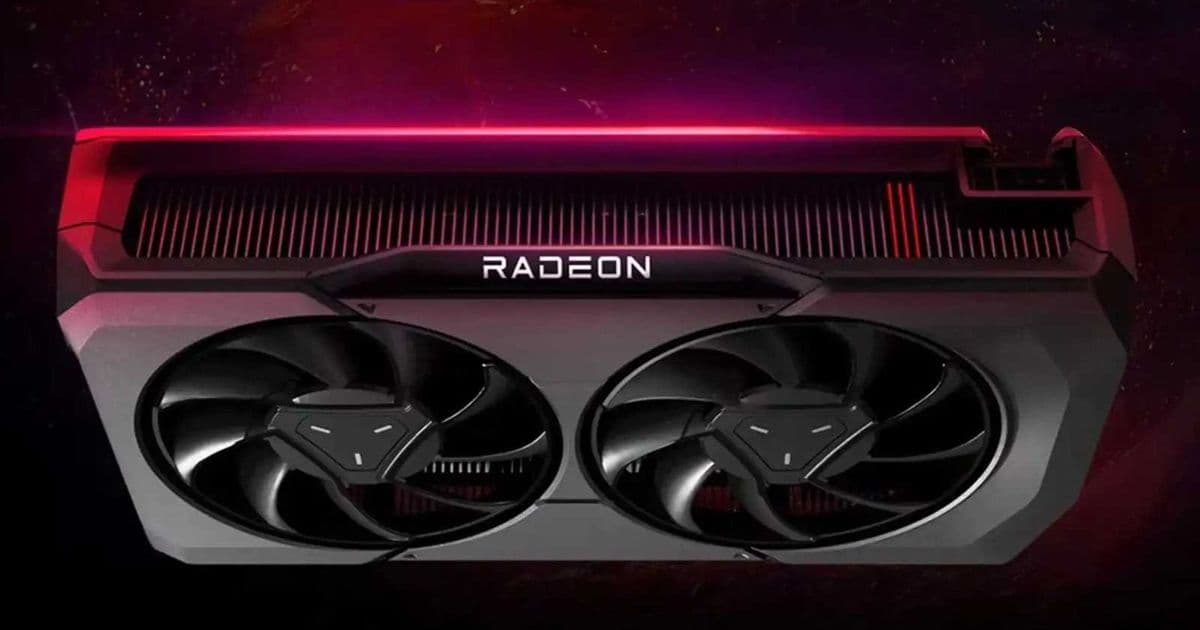
AMD officially announced the expansion of FSR 4.1 upscaling technology to RDNA 3 (RX 7000-series) and RDNA 2 (RX 6000-series) Radeon GPUs, following months of community outcry and unofficial implementations. The move extends the useful life of older Radeon cards while maintaining AMD's competitive position in the gaming GPU market.
AMD has officially announced that its FSR 4 upscaling technology will be extended to Radeon RX 7000-series and RX 6000-series graphics cards, bringing improved visual fidelity to millions of existing GPU owners. The announcement, made by AMD VP Jack Huynh, confirms that FSR 4.1 will arrive for RDNA 3 cards in July 2025, with RDNA 2 support following in early 2027.
Technical Specifications and Architecture
FSR 4 represents AMD's latest spatial upscaling technology, leveraging AI-enhanced algorithms to render games at lower resolutions and then intelligently reconstruct the image at higher resolutions. The technology was initially developed to take advantage of RDNA 4's accelerated FP8 hardware, but AMD has developed an INT8 version compatible with previous generations.
The FSR 4.1 iteration introduces several key improvements over its predecessor:
- Reduced blurring and smearing effects
- Enhanced detail retention on thin lines and distant objects
- Finer particle effects
- Significantly improved temporal stability with less shimmer on object edges
Community testing of the leaked INT8 FSR 4 code revealed a performance penalty of approximately 10-20% compared to FSR 3 on RX 6000-series cards. RDNA 3 cards are expected to incur a lower performance cost due to their more advanced architecture. Despite these costs, the quality-to-speed ratio of FSR 4.1 appears to justify the trade-off for most gaming scenarios.
Market Context and Competitive Positioning
The expansion of FSR 4 support comes at a critical time for AMD's GPU division. The company has increasingly focused on AI accelerators, a far more lucrative market than consumer graphics cards. By extending advanced features to older hardware, AMD demonstrates its commitment to its existing customer base while positioning itself against Nvidia's dominant DLSS technology.
The move also responds to community pressure that intensified after an FSR 4 source code leak in August 2025 revealed AMD had created an INT8 version compatible with older cards. Community tools like Optiscaler already enabled unofficial FSR 4 support on older Radeons, creating an ongoing demand for official support that AMD has now addressed.
AMD's potential decision to open-source FSR 4 could further strengthen its position in the upscaling market. Open-sourcing would allow developers to optimize the technology for various use cases and potentially accelerate adoption across different platforms. This strategy mirrors AMD's approach with other technologies like FFXIV Super Resolution and could help establish FSR as a more universal alternative to proprietary solutions.
Future Implications and Roadmap
The SDK update accompanying this announcement hints at significant developments for FSR frame generation, with multipliers potentially reaching 4-6x. This would bring feature parity with Nvidia's Multi-Frame Generation (MFG) technology, addressing one of the key differentiators between the two companies' upscaling solutions.
The staggered rollout timeline—with RDNA 3 support arriving first in July 2025 and RDNA 2 following in early 2027—suggests a deliberate approach to testing and optimization. This timeline allows AMD to gather performance data from the larger RDNA 3 install base before extending support to the older RDNA 2 architecture.

For consumers, this announcement extends the useful life of existing Radeon GPUs. RX 7000-series cards, launched in late 2022, will receive a significant visual upgrade with FSR 4.1. RX 6000-series cards, dating back to 2020, will gain similar capabilities in early 2027, potentially extending their relevance in the gaming market for several additional years.
The timing of RDNA 2 support coincides with the expected end of mainstream support for many games from that era, creating a natural lifecycle extension for hardware that might otherwise face obsolescence.
Industry Analysis
From an industry perspective, AMD's decision to extend FSR 4 to older architectures reflects broader trends in the semiconductor industry:
- The increasing importance of software and firmware updates in extending hardware value
- The growing significance of AI-accelerated features in consumer graphics
- The competitive pressure to match or exceed features offered by rival companies
This move also demonstrates AMD's understanding of its market position. While the company may trail Nvidia in raw performance metrics in many segments, extending advanced features across multiple generations helps maintain customer loyalty and value perception.
The technical challenge of implementing FSR 4 on INT8 hardware rather than the native FP8 hardware of RDNA 4 represents a significant engineering achievement. AMD's ability to maintain visual quality while adapting the technology to different architectures speaks to the flexibility of its upscaling approach.
As AMD continues to develop its AI accelerator business, maintaining a strong presence in the consumer gaming market remains strategically important. FSR 4's expansion to older Radeon cards reinforces this commitment while demonstrating that AMD can deliver advanced features across its product portfolio.
For more information about AMD's FSR technology, visit the official AMD FSR page.
Comments
Please log in or register to join the discussion