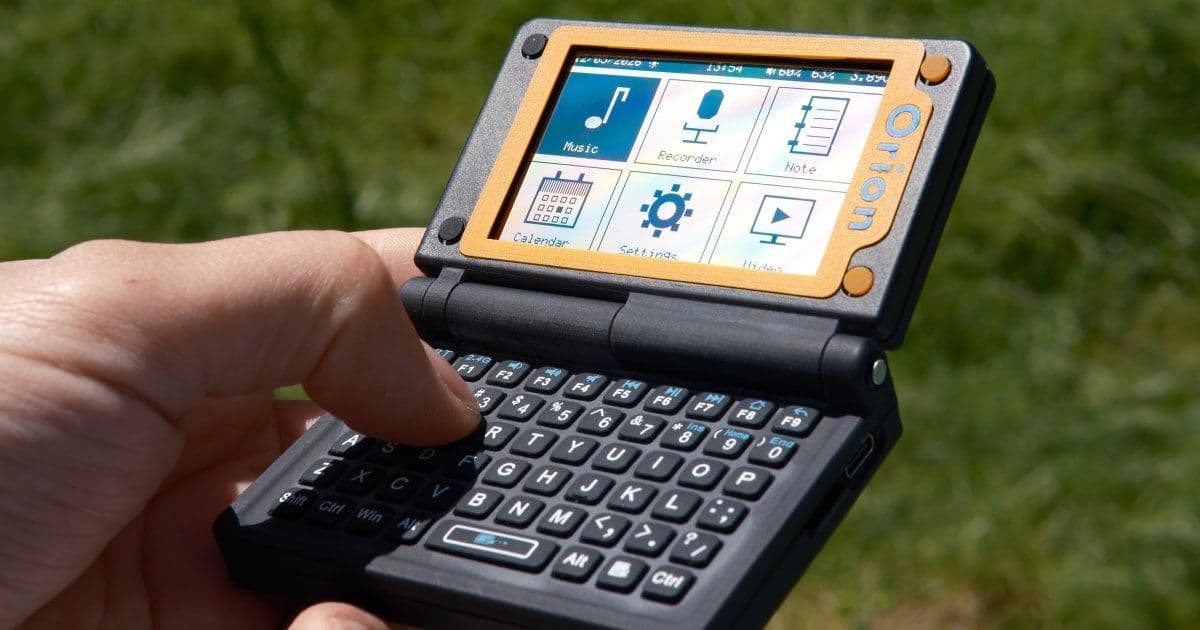
The Orion PDA combines vintage aesthetics with modern functionality, offering a sunlight-viewable display, thumb keyboard, and solar charging in a pocket-sized clamshell design.
The mobile computing landscape continues to evolve beyond smartphones and tablets with innovative devices like the Orion PDA, a fascinating blend of retro design and contemporary functionality. This pocket-sized computer brings back memories of early PDAs while incorporating modern technology that addresses specific needs for developers, outdoor enthusiasts, and anyone who values portable computing with minimal power requirements.
Design and Hardware Specifications
The Orion PDA immediately stands out with its distinctive retro-inspired design that resembles a cross between an advanced pager and a miniature laptop. The clamshell design houses a 3.16-inch Sharp LS032B7DD02 Memory LCD display with a resolution of 536 x 336 pixels in 1-bit black and white. This monochrome screen offers exceptional readability in direct sunlight, making it ideal for outdoor use where traditional LCD screens often become washed out.
At the heart of the device is an ST Micro STM32U575 microprocessor featuring an Arm Cortex-M33 core running at up to 160 MHz. While not as powerful as modern smartphone processors, this microcontroller provides sufficient processing power for the device's intended use cases while maintaining excellent energy efficiency.
Audio capabilities are handled by a Cirrus Logic WM8904 DAC, which includes a 3.5mm audio jack, built-in speaker, and digital MEMS microphone. This combination allows for basic audio recording and playback functionality, expanding the device's utility beyond simple text input.
Unique Features: Solar Charging and Sunlight-Readable Display
Two standout features set the Orion PDA apart from most portable computing devices:
Solar Panel: The back panel incorporates a solar cell for charging the device, enabling extended use in outdoor environments without requiring access to traditional power sources.
Sunlight-Readable Display: The Memory LCD technology doesn't require a backlight, making the display actually more visible in direct sunlight than indoors. This is a significant advantage for field workers, researchers, or anyone who needs to use a device in bright outdoor conditions.
The current prototype has a display driver issue causing flickering, but the developer is actively working to resolve this problem before production begins.
Software Capabilities and Limitations
The Orion PDA runs a relatively simple software stack optimized for its hardware constraints. Recent demonstrations have shown the device functioning as:
- A music player
- A note-taking device with a basic text editor
- A voice note recorder
- A video player (though limited to black and white or black and gray due to the 1-bit display)
The software appears to be custom-built rather than running a full mobile operating system like Android or iOS. This approach reduces resource requirements but also limits the device's flexibility. The 1-bit display presents both challenges and opportunities—while it can't display color or grayscale, it offers extremely low power consumption and excellent visibility in various lighting conditions.
Expansion Potential
One of the most exciting aspects of the Orion PDA is its expansion port, designed to accommodate optional modules that can enhance functionality. The developer has already announced that WiFi and LoRa modules are under development, which would significantly expand the device's connectivity options.
For mobile developers, this expansion capability suggests potential for creating specialized applications for specific use cases. The modular approach could allow the device to evolve from a simple note-taking device to a more comprehensive tool for field work, research, or specialized industrial applications.
Development Status and Crowdfunding Plans
The Orion PDA is currently a DIY project in the prototype phase. After resolving the display driver issue, the developer plans to manufacture a small batch of 20-30 units for beta testing before launching a crowdfunding campaign for larger production.
No pricing information has been released yet, but given the specialized components and relatively limited production run, the device is likely to be positioned as a premium niche product rather than a mass-market consumer device.
For developers and enthusiasts interested in this unique computing device, several options exist to stay updated:
- Sign up for notifications on the project website
- Follow the developer's YouTube channel for demo videos and progress updates
- Join the Discord community for discussions with other enthusiasts
Market Context and Positioning
The Orion PDA exists in an interesting space between modern smartphones and retro computing devices. It doesn't compete directly with smartphones in terms of processing power or app ecosystem, but instead targets specific use cases where its unique features provide advantages:
- Field research and data collection
- Outdoor activities where sunlight readability is crucial
- Emergency preparedness scenarios where power availability may be limited
- Niche applications requiring extreme battery life
- As a secondary device for specialized tasks
For mobile developers, the Orion PDA represents an interesting platform for developing specialized applications that can leverage its unique hardware characteristics. The combination of a sunlight-readable display, solar charging, and expansion potential could inspire creative solutions for industries ranging from agriculture to field research.
The device also taps into the growing trend of retro computing and nostalgia for simpler, more focused computing experiences. In an era of increasingly complex smartphones and tablets, the Orion PDA offers a refreshing alternative that prioritizes functionality over features.
Conclusion
The Orion PDA is a fascinating example of how computing devices can evolve beyond the smartphone form factor. By combining retro aesthetics with modern technology, addressing specific pain points like sunlight readability and battery life, and maintaining an open approach to expansion, the device has the potential to carve out a unique niche in the portable computing market.
As the project moves from prototype to production and eventually to market, it will be interesting to see how developers and enthusiasts adopt this device and what innovative applications emerge. For those who value utility over features and functionality over flash, the Orion PDA may represent the perfect pocket-sized computing solution.
Comments
Please log in or register to join the discussion