Microsoft has officially ended support for Windows 10, halting security updates for the operating system that still powers over 40% of Windows devices globally. Organizations and individuals must now choose between costly extended security patches, upgrading to Windows 11, or accepting significant cybersecurity risks in an increasingly hostile threat landscape.
Today marks a critical inflection point for enterprise security and personal computing: Windows 10 has officially reached end of support (EOS). As of October 14, 2025, Microsoft will no longer release security patches, feature updates, or technical assistance for the operating system that once dominated business and home environments. While existing installations will continue functioning, they become increasingly vulnerable to emerging threats—a dangerous prospect given Windows 10's persistent 40.5% market share among Windows systems.
The Unavoidable Cybersecurity Cliff Edge
Microsoft's support documentation states plainly: "Without continued software and security updates, your PC will be at greater risk for viruses and malware." This isn't theoretical. Unpatched vulnerabilities in an OS used by hundreds of millions become low-hanging fruit for ransomware gangs and state-sponsored actors—especially as legacy systems accumulate unaddressed flaws over time.
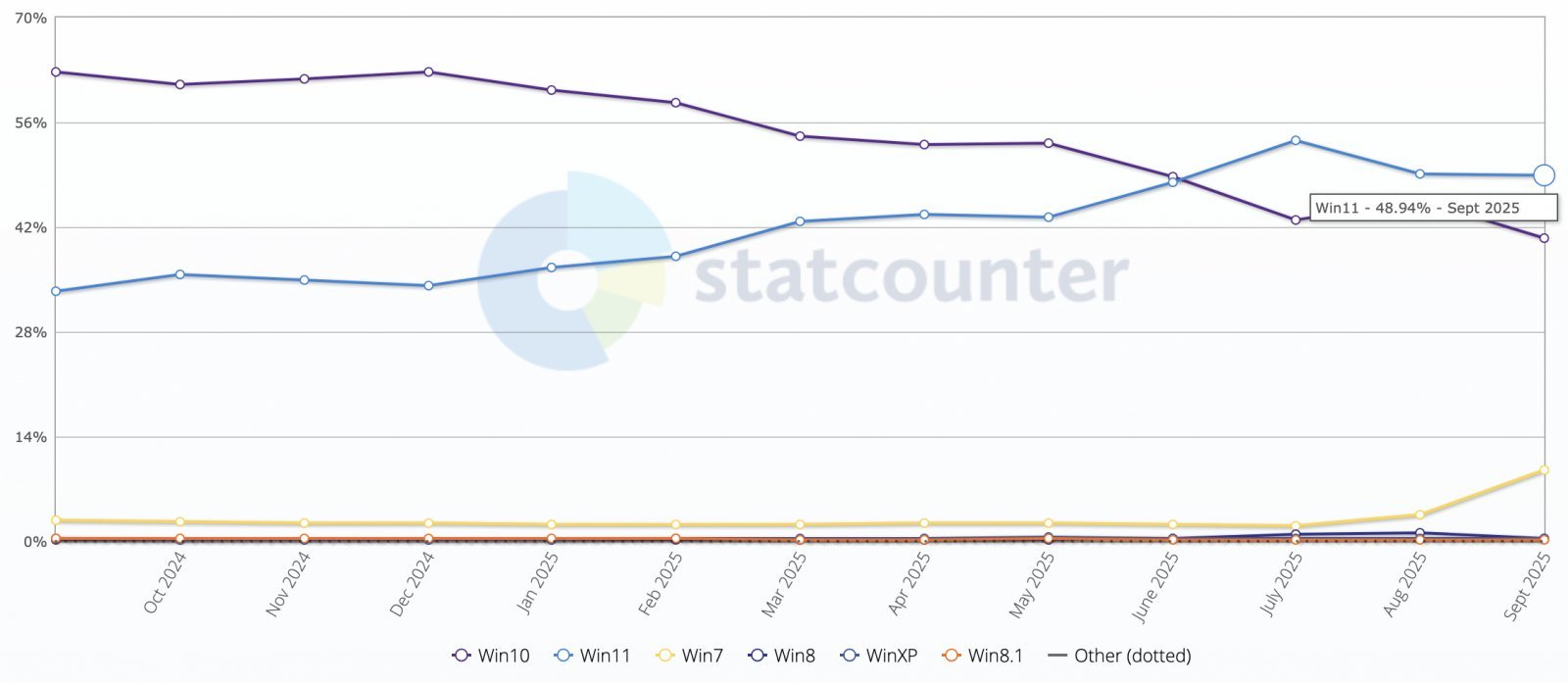 Windows market share evolution highlights Windows 11's gradual overtaking of Windows 10 (Source: Statcounter)
Migration Realities and Stopgap Measures
For those unable to immediately upgrade hardware to meet Windows 11's strict TPM 2.0 and CPU requirements, Microsoft offers temporary solutions with significant trade-offs:
Extended Security Updates (ESU):
- $30/year for consumers (free via Microsoft Rewards or enabling Windows Backup)
- $61/device/year for enterprises (doubling annually, totaling $427 over 3 years)
- European Economic Area residents gain free ESU access following regulatory pressure
Long-Term Servicing Channel (LTSC): Reserved for specialized devices like medical equipment, with support stretching to 2029 for certain versions. General users face compatibility limitations.
The Upgrade Imperative
Data reveals the urgency: While Steam's hardware survey shows 63% of gamers migrated to Windows 11, Statcounter confirms over 40% of all Windows machines remain on the now-unsupported OS. This creates a massive attack surface—particularly concerning for SMBs with limited IT resources. Microsoft's recommendation is unambiguous: Upgrade to a supported OS immediately.
The Bigger Picture: Endings and Ecosystems
Windows 10's sunset isn't merely a technical milestone—it exposes the friction in enterprise upgrade cycles and the real-world costs of hardware obsolescence. As security teams brace for inevitable exploit attempts against lingering Windows 10 instances, this transition underscores a harsh truth: In modern computing, expiration dates carry existential risk. Organizations delaying this migration aren't just postponing an IT project; they're gambling with their security perimeter.
Source: BleepingComputer
Comments
Please log in or register to join the discussion