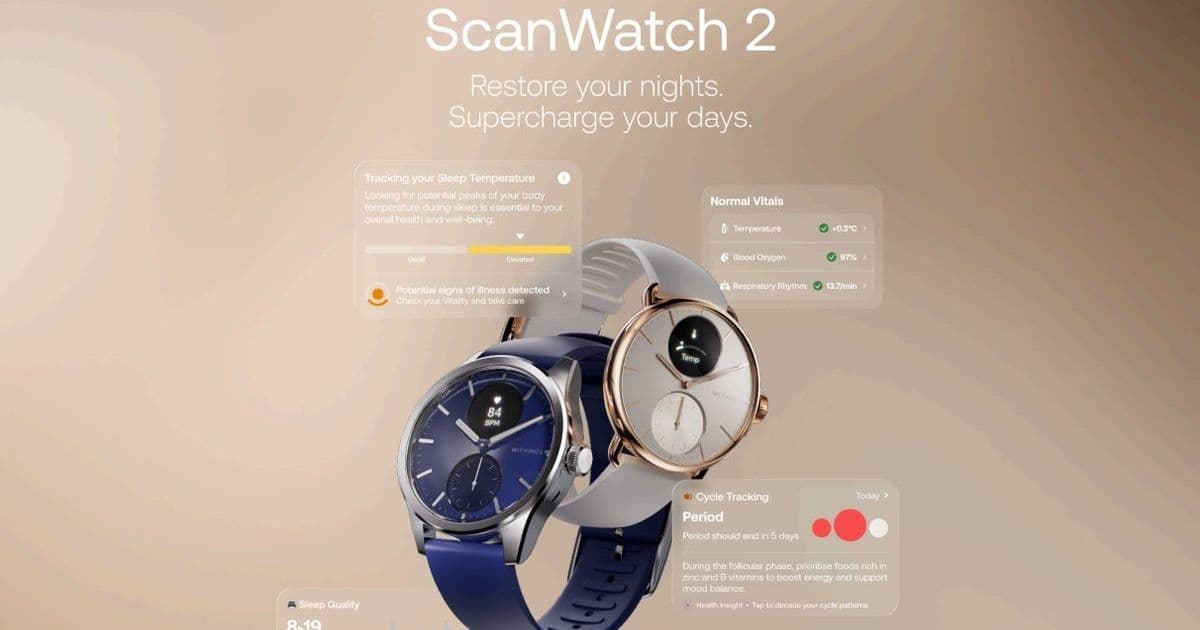
Withings' new ScanWatch 2 smartwatch introduces a 'Vitality Indicator' feature, leveraging AI to analyze 35 health parameters and warn users of potential illness onset or excessive fatigue. This predictive health monitoring tool, reminiscent of Oura's Symptom Radar, represents a significant push towards preventative wearables but requires a $10/month Withings+ subscription.
The race to develop wearables capable of detecting health issues before symptoms become apparent has intensified, with Withings launching its latest salvo: the ScanWatch 2 featuring an AI-driven Vitality Indicator. This flagship feature continuously monitors a complex array of physiological data – including heart rate variability, skin temperature, oxygen saturation, respiratory rate, sleep quality, and activity levels – to identify subtle deviations signaling potential illness or significant physical strain.
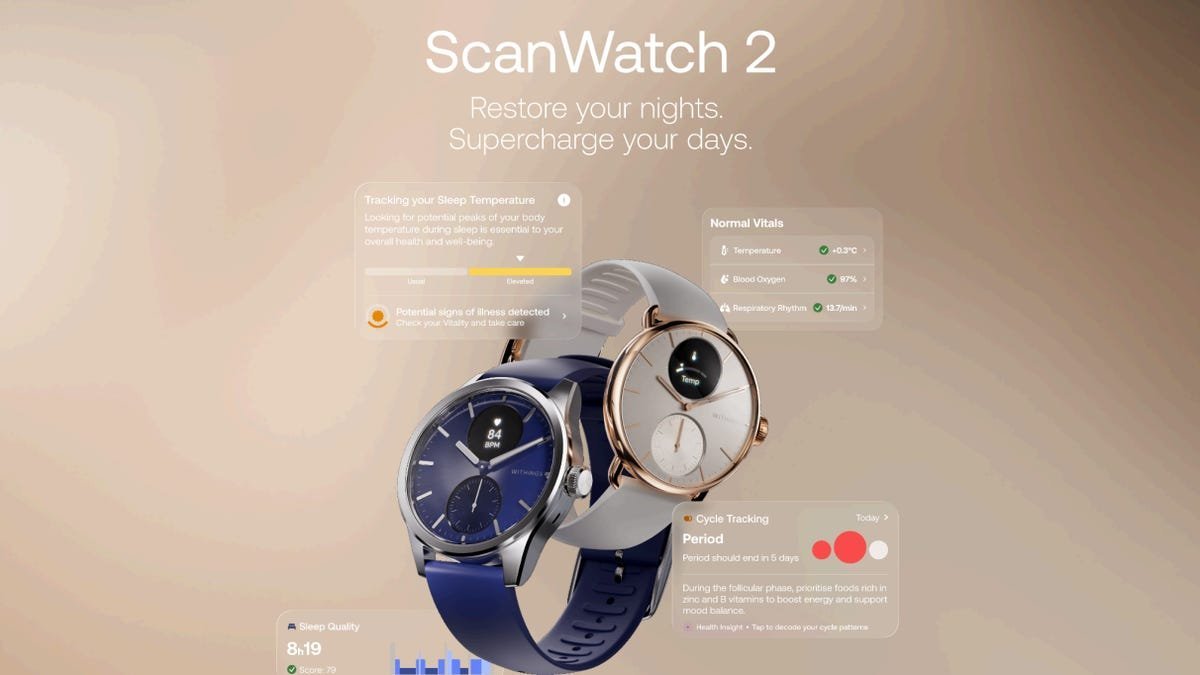 Caption: The Withings ScanWatch 2, featuring the new Vitality Indicator health prediction system. (Credit: Withings/ZDNET)
Leveraging predictive AI algorithms, the Vitality Indicator analyzes over 35 distinct health parameters, aiming to 'pinpoint fatigue causes' and alert users to early signs of conditions like infections or excessive stress. The goal, according to Withings founder Éric Carreel, is to enable a fundamental shift: "By integrating such innovations into daily routine, we can move from reactive treatment to true prevention, ultimately improving the quality of life."
This move aligns Withings directly with competitors like Oura and its established 'Symptom Radar' feature, which similarly tracks biometric anomalies to warn users of potential illness. Early user experiences with such systems, including reports from ZDNET, suggest they can provide valuable, actionable insights during periods of illness and recovery.
However, access to the ScanWatch 2's predictive prowess comes at an ongoing cost. The Vitality Indicator is exclusively available to Withings+ subscribers, priced at $10 per month or $100 annually. Purchasers of the ScanWatch 2 receive a complimentary one-month trial of Withings+, which also includes other premium features like the recently launched 'Cardio Check-Up' service connecting users with cardiologists for heart data reviews.
The introduction of the Vitality Indicator underscores a critical trend: smartwatches are evolving beyond simple activity trackers and heart rate monitors into sophisticated preventative health platforms. This shift relies heavily on advanced sensor fusion and AI interpretation of complex biometric data streams. While promising earlier intervention and improved wellness management, it also raises important questions about the accuracy of these predictions, the clinical validation of underlying algorithms, data privacy, and the implications of locking advanced health insights behind subscription paywalls. The ScanWatch 2 is available now, positioning predictive health monitoring as the new frontier in wearable technology.
Comments
Please log in or register to join the discussion