A 2D MMORPG that spent 15 years in development hell finally launched on Steam, climbing the charts with 300+ concurrent players, but its 'Mostly Negative' reviews reveal how outdated design and aggressive monetization can kill community goodwill before it even forms.
The 2D side-scrolling MMORPG WonderKing launched on Steam on January 12, 2026, after spending more than a decade in development limbo. For players who remember the original 2011 release, this should have been a triumphant return. Instead, the game's Steam review score sits at "Mostly Negative," and the reasons why expose a fundamental disconnect between what nostalgic players want and what modern gaming standards demand.
What's New in WonderKing
WonderKing presents itself as a classic 2D side-scrolling MMORPG where players create a hero to fight against an evil force threatening the world. The core loop follows familiar patterns: complete quests, earn rewards, strengthen your character, and progress through the story. The game offers multiple classes with unique skills and fighting styles, plus specializations that theoretically allow for varied gameplay approaches.
From a technical perspective, the game runs on what appears to be an updated version of its original engine. The side-scrolling perspective means players move horizontally through maps, with combat occurring in real-time using class-based abilities. Quest completion provides the primary progression path, with rewards designed to make characters progressively stronger.
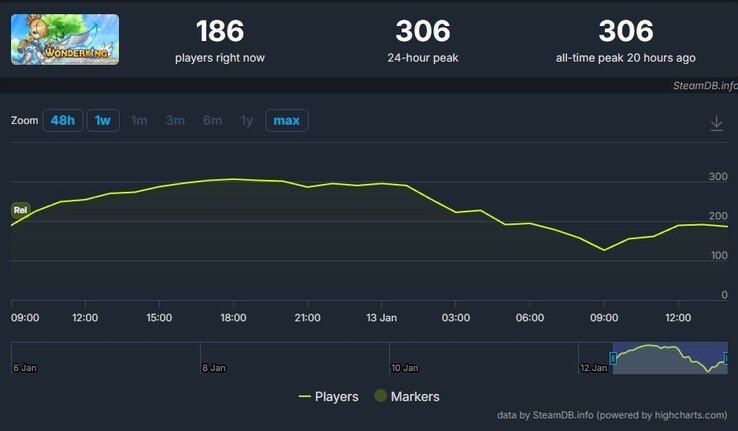
The SteamDB data shows the game has managed to attract a small but dedicated player base. During the last 24 hours, WonderKing peaked at 306 concurrent players, with 186 players actively in-game at the time of reporting. These numbers aren't massive, but for a niche 2D MMORPG that essentially nobody knew existed until last week, they represent a modest success in terms of initial interest.

Why Players Are Disappointed
Despite the initial player interest, the Steam review section tells a much darker story. The "Mostly Negative" rating stems from several technical and design issues that make the game feel more like a rushed mobile port than a polished PC MMORPG.
Text and UI Problems: Multiple reviewers complain that text in menus is difficult to read. This isn't just an aesthetic complaint—poor text readability makes core gameplay functions like inventory management, quest tracking, and skill descriptions frustrating to use. When basic UI elements fail at their primary function of conveying information, it undermines the entire experience.
Missing Resolution Options: The game apparently lacks proper resolution settings, resulting in a blurry, stretched appearance on modern monitors. This is particularly damaging for a 2D game where visual clarity is essential for both gameplay and aesthetic appreciation. Side-scrolling MMORPGs rely heavily on visual feedback for combat timing and environmental navigation, making blurry visuals a critical failure.
Pay-to-Win Concerns: Perhaps most damaging is the perception that players who spend money in the in-game store gain significant advantages over free players. While the exact mechanics aren't detailed in early reviews, any hint of pay-to-win design in a competitive or progression-focused MMO tends to drive away the player base quickly. Modern players have little patience for systems where spending money replaces skill or time investment as the primary progression path.
The Broader Context
What makes this situation particularly interesting is the timeline. WonderKing originally launched in 2011, then disappeared. The fact that it took 15 years to reach Steam suggests development troubles, funding issues, or both. When games spend that long in development, they often carry design decisions that were current when development started but feel dated upon release.
The "mobile game" complaints from players likely stem from this development gap. Modern mobile game UI design prioritizes large touch targets and simplified layouts, which can look cramped and poorly scaled when translated directly to PC without proper adaptation. The missing resolution options further support the theory that this was designed primarily for mobile platforms and ported to PC without adequate optimization.
The SteamDB chart data shows that WonderKing managed to climb the charts based on curiosity and nostalgia, but player retention appears weak. The gap between peak concurrent players (306) and current players (186) within a 24-hour window suggests many players tried the game, encountered issues, and left.
Who This Game Is For
Based on the current state, WonderKing is only suitable for a very narrow audience:
- Nostalgic players who have fond memories of the 2011 version and are willing to overlook technical issues
- 2D MMORPG enthusiasts who are desperate for any new entry in the genre, regardless of quality
- Extremely patient players who don't mind blurry visuals and poor UI design
For everyone else, the current version presents too many barriers. The pay-to-win concerns alone should make competitive players look elsewhere, while casual players will find better polished alternatives in both the 2D and 3D MMO spaces.
What Needs to Change
If the developers want to turn this around, they need to address three critical areas:
UI/UX Overhaul: Complete redesign of menu systems with proper text scaling and readability. This is non-negotiable for a PC game.
Resolution and Graphics Options: Full support for modern display resolutions with proper scaling algorithms. The game needs to look crisp on 1440p and 4K monitors, not just 1080p.
Monetization Transparency: Clear communication about what the cash shop offers and how it affects gameplay. If there are advantages for paying players, that needs to be either removed or made transparent before purchase.
The Verdict
WonderKing demonstrates that nostalgia alone cannot carry a game in 2026. Players who waited 15 years for this return have every right to feel disappointed. The game's technical issues and questionable monetization create a barrier that most potential players won't overcome.
However, the initial player count shows there's still interest in 2D side-scrolling MMORPGs. If the developers release substantial updates addressing the core complaints, they might salvage the situation. But based on the "Mostly Negative" reviews and the technical state at launch, players interested in this genre should probably wait for concrete improvements before investing their time.
The Steam page for WonderKing is available here, and the SteamDB tracking page shows real-time player statistics here. For players who want to follow the development updates, checking the game's Steam community forums would be the best way to monitor whether the developers respond to the criticism with meaningful patches.
WonderKing ultimately serves as a cautionary tale: releasing a game after a decade-plus development cycle requires more than just getting it on a digital storefront. Modern players expect modern standards, and nostalgia can only carry a title so far before technical problems and design decisions from a different era catch up to it.
Comments
Please log in or register to join the discussion