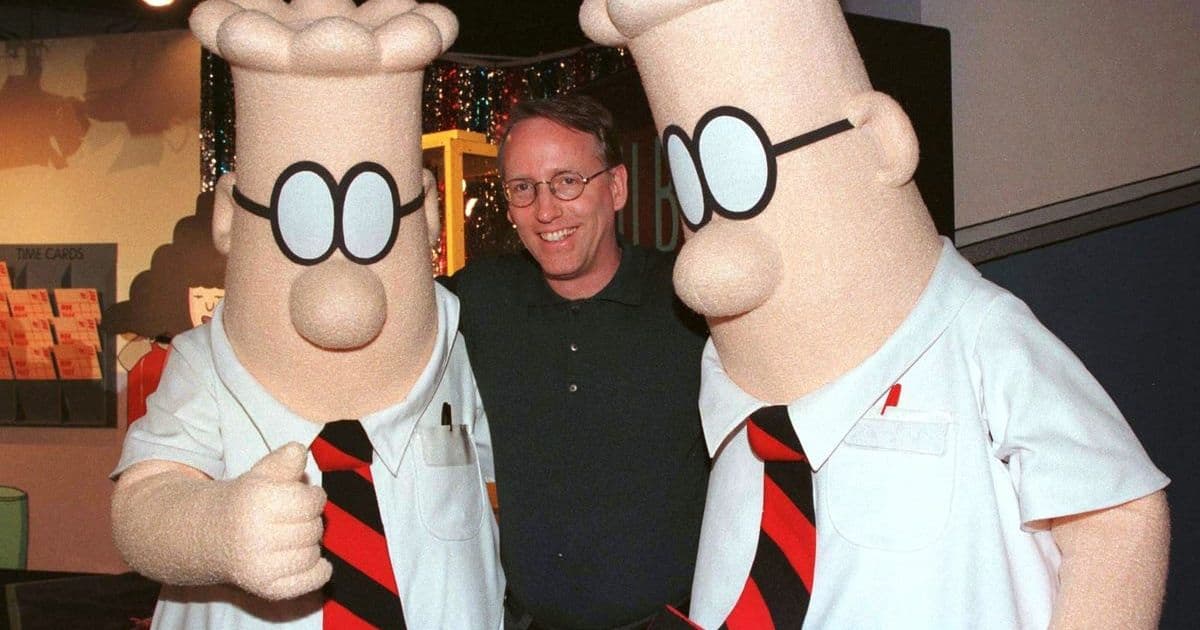
Scott Adams, the cartoonist behind the iconic Dilbert comic strip that satirized corporate bureaucracy and office culture, has died at 68 following a battle with prostate cancer that spread to his bones. His ex-wife confirmed the news during his podcast on Tuesday, January 13, just weeks after Adams publicly stated his chances of recovery were 'essentially zero.'
The creator of one of the most recognizable commentaries on American corporate life has died. Scott Adams, whose Dilbert comic strip became a daily ritual for office workers navigating the absurdities of management speak and bureaucratic inefficiency, passed away at 68 after complications from prostate cancer.
His ex-wife, Shelly Miles, announced the news during a livestream of his podcast "Real Coffee with Scott Adams" on Tuesday, January 13. "Unfortunately, this isn't good news," Miles told listeners. "He's not with us anymore." The timing, she noted, was characteristic of Adams' approach—he had scheduled the announcement just before the show started.
A Cancer Diagnosis That Spread Quickly
Adams had disclosed his prostate cancer diagnosis publicly in May, revealing that the disease had already metastasized to his bones. The progression proved aggressive. During his New Year's Day broadcast, he delivered a sobering update to his audience: his chances of recovery had dropped to "essentially zero." He had been documenting his treatment journey and health updates regularly on his podcast and social media channels.
Prostate cancer that spreads to bone presents significant treatment challenges. Once cancer metastasizes beyond the original site, it becomes much harder to eliminate completely. Treatment typically focuses on managing symptoms, slowing progression, and maintaining quality of life rather than cure. Adams had been open about the physical toll and the difficult decisions around treatment protocols.
The Corporate World Through a Stick Figure Lens
Dilbert launched in 1989 and ran for over three decades, at its peak appearing in more than 2,000 newspapers worldwide. The strip followed the daily frustrations of an unnamed engineer working in a fictional company, surrounded by pointy-haired bosses, clueless middle managers, and the infamous "PHB" (Pointy-Haired Boss). Adams captured the essence of corporate dysfunction: meetings that should have been emails, performance reviews based on arbitrary metrics, and the disconnect between technical workers and management.
The strip resonated because it reflected real experiences. Engineers recognized their own frustrations in Dilbert's deadpan reactions to impossible deadlines and nonsensical directives. Managers saw themselves in the well-meaning but incompetent characters. The strip's genius was in its specificity—it didn't just mock corporate life, it documented the actual language and rituals of business culture.
The Controversy That Ended His Mainstream Platform
In 2023, Adams made racist comments during a podcast episode, describing Black Americans as a "hate group" and urging white people to "stay away" from them. The remarks triggered immediate backlash. Newspapers across the country, including major chains like Andrews McMeel Universal and Tribune Content Agency, dropped Dilbert within days.
Adams defended his comments as satire taken out of context, but the damage was permanent. He lost his syndication deals, his mainstream platform, and much of his professional infrastructure. He pivoted to independent publishing and his podcast, but the strip's institutional support vanished overnight.
The Legacy of a Complicated Creator
The story of Dilbert is now inseparable from the story of its creator's downfall. For decades, Adams built a reputation as a sharp observer of workplace culture, even as his personal views grew increasingly controversial. His later years saw him embrace political commentary and conspiracy theories, alienating much of his original audience.
Yet the strip itself remains a cultural artifact. It captured a specific moment in American business history—the rise of the knowledge worker, the proliferation of management jargon, the tension between productivity metrics and actual work. Future historians studying corporate culture will find Dilbert as valuable as any business textbook.
Scott Adams leaves behind a complicated legacy: a brilliant satirist who documented the absurdities of modern work, and a controversial figure whose own words ultimately cost him the platform he had built. He was 68 years old.
Comments
Please log in or register to join the discussion