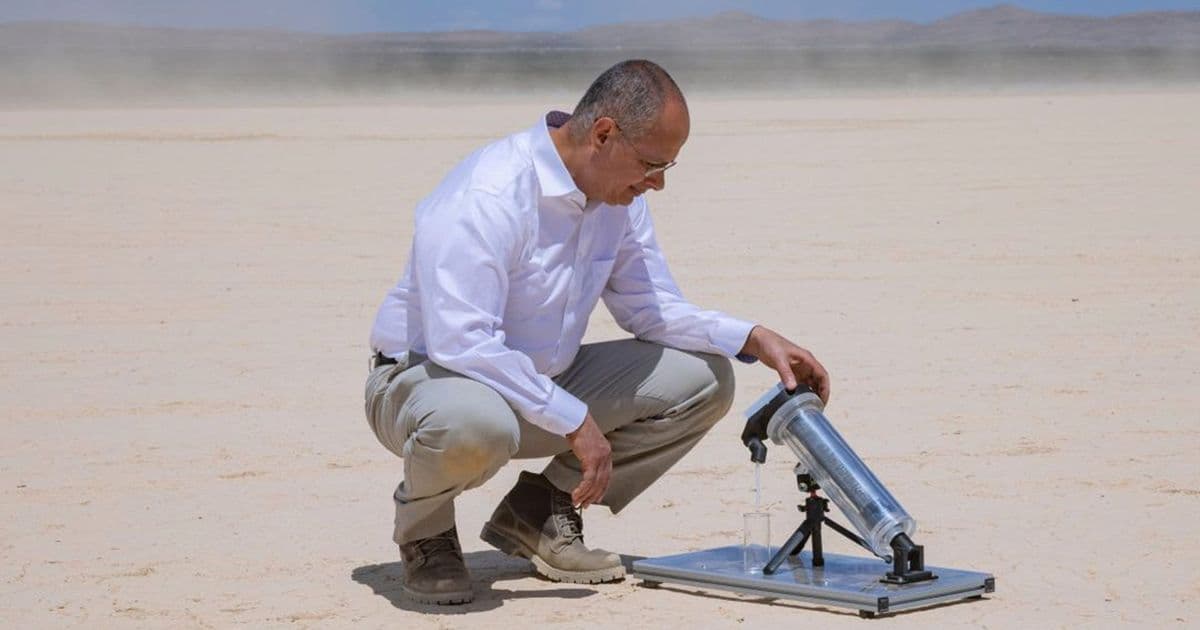
2025 Nobel laureate Omar Yaghi has commercialized a revolutionary atmospheric water harvesting device capable of producing 1,000 liters of drinkable water daily from air with just 20% humidity. The shipping container-sized system uses Metal-Organic Frameworks (MOFs) to extract moisture in extreme conditions, potentially transforming water security in arid regions worldwide.
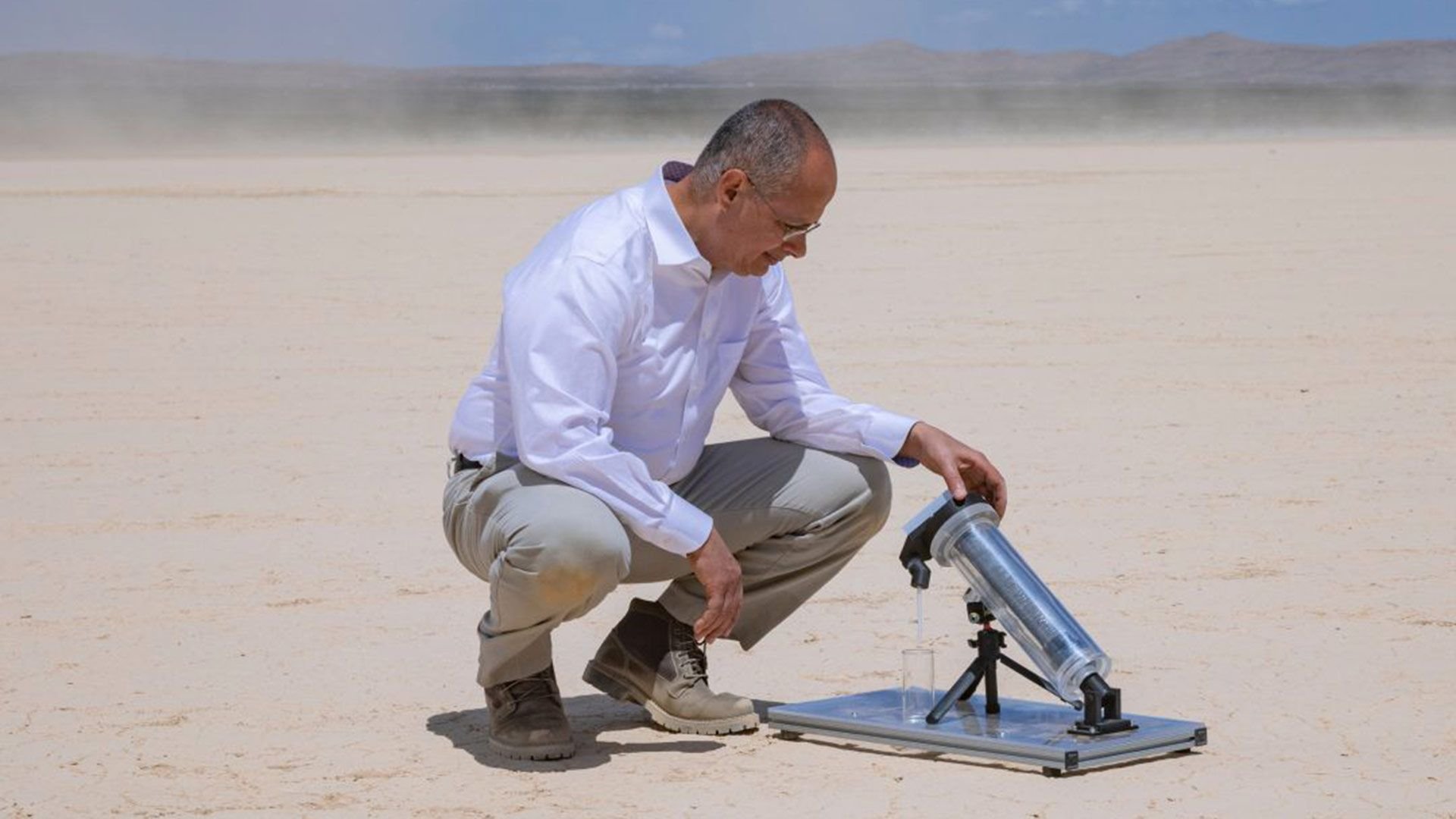
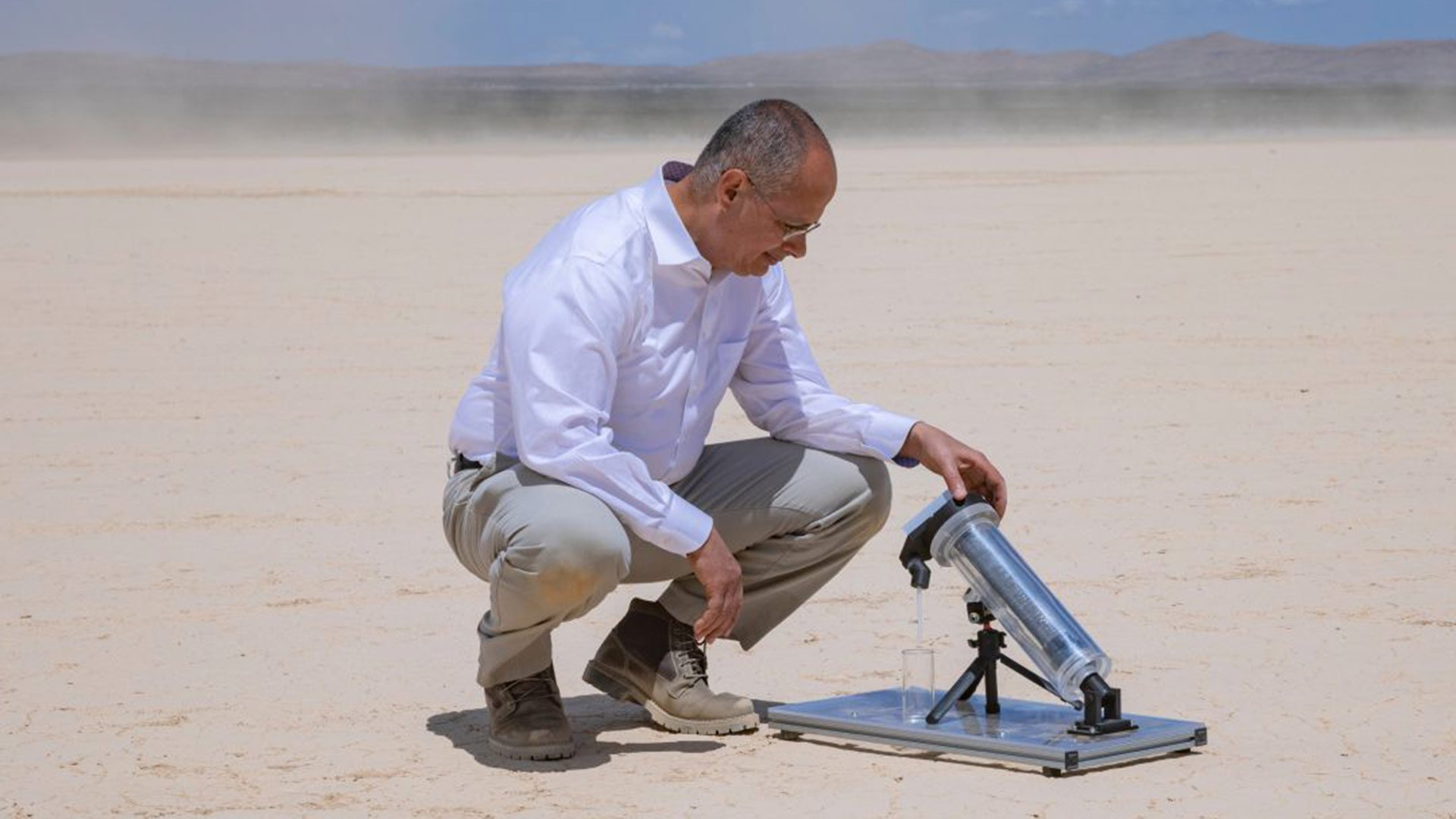
Professor Omar Yaghi, the 2025 Nobel Prize winner in Chemistry, has unveiled a groundbreaking atmospheric water harvesting (AWH) technology through his company Atoco. The device can extract approximately 1,000 liters (264 US gallons) of clean, drinkable water daily from desert air with humidity levels as low as 20%, conditions where conventional AWH technologies fail. This represents a significant leap in water harvesting capabilities, potentially addressing water scarcity issues affecting billions of people globally.
The system has been successfully tested in some of the world's most arid locations, including Death Valley in California. Unlike previous atmospheric water harvesting technologies that require higher humidity levels (typically above 40%), Yaghi's innovation functions effectively in extreme desert conditions, expanding the geographical applicability of off-grid water solutions.
[Technical specs] The water harvester's core technology is based on Metal-Organic Frameworks (MOFs), a class of materials developed through reticular chemistry—one of Yaghi's specialist areas. MOFs are synthetic porous materials engineered at the molecular level to possess extraordinary surface areas. According to technical specifications from Atoco, just a few grams of MOF material can have a surface area equivalent to a football field (approximately 7,140 square meters).
The harvesting process involves several key steps:
- Adsorption: MOF materials capture water molecules from passing air due to their high surface area and affinity for water
- Condensation: Solar energy drives the condensation of captured water vapor
- Collection: The condensed water is collected and stored in a clean reservoir
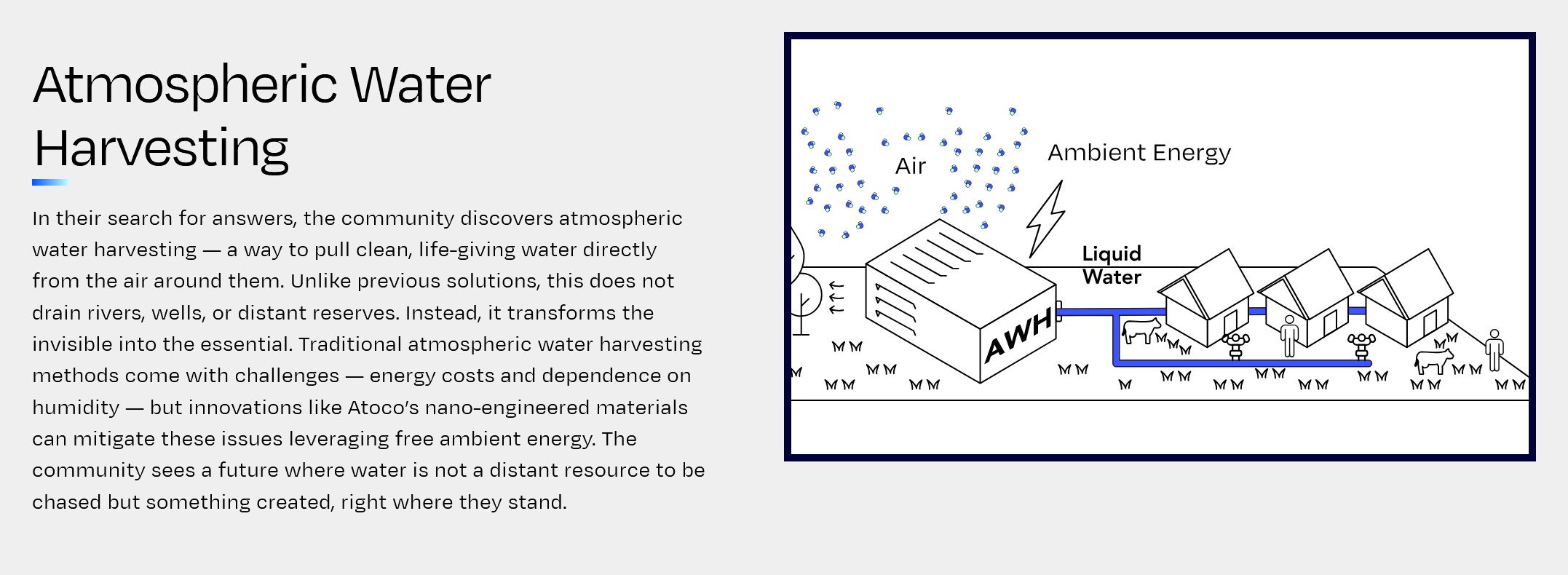
The device operates entirely off-grid, utilizing wind for air circulation and solar energy for the condensation process. This self-contained approach eliminates the need for external power sources, making it particularly valuable in remote or disaster-stricken areas.
The production model, capable of generating 1,000 liters daily, measures approximately 20 feet in length—roughly the size of a standard shipping container. This contrasts with smaller prototypes that have been publicly demonstrated, which are designed for different applications or testing purposes.
[Market implications] The potential market impact of this technology spans multiple sectors and geographies:
Humanitarian and Disaster Relief: The device could revolutionize emergency response to natural disasters, providing immediate access to clean water in affected areas. The World Health Organization reports that approximately 2 billion people lack access to safely managed drinking water services, with the situation particularly dire in arid regions.
Agricultural Applications: In regions facing water scarcity for agriculture, the technology could provide a sustainable water source for small to medium-scale farming operations. A single unit could potentially support several hectares of drought-resistant crops.
Residential and Commercial Markets: Atoco is positioning the technology for "personalized water" markets, similar to how households generate their own power through solar panels. This decentralized approach could reduce dependence on municipal water systems, particularly in areas with aging infrastructure.
Industrial Applications: Manufacturing facilities, mining operations, and other industries requiring significant water resources could utilize the technology to reduce their environmental footprint and water costs.
Military and Remote Operations: The off-grid capability makes the system ideal for military bases, research stations, and other remote operations where water supply is a logistical challenge.
The economic viability of the technology will depend on several factors, including production costs of MOF materials, maintenance requirements, and energy efficiency compared to traditional water sourcing methods. However, the ability to operate in extreme conditions with minimal infrastructure requirements gives it a competitive advantage in many applications.
The invention stems from Yaghi's personal experiences growing up in a refugee community in Jordan, where his family relied on water truck deliveries—a memory that has clearly shaped his scientific focus. This human connection to the technology adds a compelling dimension to its potential impact.
The United Nations has long warned about escalating water insecurity issues globally, with some regions facing "water bankruptcy" as climate change intensifies. Yaghi's innovation arrives at a critical moment when technological solutions to water scarcity are urgently needed.
For more technical information about Metal-Organic Frameworks, interested readers can explore the Yaghi Research Group at UC Berkeley. Additional details about Atoco's water harvesting technology are available through their official website.
The development represents a significant advancement in materials science and water technology, potentially changing how humanity approaches one of its most fundamental needs—access to clean water. As climate change continues to exacerbate water scarcity in many regions, technologies like this may become increasingly essential for global water security.
Comments
Please log in or register to join the discussion