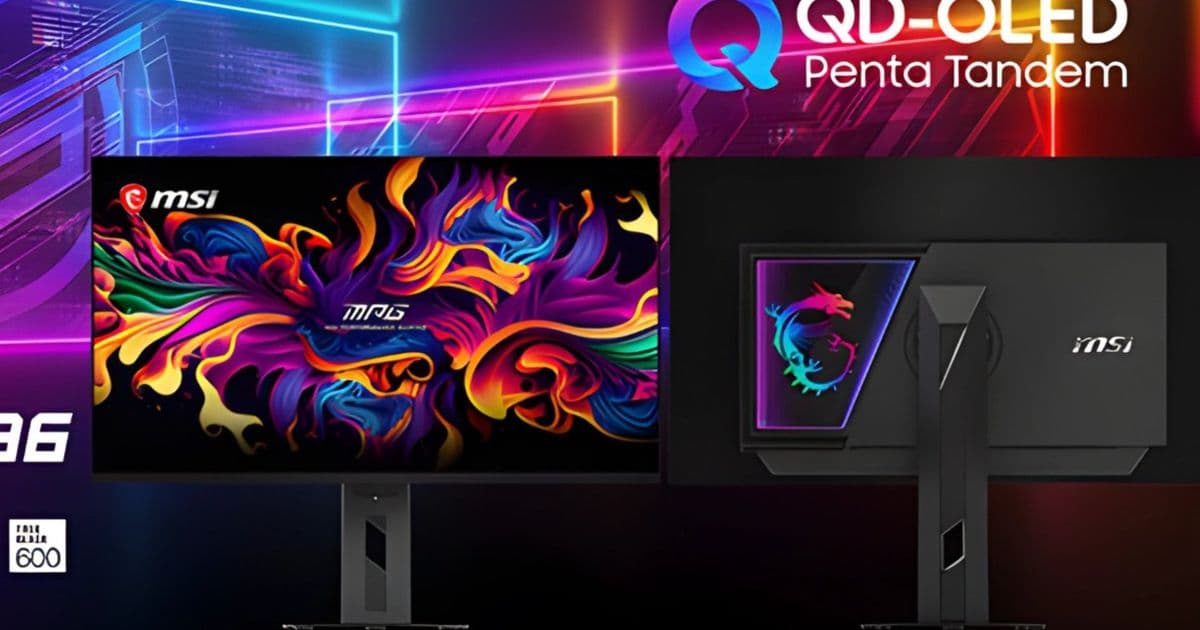
MSI’s new MPG OLED 322URDX36 brings a 32‑inch 5th‑gen QD‑OLED panel that can switch between 4K 360 Hz, 2K 520 Hz and FHD 680 Hz, adds a DarkArmor film for deeper blacks, and packs DisplayPort 2.1a, 98 W USB‑C PD and 1 500‑nit peak HDR, positioning it as the most versatile high‑refresh‑rate monitor on the market.
What’s new
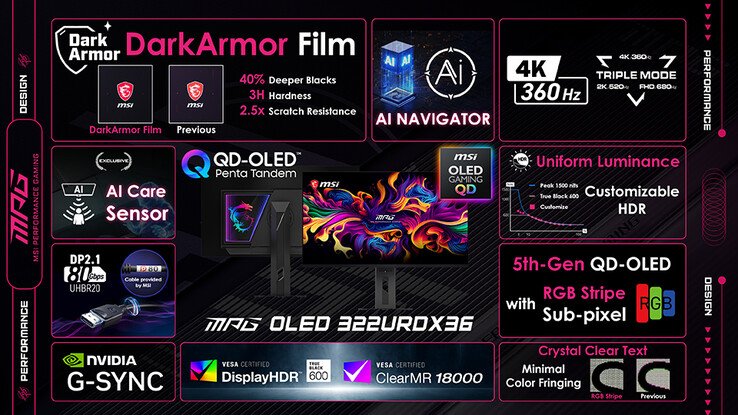
MSI has taken the dual‑mode concept that has been floating around the monitor market and turned it into a Triple Mode implementation with the MPG OLED 322URDX36. The 32‑inch screen uses a 5th‑generation QD‑OLED panel built on Samsung’s Penta Tandem technology, which allows the display to run at three distinct resolution‑refresh combinations:
- 4K (3840×2160) at 360 Hz – matching the ultra‑high‑refresh rates that Samsung recently introduced on its own 4K panels.
- 2K (2560×1440) at 520 Hz – a sweet spot for competitive shooters that need the extra pixel density without sacrificing frame‑rate.
- FHD (1920×1080) at 680 Hz – the highest refresh rate currently achievable on a consumer monitor, ideal for esports titles that push 300 fps and beyond.
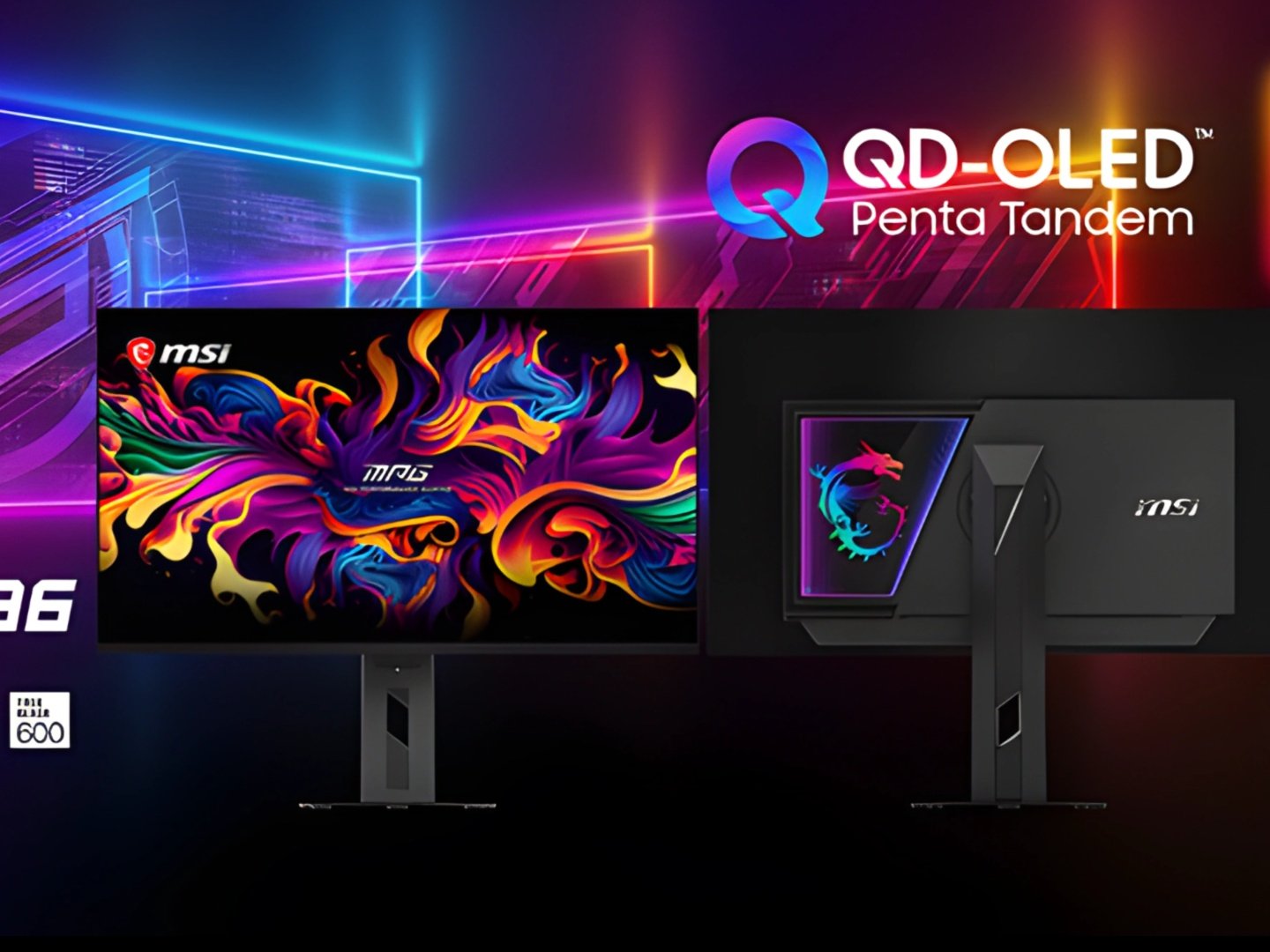
The panel is paired with MSI’s DarkArmor Film, a proprietary coating that claims a 40 % improvement in black‑level performance over standard OLED. In practice, the film pushes the monitor’s VESA DisplayHDR True Black 600 certification to a peak brightness of 1 500 nits, while still delivering true OLED deep blacks.
Connectivity is future‑proof: a DisplayPort 2.1a (UHBR20) link handles the massive bandwidth required for 4K 360 Hz, and a USB‑C port with 98 W Power Delivery lets you power a laptop while using the monitor as a dock. Additional ports include HDMI 2.1, a 3.5 mm audio jack and a USB‑A hub.
How it compares
Versus previous MSI models
Earlier MSI OLED offerings, such as the MPG OLED 272XRU, were limited to a single refresh‑rate mode (typically 240 Hz at 4K). The new Triple Mode not only adds two extra modes but also pushes the top refresh rate from 240 Hz to 360 Hz, a 50 % jump that translates into noticeably smoother motion in fast‑paced games.
Versus competitors
| Model | Size | Panel | Max Resolution | Max Refresh | HDR Rating |
|---|---|---|---|---|---|
| MSI MPG OLED 322URDX36 | 32 in | 5th‑gen QD‑OLED (Penta Tandem) | 4K | 360 Hz (4K) / 520 Hz (2K) / 680 Hz (FHD) | DisplayHDR True Black 600 (1 500 nit peak) |
| Samsung Odyssey G9 Neo | 49 in | Mini‑LED | 5120×1440 | 240 Hz | DisplayHDR 2000 |
| ASUS ROG Swift PG32UQX | 32 in | Mini‑LED | 4K | 144 Hz | DisplayHDR 1400 |
| Dell Alienware AW3423DW | 34 in | QD‑OLED | 3440×1440 | 175 Hz | DisplayHDR 600 |
The MSI monitor outpaces most Mini‑LED rivals in raw refresh rate while keeping OLED’s pixel‑perfect contrast. Samsung’s own 4K 360 Hz panel is the only direct competitor, but it lacks the two lower‑resolution high‑refresh options that give MSI an edge for gamers who switch between titles that demand different pixel densities.
Trade‑offs
- Power consumption: Running an OLED at 1 500 nits can draw more than 150 W under full white, so a robust power supply is essential.
- Burn‑in risk: OLEDs remain susceptible to static‑image retention; MSI mitigates this with a pixel‑shift algorithm and the DarkArmor coating, but users should still enable screen‑savvy features.
- Price: Early leaks suggest a launch price north of $2,500, positioning it as a premium niche product rather than a mainstream option.
Who it’s for
- Competitive FPS/RTS players who want the absolute smoothest input lag and motion clarity. The 680 Hz FHD mode will let you exploit frame rates well beyond 300 fps without sacrificing responsiveness.
- Content creators and streamers who need a high‑resolution canvas for video editing or color‑critical work, yet still want the option to drop to a lower resolution for gaming sessions.
- Enthusiasts with a powerful GPU (RTX 4090, AMD RX 7900 XTX or equivalent) that can actually feed 4K 360 Hz or 2K 520 Hz streams. Without that horsepower, the monitor’s headline specs become a marketing footnote.
What to watch for
MSI will debut the MPG OLED 322URDX36 at Computex 2026, with pricing and regional availability expected shortly after. Keep an eye on firmware updates; early OLED panels often need tweaks to balance peak brightness, color accuracy, and burn‑in mitigation.
Bottom line – MSI’s Triple Mode OLED monitor pushes the envelope of what a gaming display can do, offering three ultra‑high‑refresh configurations in a single 32‑inch panel. If you have a GPU that can keep up and you’re willing to pay a premium for the performance and contrast OLED provides, the MPG OLED 322URDX36 could become the reference monitor for high‑end competitive gaming.
Comments
Please log in or register to join the discussion