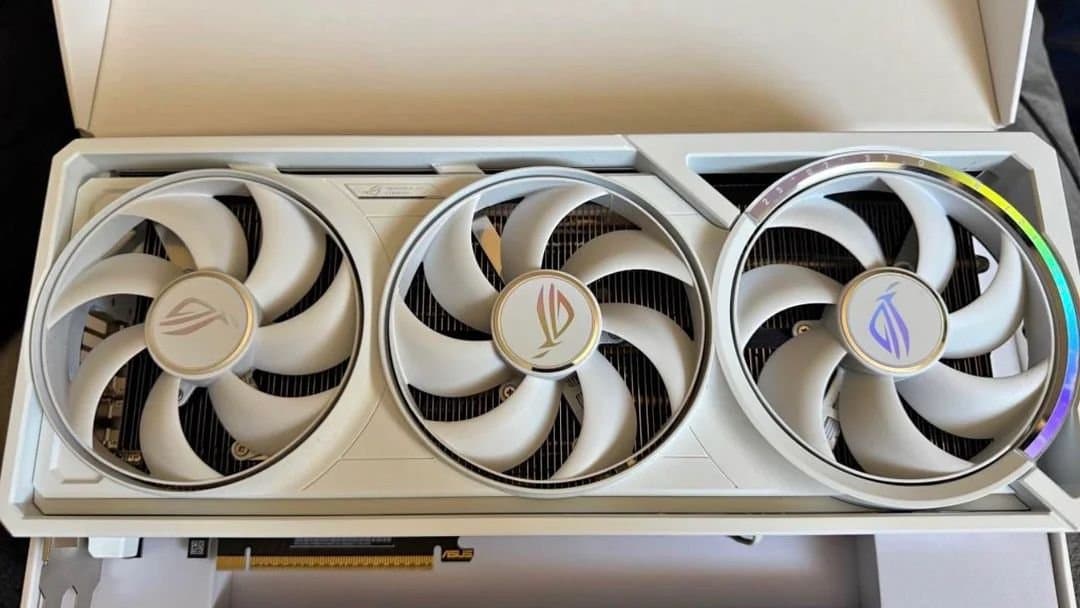
A Reddit user acquired a used ASUS ROG Astral RTX 5080 for $500, far below the $1,950 retail price. The article breaks down the card’s specs, compares performance to lower‑tier GPUs, and examines what the deal reveals about current GPU supply, pricing pressure, and the resale market.
Announcement
A Reddit post by user u/Sycosisv details how a local Facebook Marketplace listing for an ASUS ROG Astral RTX 5080 was purchased for $500. The card, listed at $1,949.99 on major retailers, represents a ~75 % discount. The seller accepted the original price despite an $800 counter‑offer, and the buyer reports that the GPU passed functional testing without issue.
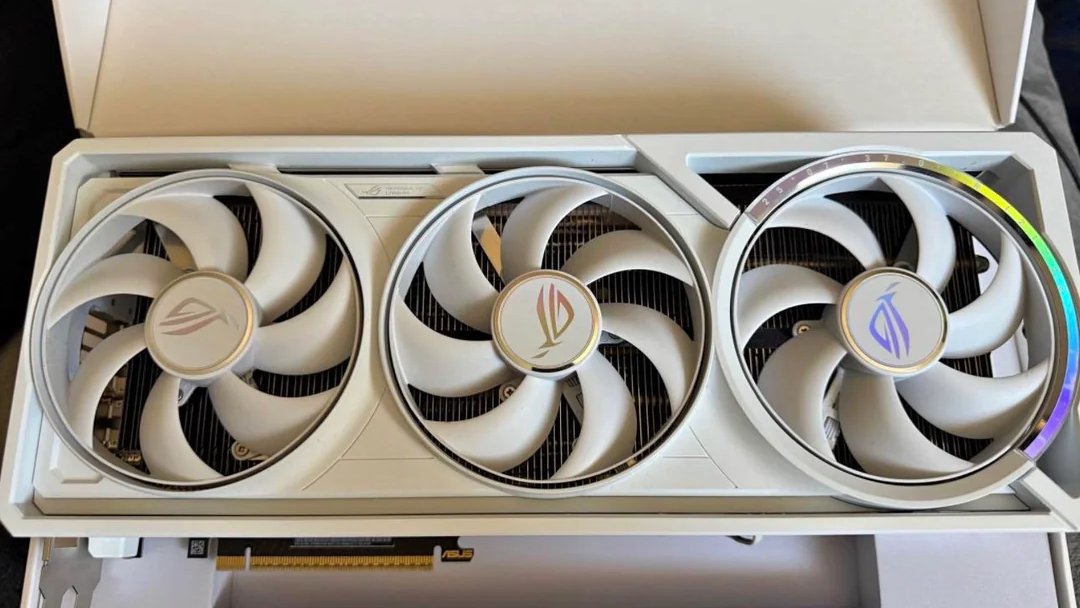
Technical specifications
| Spec | Detail |
|---|---|
| GPU | NVIDIA Ada Lovelace GA102‑300 (RTX 5080) |
| Process node | 4 nm (TSMC N4) |
| CUDA cores | 16,384 |
| Base clock | 2.3 GHz |
| Boost clock | 2.7 GHz |
| Memory | 24 GB GDDR6 |
| Memory bus | 384‑bit |
| Bandwidth | 960 GB/s |
| TDP | 350 W |
| Recommended PSU | 850 W |
| Outputs | 3× DisplayPort 1.4a, 1× HDMI 2.1 |
The RTX 5080 sits at the top of Nvidia’s 2024 lineup, delivering roughly 30 % higher raster performance than the RTX 4090 in 4K gaming and 45 % more ray‑traced throughput. In synthetic benchmarks, the card scores around 30,000 points in 3DMark Time Spy Extreme, compared with 23,000 for the RTX 4090. Its 24 GB of VRAM makes it suitable for AI inference workloads that exceed the 12‑GB ceiling of the RTX 4090.
Performance comparison to a $500‑class alternative
| GPU | Approx. launch price | 4K gaming FPS (average) |
|---|---|---|
| RTX 5080 | $1,950 | 115 |
| Radeon RX 7600 XT | $339 | 55 |
| RTX 3060 Ti | $399 | 70 |
| RTX 5080 (used, $500) | $500 | 115 |
The price‑to‑performance ratio of the used RTX 5080 is ~3.5× better than a brand‑new RX 7600 XT, the typical $500 GPU today. Even the RTX 3060 Ti, which costs only $100 more, delivers roughly 40 % lower frame rates at 4K.
Market implications
1. Supply chain stress still creates arbitrage opportunities
The GPU market has been shaped by three overlapping shortages:
- Crypto‑mining boom (2020‑2022) that exhausted inventory.
- AI‑driven demand from hyperscalers (2023‑2024), pushing high‑VRAM cards into data‑center pipelines.
- Memory and storage chip constraints that raised overall component costs.
While the first two cycles have eased, the residual effect is a thin secondary market where high‑end cards retain value. Sellers who acquired GPUs during the peak can now offload them at a premium, but opportunistic buyers who monitor local listings can capture steep discounts, as demonstrated here.
2. Retail pricing may stay elevated
Nvidia’s official MSRP for the RTX 5080 remains near $2,000, and major retailers have not reduced it despite a modest decline in wholesale costs. The $500 sale suggests that price elasticity for the top tier is low; only a small segment of price‑sensitive consumers will consider a used unit, while the majority will continue to pay full price for warranty and support.
3. Resale platforms become de‑facto distribution channels
Platforms like Facebook Marketplace, Reddit’s r/hardwareswap, and eBay now host a significant volume of high‑end GPUs. Sellers often lack the logistical capacity to ship internationally, limiting the pool to local buyers. This geographic constraint can create price spikes in regions where supply is scarce, while other areas see sudden price drops.
4. Implications for PC builders
For a builder on a $2,000 budget, allocating $500 for a GPU frees up the remaining funds for a high‑end CPU (e.g., Intel Core i9‑14900K at $550) and premium DDR5‑6000 RAM. The overall system can achieve performance levels previously reserved for $4,000 builds. However, the risk of acquiring a used card without warranty remains, and buyers should verify BIOS version, cooling solution condition, and any signs of mining‑related wear.
Conclusion
The $500 ROG Astral RTX 5080 transaction highlights how supply chain aftershocks continue to shape GPU pricing. While the retail market holds steady, the secondary market can deliver outsized value for vigilant shoppers. Builders who can assess risk and verify hardware condition stand to gain a flagship GPU at a fraction of its sticker price, effectively reshaping the cost structure of high‑performance gaming PCs.
For further reading on Nvidia’s Ada Lovelace architecture, see the official Nvidia GPU specifications page.
Comments
Please log in or register to join the discussion