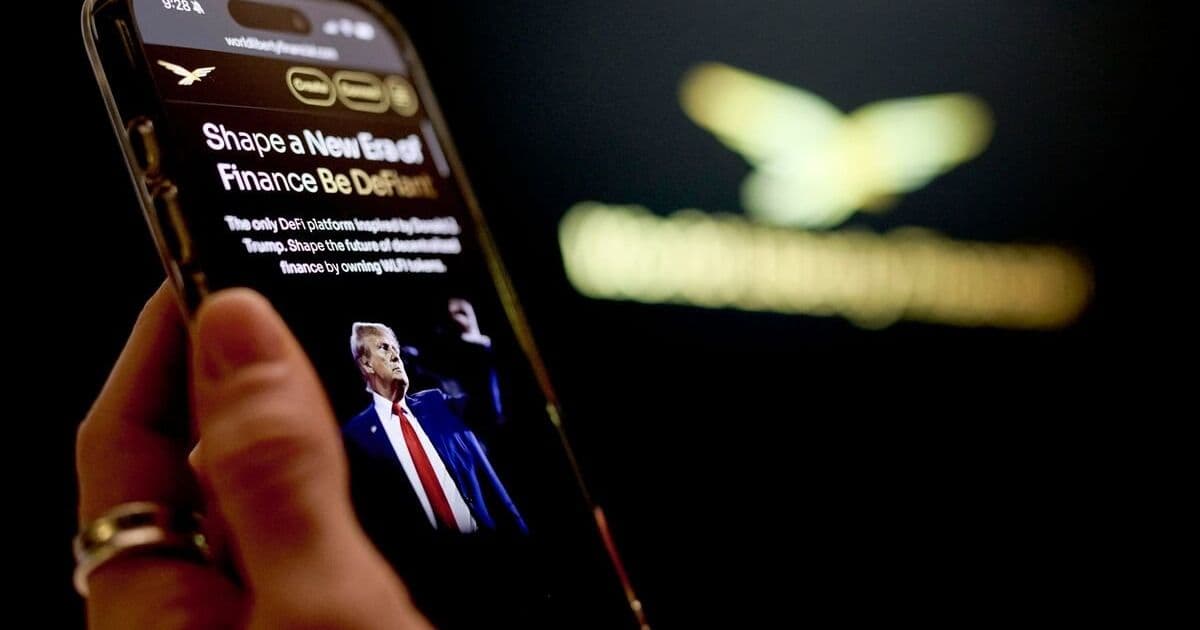
After raising $550 million from investors, Donald Trump's World Liberty token project conducted private sales of tokens worth hundreds of millions in USD through 'white glove' transactions, raising questions about regulatory compliance and market transparency in the cryptocurrency space.
The recent revelation that Donald Trump's World Liberty cryptocurrency project has raised $550 million from investors and subsequently conducted private token sales worth hundreds of millions of USD through "white glove" transactions highlights several concerning trends in the cryptocurrency market. This development warrants careful examination beyond the surface-level excitement often associated with celebrity-backed crypto ventures.
What's being claimed: World Liberty, positioned as a cryptocurrency venture associated with Donald Trump and his family, has successfully attracted substantial investment, raising $550 million from various investors. Following this initial funding round, the project has reportedly engaged in private token sales described as "white glove" transactions, typically implying personalized, high-value sales to select investors. These private sales are said to involve tokens worth hundreds of millions in USD.
What's actually new: The scale of fundraising and subsequent private token sales represents a significant capital accumulation for a political figure's crypto venture. The "white glove" approach to token distribution suggests an attempt to create an exclusive investment opportunity, potentially bypassing public markets and typical regulatory oversight mechanisms. This model differs from traditional venture capital funding rounds in that it involves direct token sales rather than equity investments.
The involvement of a high-profile political figure adds a unique dimension to this crypto project. Trump's association with the venture likely contributed to its ability to attract substantial capital, leveraging his name recognition and existing supporter base. This represents a convergence of political influence and cryptocurrency markets that merits scrutiny.
Limitations and concerns: Several red flags emerge from this development. First, the "white glove" nature of these token sales raises questions about transparency and potential regulatory violations. Securities regulators, including the SEC, have increasingly scrutinized cryptocurrency offerings, particularly those involving private sales that may function as unregistered securities offerings.
The timing of these transactions also warrants attention. The initial $550 million funding round occurred before the private token sales, creating a tiered investment structure that could benefit early investors at the expense of later participants. This pattern resembles pump-and-dump schemes or other market manipulation techniques that have drawn regulatory attention in the past.
Furthermore, the connection between political influence and financial markets raises ethical questions. The ability of a political figure to raise such substantial capital for a crypto venture may create conflicts of interest and could potentially influence policy discussions around cryptocurrency regulation.
From a market integrity perspective, the concentration of tokens among select "white glove" investors creates potential for market manipulation. When a small group of holders controls a significant portion of a cryptocurrency's supply, they can exert undue influence on price movements and market dynamics.
The lack of detailed information about the terms of these token sales, including valuation methods, vesting schedules, and investor protections, makes it difficult to assess the fairness and legitimacy of these transactions. This opacity is particularly concerning given the history of crypto projects that have failed to deliver on promises while enriching early insiders.
Regulatory implications: This case may prompt increased scrutiny of celebrity-backed crypto ventures and the mechanisms used to distribute tokens. Regulators may view "white glove" sales as an attempt to circumvent securities regulations by structuring token offerings as private transactions rather than public offerings.
The involvement of a former U.S. president adds political dimensions to this case. It may influence the broader regulatory landscape for cryptocurrencies, potentially leading to stricter oversight of how tokens are distributed and marketed to investors.
Market impact: The success of World Liberty in raising substantial capital may encourage other political figures to enter the crypto space, potentially creating a new category of celebrity-backed digital assets. This trend could further blur the lines between traditional finance, cryptocurrency markets, and political influence.
However, the long-term viability of such ventures remains questionable. Many celebrity-backed crypto projects have failed to deliver on their promises, leaving investors with worthless tokens. The track record of such ventures suggests that substantial initial fundraising does not guarantee long-term success or value creation.
Investor considerations: Potential investors in World Liberty or similar projects should exercise caution. The "white glove" nature of the token distribution suggests that early investors may receive preferential treatment, creating an uneven playing field. Investors should thoroughly investigate:
- The regulatory status of the tokens
- The backgrounds and track records of the project team
- The specific use cases for the cryptocurrency
- The token distribution mechanism and potential for market manipulation
- The existence of any lock-up periods or restrictions on token sales
Broader implications: The World Liberty token sales highlight the ongoing challenges of regulating cryptocurrency markets in a way that protects investors while allowing innovation. The case demonstrates how the borderless nature of cryptocurrency can be exploited to circumvent traditional regulatory frameworks.
It also raises questions about the appropriate relationship between political figures and financial markets. The ability to raise substantial capital through cryptocurrency ventures creates new avenues for influence and potential conflicts of interest that may require new regulatory approaches.
Conclusion: While the scale of World Liberty's fundraising is impressive, the "white glove" approach to token sales raises legitimate concerns about market integrity and regulatory compliance. As cryptocurrency markets continue to evolve, cases like this will likely prompt increased scrutiny of how tokens are distributed and marketed, particularly when involving high-profile political figures.
Investors should approach such ventures with heightened caution, recognizing that substantial initial fundraising does not guarantee long-term success or value creation. The cryptocurrency market's history is littered with projects that attracted significant attention and capital before ultimately failing to deliver on their promises.
The World Liberty case serves as a reminder that in the rapidly evolving cryptocurrency landscape, regulatory clarity and market transparency remain essential for protecting investors and ensuring the long-term viability of digital assets.
Comments
Please log in or register to join the discussion