
A Japanese researcher has created a 128-byte USB drive the size of a dinner plate using magnetic core memory technology from the 1950s, demonstrating both the ingenuity and impracticality of reviving obsolete computing methods.
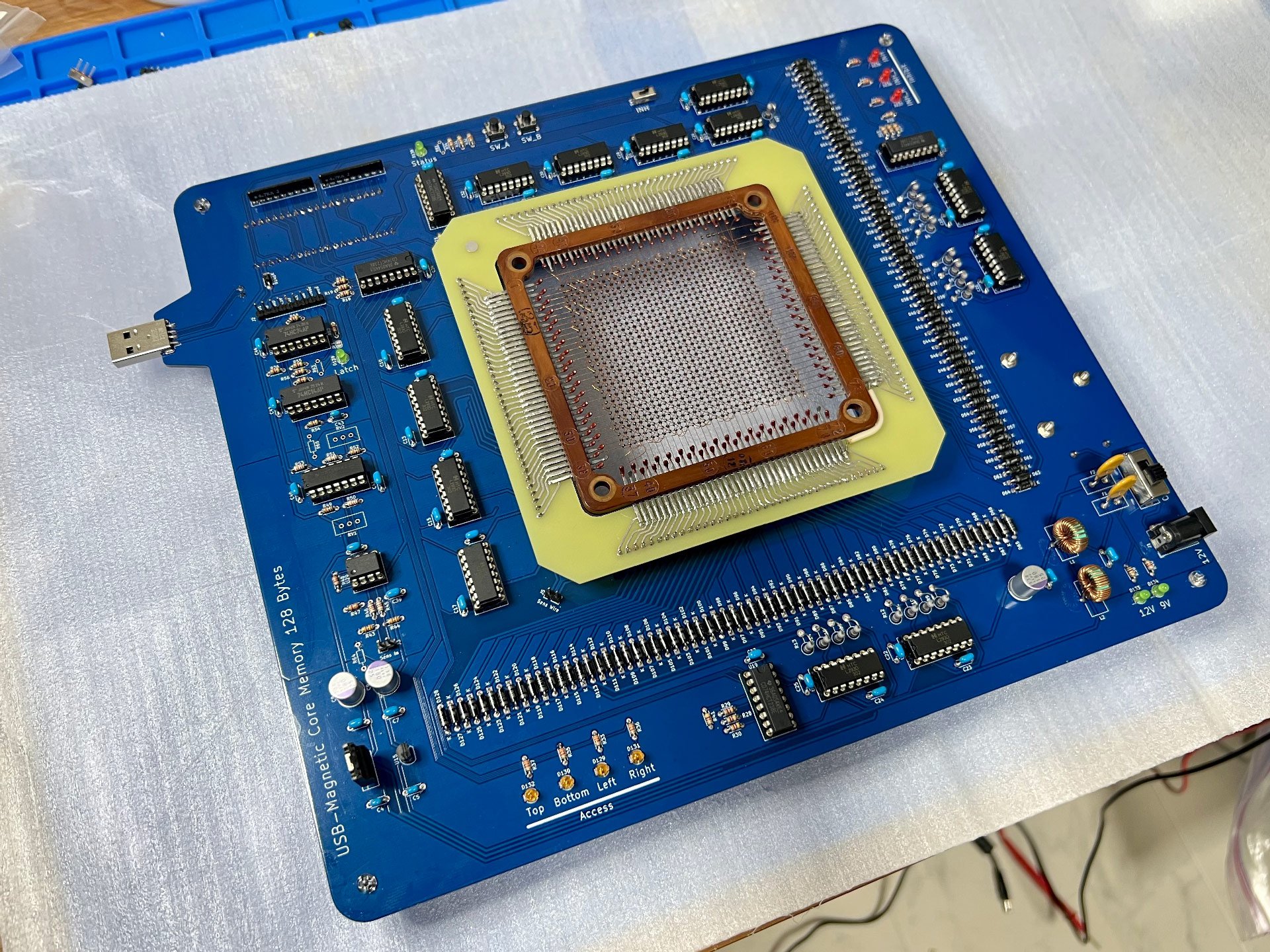
A computing enthusiast has assembled one of the most bizarre USB drives we have ever seen. Despite being the size of a dinner plate, this drive holds just 128 bytes of data. The incredibly poor data density is largely due to the use of the archaic Magnetic Core Memory technology, which predates integrated circuits. Moreover, data saved to this drive is non-volatile (good), but bits are erased during the read process (bad). Despite the drawbacks and impractical nature of this device, created by space science researcher @dyd_Nao on X (machine translation), we applaud the effort.
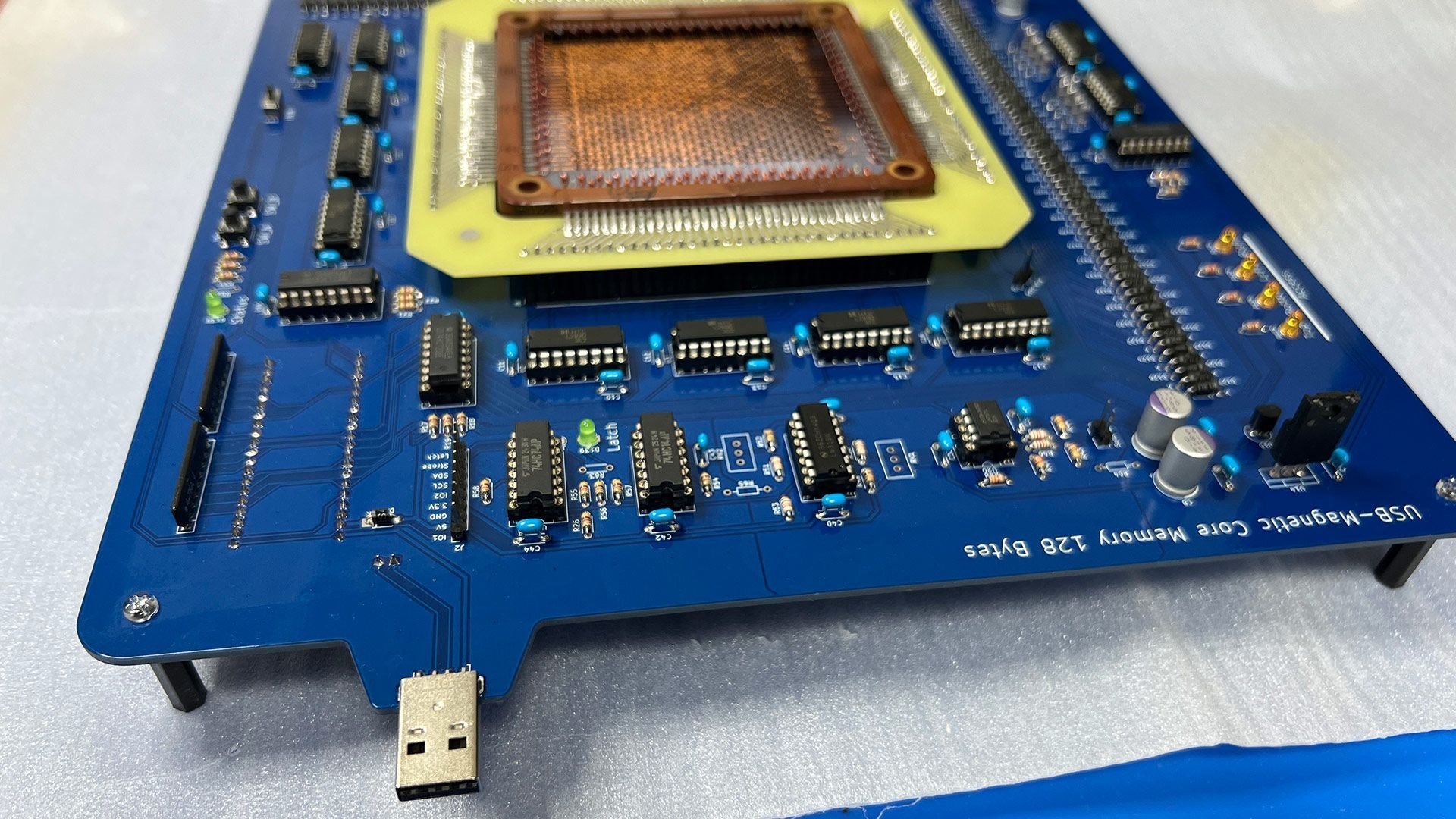
部品一通り載せ終わった ちゃんとUSB-A端子ついてるしどう見てもUSBメモリやなpic.twitter.com/LnpbrxmcznJanuary 31, 2026
See more
The Japanese tech enthusiast has mixed this curiously old memory tech with modern ICs and interfaces to come up with this bizarre USB flash drive. Built around the central non-volatile core are modern components like driver chips, sense amplifiers, LEDs, and the USB functionality is provided by a Raspberry Pi Pico. The Pico also handles the rewrite cycle.
Of course, this project was more 'can I?' rather than 'should I,' as 128 bytes of kinda-NV-RAM on a very large USB drive is of no practical purpose that we can fathom. Actually, 128 bytes isn't even enough to store the full text from an old-school Twitter Tweet. One of the original post commenters notes that Magnetic Core Memory has good resistance to radiation. But what of all the supporting components…?
What is Magnetic Core Memory?
Magnetic Core Memory was used as RAM before the semiconductor DRAM breakthrough in the 1970s. You can read more about it at places like Wikipedia, but, in brief, it stored data on tiny ferric rings wrapped in wire. If you look at the example photos from @dyd_Nao, you'd observe the central grid-like structure, which is the core plane. On the plus side, it was non-volatile RAM technology. However, amongst its many drawbacks were its expense, low density, and lack of scalability due to its sometimes hand-woven construction. Moreover, reading the data was 'destructive' – or in other words, reading the data would erase the data, so a system would need to re-write it immediately if it wanted the data to persist post-read.
Magnetic Core Memory was first used by a computer in 1953, in MIT's Whirlwind computer. It is a memory technology that predates integrated circuits, and was actually a RAM standard from 1955 to the early 70s. Intel actually pioneered semiconductor DRAM with its 1103 DRAM ICs in late 1970, commercially debuting cheaper, faster, and denser computer memory tech.
The technical achievement here is remarkable when you consider the engineering challenges involved. Magnetic core memory operates on principles fundamentally different from modern semiconductor memory. Each bit is stored in a tiny ferrite ring, with the state determined by the direction of magnetization. Reading requires sending a current through the ring that forces it to a known state, detecting the resulting voltage change, and then immediately rewriting the original data if it was different.
This destructive read characteristic is what makes the project particularly interesting from an engineering perspective. The Raspberry Pi Pico must constantly monitor read operations and trigger immediate rewrites to preserve data integrity. This creates a race condition where the system must complete the read and rewrite cycle before the data is permanently lost.
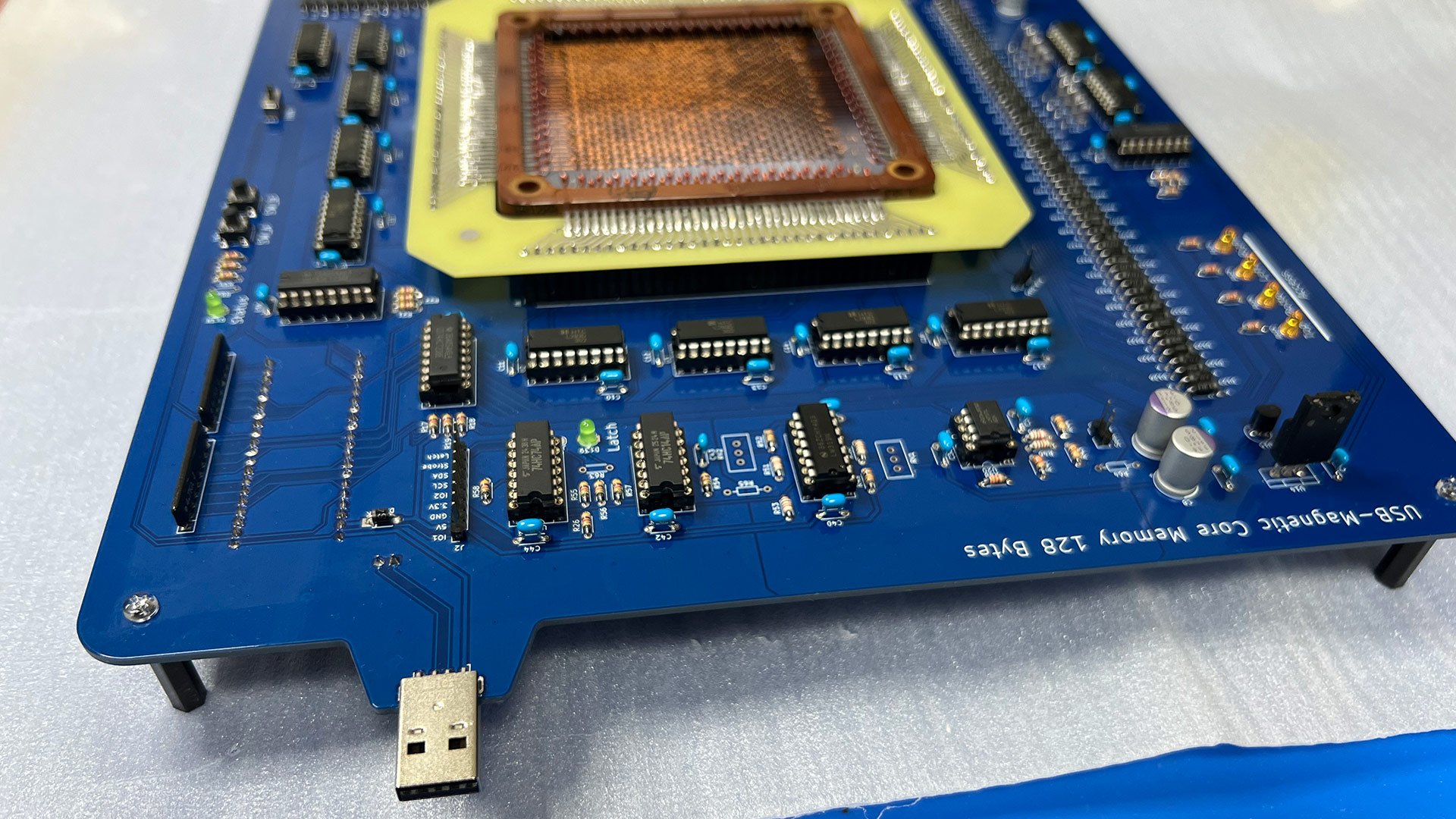
The physical implementation is equally fascinating. The core plane visible in the photos represents hundreds of individual ferrite rings, each hand-wired or machine-woven into a grid pattern. The wires running through the grid carry current to select specific cores for reading or writing. Modern driver chips interface this antique technology with the USB protocol, translating between magnetic state detection and digital data transmission.
From a practical standpoint, the limitations are severe. At 128 bytes, the drive could store approximately 85 characters of plain text – less than a typical tweet. The physical size is absurd by modern standards, with a capacity-to-volume ratio that makes even the earliest flash drives look efficient. Power consumption would be significant, as maintaining the sense amplifiers and driver circuitry requires continuous current flow.
Yet the project serves as an important reminder of computing history and the rapid pace of technological advancement. Magnetic core memory represented the state of the art for nearly two decades, enabling the first real-time computing systems and early space missions. The Apollo Guidance Computer, which helped land humans on the moon, used core memory exclusively.
The radiation resistance mentioned by commenters is particularly relevant for space applications. Unlike semiconductor memory, magnetic core memory isn't susceptible to single-event upsets from cosmic rays or solar radiation. This property made it valuable for military and aerospace applications long after semiconductor memory became available for commercial use.

What makes this project compelling isn't its utility but its demonstration of how far we've come. Modern SSDs offer terabytes of storage in packages smaller than a postage stamp, with access times measured in microseconds. This core memory USB drive, by contrast, offers barely enough space to store a short password, requires seconds for read operations, and occupies a dinner plate's worth of space.
The engineering required to bridge these technologies – connecting 1950s memory architecture to 2020s USB interfaces – showcases both the durability of well-designed systems and the remarkable progress in miniaturization and efficiency. It's a physical manifestation of Moore's Law in action, demonstrating how computing capabilities have expanded by factors of millions while shrinking to pocket-sized proportions.
For hardware enthusiasts and historians, projects like this provide tangible connections to computing's past. They demonstrate that the principles underlying modern computing – binary data storage, electronic switching, and information retrieval – have remained constant even as the implementation details have evolved beyond recognition.
The project also highlights the importance of understanding legacy systems. As technology advances, knowledge of earlier methods becomes increasingly valuable for preservation, education, and occasionally solving modern problems with proven solutions from the past. Magnetic core memory's radiation resistance, for instance, remains relevant for certain specialized applications where modern semiconductor memory might fail.
While we can't imagine practical applications for a 128-byte core memory USB drive in 2026, the project succeeds in its apparent goal: demonstrating that with enough determination and technical skill, even the most impractical ideas can be brought to life. It stands as a monument to both the ingenuity of early computer engineers and the continued curiosity of modern hardware hackers who refuse to let computing history fade into obscurity.
Comments
Please log in or register to join the discussion