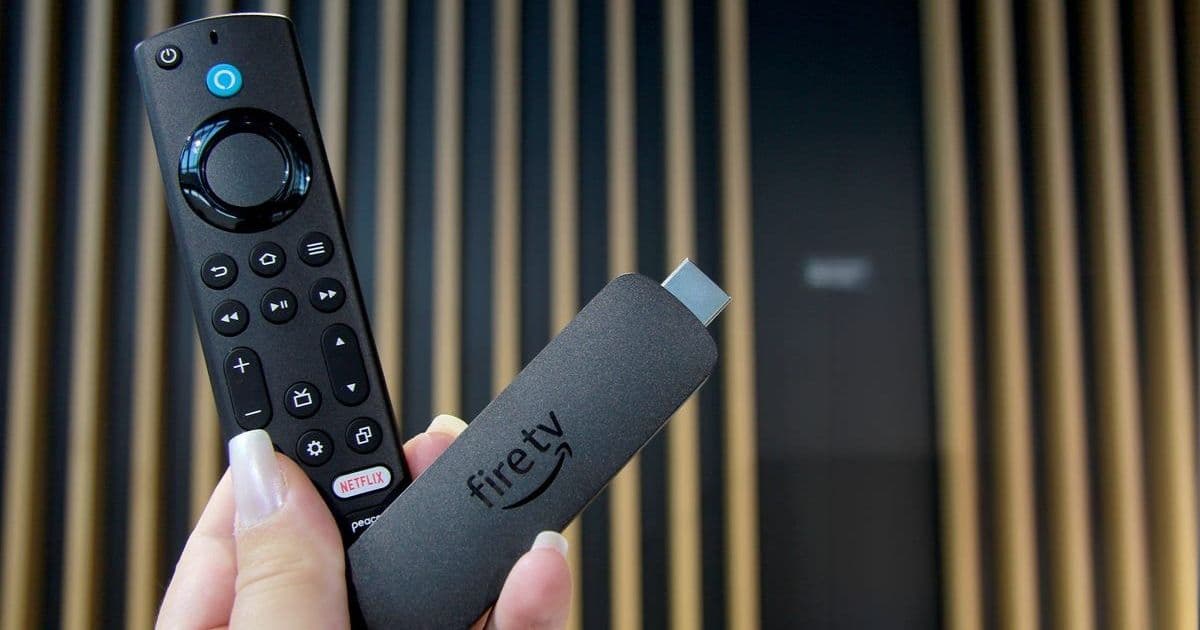
ZDNET's rigorous testing reveals the top VPN contenders optimized for Amazon Fire TV Sticks. ExpressVPN leads with exceptional speed and reliability, while Surfshark offers unbeatable value, and NordVPN impresses with minimal latency. Discover which service best unlocks geo-restricted content without compromising your privacy or streaming quality.
For developers and tech-savvy streamers, integrating a robust VPN with an Amazon Fire TV Stick isn't just about accessing geo-blocked libraries—it's a critical layer for privacy, preventing ISP throttling, and securing data on often-overlooked smart TV attack surfaces. ZDNET's latest 2025 evaluation, led by Contributing Writer Charlie Osborne, puts leading VPNs through rigorous real-world testing on Fire OS, focusing on performance metrics, security posture, and Fire TV Stick-specific usability.
The Standout Contenders
ExpressVPN (Best Overall): Dominates with consistent sub-15% speed loss in testing – crucial for 4K streaming. Its native Fire TV app (compatible with 2nd-gen+ devices) offers a seamless, set-and-forget experience. Recent KPMG audits reinforce its no-logs claims, and its expansion to servers in all 50 US states enhances regional access. Priced from $5/month (2-year plan + 4 free months). Pros: Blazing speeds, vast server network (105 countries), intuitive UI. Cons: Limited to 8 simultaneous connections; premium cost.
Surfshark (Best Budget): Unmatched value at ~$2/month (long-term plans). Delivers unlimited device connections – ideal for multi-device households. Features like Nexus (dynamic IP switching) and Bypasser (evading network blocks) showcase technical innovation. While initial connection speeds lagged slightly in tests (21% avg. speed loss), its user-friendly Fire TV app and strong security (recent proprietary DNS launch) make it a top choice. Pros: Unlimited connections, affordable, feature-rich. Cons: Variable speeds under load.
NordVPN (Best Speed Alternative): Nearly matches ExpressVPN's performance (just 3% avg. speed loss) at a lower price point ($3.39/month). Its NordWhisper protocol tackles network restrictions effectively. Supports 10 devices and boasts 111 countries. Independent audits by West Coast Labs validated its leak protection and infrastructure security. Pros: Excellent speed/price balance, large network, advanced features (dedicated IP option). Cons: No unlimited connections.
IPVanish (Best Customization): Appeals to tinkerers with extensive protocol selection (WireGuard, OpenVPN, IKEv2) directly configurable in its Fire TV app. Offers unlimited connections and recently expanded to 108 countries. A verified no-logs policy adds trust. Starts at $2.19/month. Pros: High configurability, unlimited devices. Cons: Lacks alternative login methods on Fire TV; post-promotion price hikes.
Proton VPN (Best Free Tier): The only reputable free option with a dedicated Fire TV app (Fire OS 7.0+). Its open-source nature and strong encryption provide transparency and security. The free tier includes basic access (5 countries, 1 device). Paid plans ($3+/month) unlock 117 countries and 10 devices. Pros: Trustworthy free access, strong security focus. Cons: Free server speeds can be inconsistent; limited free locations.
Technical Deep Dive: Why Fire TV VPNs Matter
- Bypassing Throttling: ISPs often throttle streaming traffic. VPN encryption masks this activity, potentially restoring full bandwidth.
- Geo-Unblocking: Access region-locked apps and content libraries by routing through VPN servers in target countries.
- Enhanced Privacy: Shields viewing habits and IP address from advertisers, trackers, and potential eavesdroppers on public networks.
- Security on IoT: Fire TV Sticks, like all IoT devices, present vulnerabilities. A VPN adds a crucial encryption layer for data in transit.
Implementation Insights
ZDNET's testing methodology emphasized:
- Real-World Performance: Measured speed loss (%) during active streaming on Fire TV Stick.
- Fire TV App Usability: Ease of installation, connection reliability, and interface clarity.
- Security Fundamentals: Verified no-logs policies (via audits), kill switch reliability, and DNS/IP leak protection.
- Value: Balancing cost against features, connection limits, and performance.
The Developer & Tech Leader Perspective
Choosing the right VPN extends beyond casual streaming. For developers building apps or services targeting the Fire TV platform, understanding VPN capabilities is crucial for testing geo-specific functionality and content delivery. Tech leaders should consider VPNs as part of a holistic home network security strategy, especially for devices frequently overlooked in traditional endpoint security models. The evolution of protocols like WireGuard (widely adopted by top contenders) and features like Surfshark's Nexus highlight ongoing innovation focused on performance and circumvention capabilities.
Source: ZDNET Testing & Analysis (Charlie Osborne), July 2025 - Original Article
Comments
Please log in or register to join the discussion