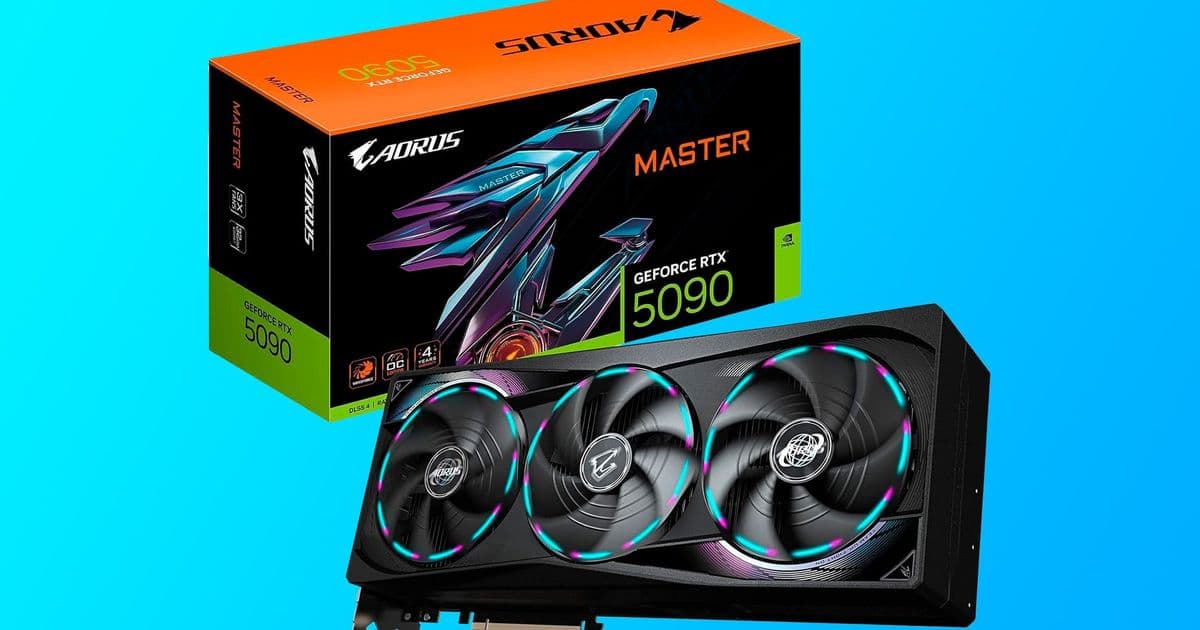
A third-party Amazon seller with a 99% positive rating has allegedly scammed 42 customers by shipping $100 fanny packs instead of $999 GeForce RTX 5090 graphics cards, exploiting Fulfillment by Amazon to maintain credibility while victims struggle with returns.
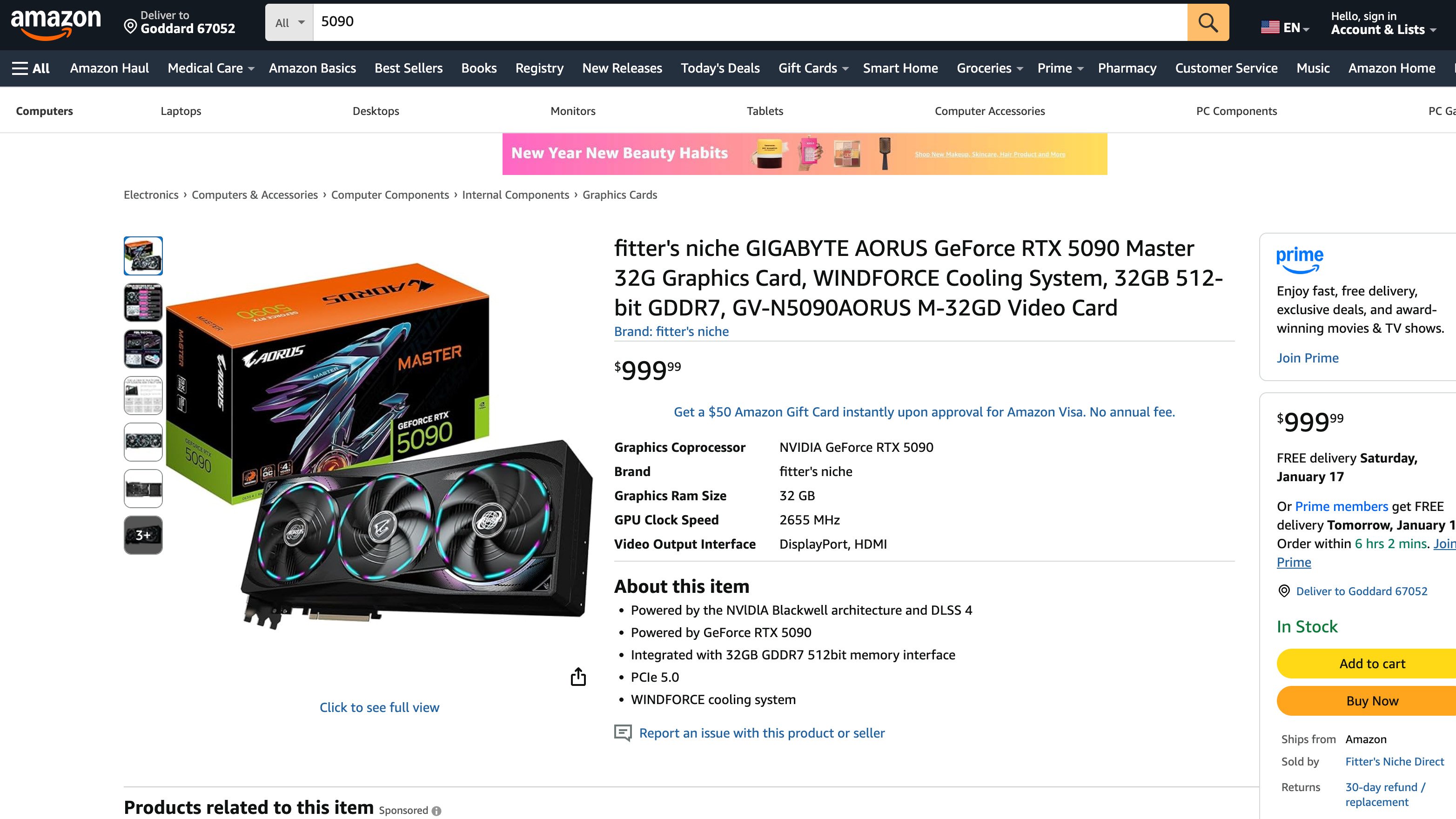
A third-party Amazon seller operating as "Fitter's Niche Direct" has allegedly scammed at least 42 customers through an elaborate bait-and-switch scheme involving fake $999 GeForce RTX 5090 graphics card listings that ship fanny packs instead. The scam, which began surfacing in late December 2025, exploits Amazon's Fulfillment by Amazon (FBA) program and the seller's previously impeccable 99% positive rating across nearly 1,800 reviews.
The Anatomy of a $999 RTX 5090 Scam
The GeForce RTX 5090 officially launched at $1,999, but ongoing global memory shortages and overwhelming demand have driven actual retail prices well above $2,500, with many custom models from partners like Gigabyte, ASUS, and MSI selling out instantly. This pricing reality makes a $999 listing immediately suspicious to informed buyers, but the seller's established reputation and Amazon's platform trust signals convinced many victims to overlook the red flags.
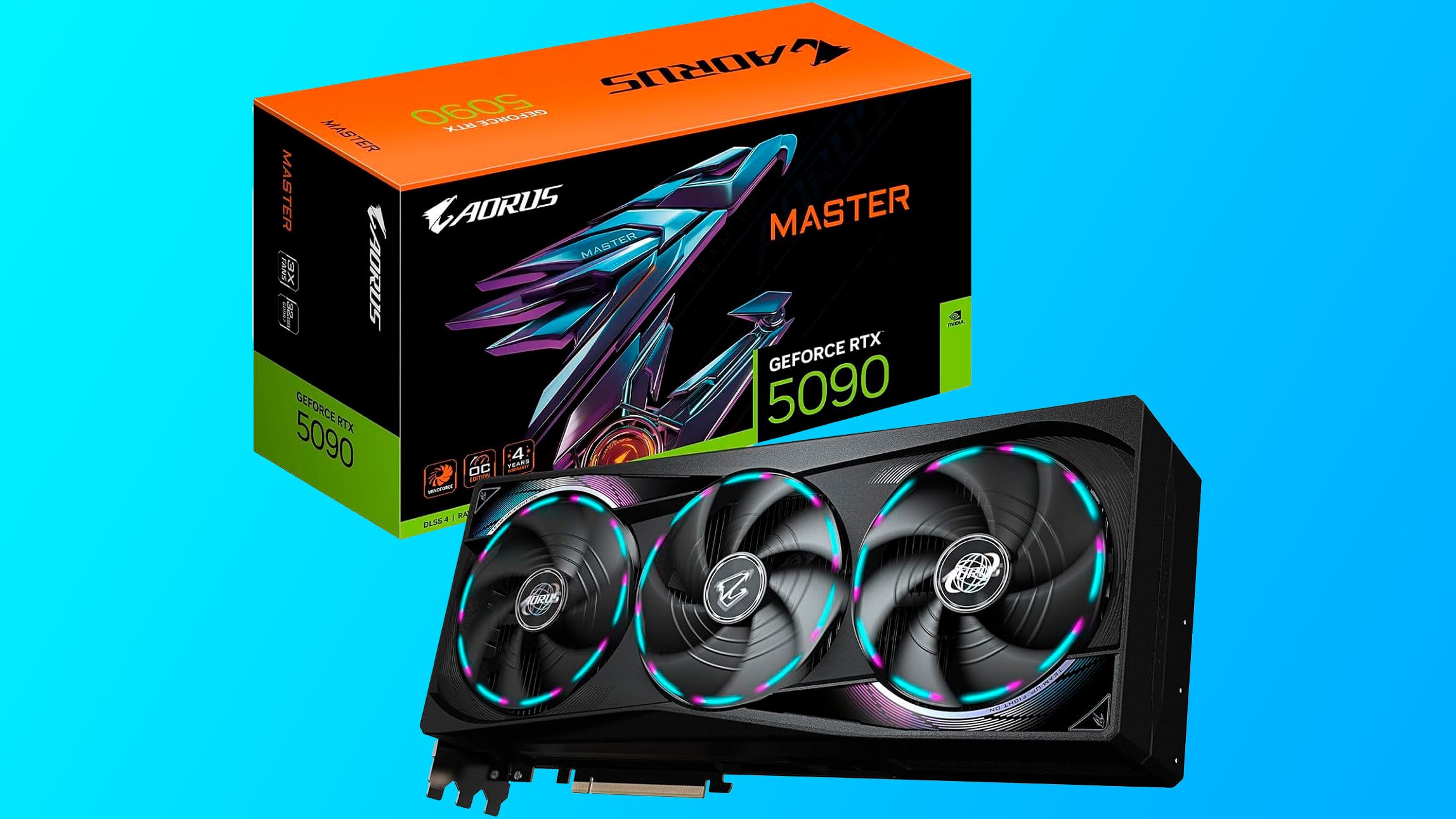
Fitter's Niche Direct, registered in China, maintained a spotless reputation for months before the fraudulent activity began. The storefront currently lists only five products: three generic fanny packs, one elastic stretching band, and the fraudulent RTX 5090 listing. The scam listing specifically targets Gigabyte's Aorus GeForce RTX 5090 Master 32G model, which typically commands premium pricing even at MSRP.
Victims report receiving shipping notifications and tracking numbers, creating the appearance of legitimate transactions. When packages arrive, customers discover inexpensive fanny packs instead of graphics cards. One buyer stated: "These guys are scam artist; they sent me a $1000 fanny pack not a graphics card that I ordered. Don't buy anything from this store."
Amazon's Fulfillment Program Creates Complications
The scam exploits Amazon's Fulfillment by Amazon (FBA) program, where sellers ship inventory directly to Amazon's warehouses. Amazon then handles storage, packing, shipping, customer service, and returns. This creates a veneer of legitimacy because Amazon itself fulfills orders, and the company assumes responsibility for the fulfillment experience.

When victims attempt returns, complications arise. One customer reported: "Ordered a Graphics card and received a fanny pack instead. Now amazon is delaying my return since I returned a fanny pack and not a 5090." This suggests Amazon's return verification systems may flag discrepancies between returned items and original orders, creating additional friction for victims seeking refunds.
Amazon's FBA program typically protects buyers through the company's A-to-z Guarantee, meaning affected customers have likely been reimbursed. However, the program's structure raises questions about accountability. It remains unclear whether Amazon absorbs the financial losses from fraudulent FBA transactions or if sellers ultimately bear responsibility, especially when the seller appears to be exploiting the system.
Market Context and Timing
The scam emerges during peak scarcity for Blackwell architecture GPUs. The RTX 5090 represents NVIDIA's flagship gaming graphics card based on their latest architecture, featuring significant performance improvements over previous generations. However, global memory supply constraints have exacerbated already-high demand, creating perfect conditions for fraudsters.
Legitimate retailers struggle to maintain stock, while scalpers resell cards at even higher premiums. This desperation creates a market segment willing to gamble on deals that seem too good to be true. The $999 price point specifically targets buyers who understand the card's $1,999 MSRP but may not monitor daily market fluctuations closely enough to recognize that even half-price would be unrealistic given current conditions.
Platform Response and Seller Accountability
Perhaps most concerning is Amazon's apparent inaction. Despite 42 confirmed victims and negative feedback spanning from December 28, 2025 through January 12, 2026, the seller remains active. The negative reviews appear struck through with Amazon's disclaimer about fulfillment responsibility, which may protect the seller's overall rating metric while doing little to prevent future victims.
This situation highlights a critical vulnerability in e-commerce platforms. A seller can build reputation through legitimate transactions, then pivot to fraud while exploiting fulfillment programs that obscure the deception. The FBA program's benefits—Prime eligibility, trusted shipping, and customer service handling—provide cover for fraudulent activity until the platform takes decisive action.
Buyer Protection and Warning Signs
For consumers, this case demonstrates several crucial red flags:
- Price anomalies: Any RTX 5090 listing at or below $1,000 should be considered fraudulent given current market conditions
- Seller inventory patterns: A legitimate GPU seller typically carries related components, not unrelated accessories like fanny packs
- Recent rating changes: Scrutinize when negative reviews began appearing, especially for established sellers
- FBA complications: Understand that while Amazon's fulfillment provides shipping reliability, it doesn't guarantee product authenticity from third-party sellers
The scam also reveals how platform trust metrics can be weaponized. A 99% positive rating across 1,800 reviews creates powerful psychological assurance, but that history becomes irrelevant if the seller pivots to fraud. The volume of past legitimate transactions essentially becomes a shield for subsequent scams.
Ongoing Impact
With 42 confirmed victims and counting, this represents significant financial fraud. Each transaction involves approximately $900 in losses (the difference between the scam price and actual product value), though Amazon's buyer protection likely mitigates direct consumer losses. However, the time and frustration involved in resolving these disputes creates non-monetary costs.
The incident also damages confidence in Amazon's marketplace and FBA program. If a seller can maintain active status while allegedly defrauding dozens of customers over multiple weeks, questions arise about Amazon's fraud detection capabilities and response protocols.
For the semiconductor market more broadly, this scam underscores the extreme demand-supply imbalance affecting cutting-edge components. When legitimate channels cannot satisfy demand at reasonable prices, fraudsters find fertile ground. The RTX 5090's position as a coveted gaming and AI accelerator makes it particularly attractive for such schemes.
Until Amazon takes decisive action to suspend Fitter's Niche Direct and implement stronger safeguards against similar exploitation of the FBA program, buyers must remain exceptionally cautious when encountering GPU deals that defy current market realities.
This article is based on reports from affected customers and publicly available seller information. Victims seeking assistance should contact Amazon customer service directly and file reports through appropriate consumer protection channels.
Comments
Please log in or register to join the discussion