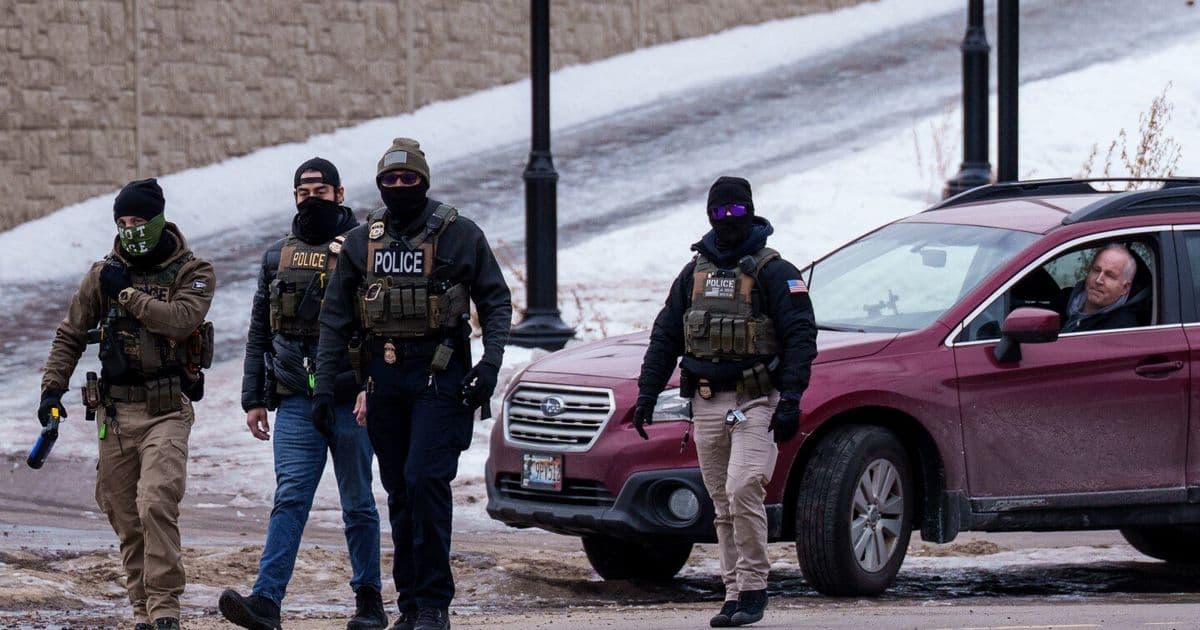
A federal judge ruled that immigration agents broke down a man's door without a warrant. The man was released, then detained again at a routine check-in, highlighting the legal gray zones and confrontational tactics of current immigration enforcement.
The video footage from last weekend in Minneapolis shows a scene of overwhelming force. Armed Immigration and Customs Enforcement (ICE) agents, some in tactical gear, use a battering ram to break through the front door of a home. They are there for Garrison Gibson, a 37-year-old Liberian man who fled the country's civil war as a child.
The arrest was part of a broader, weeks-long immigration crackdown in the Minneapolis-St. Paul area, which the Department of Homeland Security says has resulted in over 2,500 arrests. But this particular arrest drew immediate scrutiny. Gibson’s attorney, Marc Prokosch, argued the action was unlawful because the agents did not have a judicial warrant. U.S. District Judge Jeffrey Bryan agreed, ruling the arrest violated the Fourth Amendment's protection against unreasonable searches and seizures. Gibson was ordered released.
The story, however, did not end there. The very next day, Gibson appeared at an immigration office for a scheduled check-in—a routine requirement for individuals living in the U.S. under an order of supervision. This is a status often granted to people with final removal orders, allowing them to remain in the country temporarily for specific reasons, such as humanitarian concerns or ongoing legal proceedings.
According to Prokosch, the initial officer at the check-in seemed to approve of Gibson's paperwork. "This looks good, I’ll be right back," the officer reportedly said. Moments later, the situation escalated. "There was a lot of chaos, and about five officers came out and then they said, ‘We’re going to be taking him back into custody,’" Prokosch recounted. "I was like, ‘Really, you want to do this again?’"
Gibson is back in custody.
This sequence of events exposes a critical tension in immigration enforcement. A judicial ruling deemed the initial arrest illegal, yet the system appears to have a mechanism to detain the same individual through administrative means. The check-in, a process meant to ensure compliance and monitor status, became the venue for re-detention. It raises questions about the separation of judicial and administrative powers, and whether a judge's order to release can be effectively circumvented by another branch of the government.
The context surrounding this case is highly charged. The Minneapolis crackdown has intensified since January 7, when an immigration agent fatally shot a woman. The incident has fueled protests and a palpable sense of fear and anger in the community. In response, President Donald Trump has threatened to invoke the 1807 Insurrection Act to deploy troops to quell the demonstrations, a move Minnesota's attorney general has vowed to challenge in court.
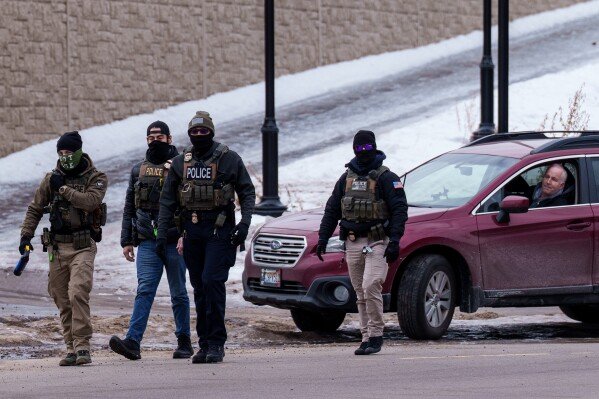
The confrontations have extended beyond the streets. Federal officials report that government vehicles in Minneapolis have had their windows broken, with body armor and weapons stolen. The FBI has arrested at least one person in connection with these incidents. Meanwhile, the tactics of the enforcement agents themselves have drawn attention. In one image from the operation, an ICE agent is seen wearing a face covering with the words "NOT ICE" printed on it, a detail that adds to the surreal and tense atmosphere of the operations.
The fallout is not limited to those directly involved in the crackdown. A separate but related issue has emerged for Native American communities. Tribal leaders and rights organizations across the U.S. have reported instances of their members being stopped or detained by ICE officers. In response, they are advising citizens to carry tribal identification at all times. Ben Barnes, chief of the Shawnee Tribe in Oklahoma, called the reports "deeply concerning." In Minneapolis, organizers have set up booths to help people obtain tribal IDs, a practical response to a systemic problem.
Gibson's case sits at the intersection of these broader patterns: aggressive enforcement tactics, legal challenges to those tactics, and the community-wide anxiety they generate. His story is a specific, personal example of a larger legal and political conflict. The judge's warrant requirement was meant to be a check on government power, a fundamental constitutional safeguard. Yet, the subsequent detention at a routine check-in suggests that the line between judicial oversight and administrative authority can be blurry in practice.
For individuals like Gibson, who have been complying with the system by attending regular check-ins, the experience is a profound disruption. The very process designed to monitor his lawful presence became the tool for his re-arrest. It underscores a difficult reality for those navigating the immigration system: legal rulings can provide temporary relief, but the machinery of enforcement operates with its own momentum and procedures. The question left hanging is whether a court-ordered release can be meaningfully enforced if other branches of the government can simply find another path to the same outcome.
The situation in Minneapolis remains volatile. Protests continue, legal challenges are being filed, and the community is on high alert. For Garrison Gibson, the legal victory of a judge's order proved fleeting, replaced by the uncertainty of detention once more. His case is a stark illustration of the complex, often contradictory forces at play in the current immigration landscape.
Comments
Please log in or register to join the discussion