
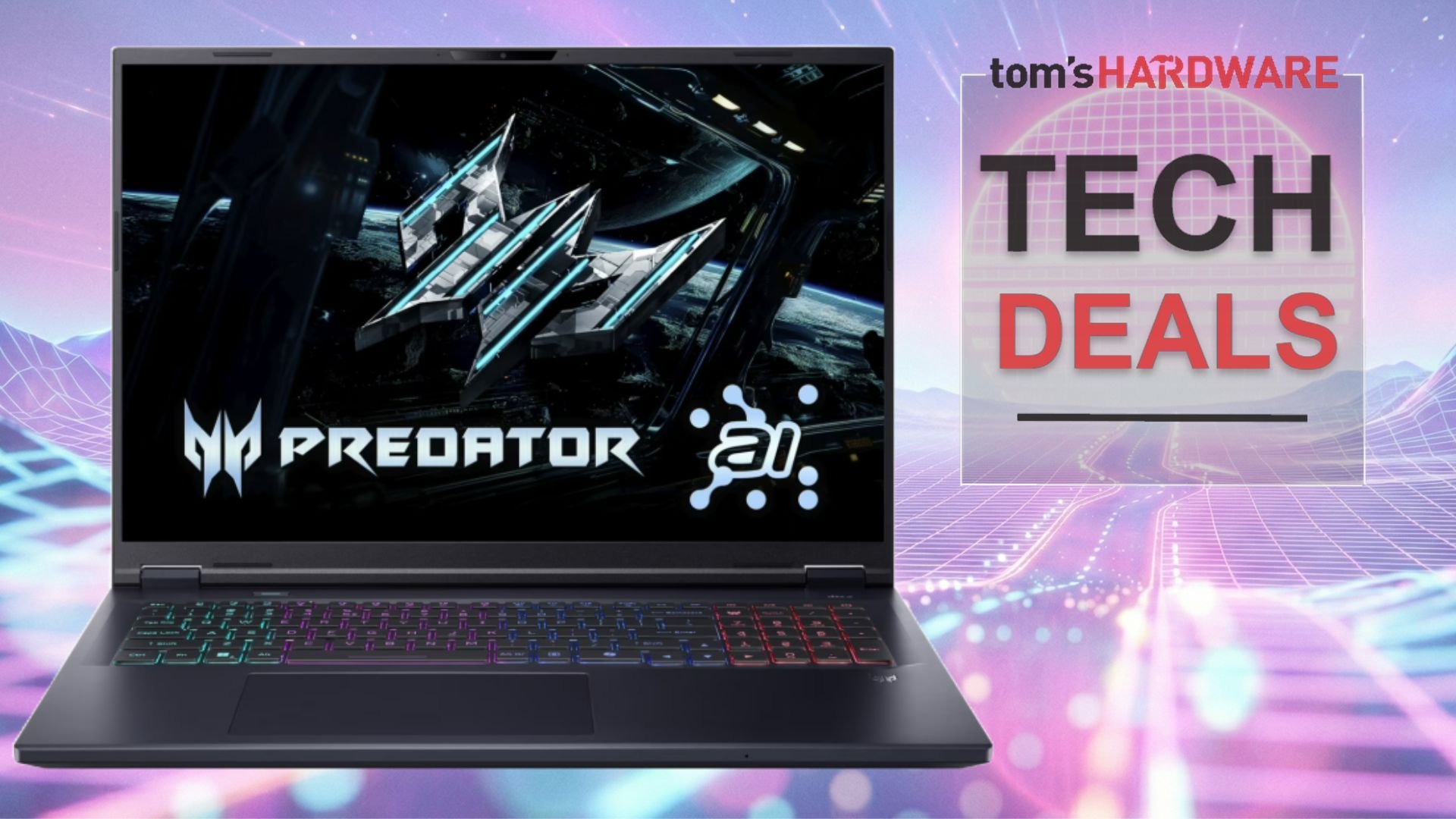
The Acer Predator Helios Neo 18 AI, now $1,799 at Walmart, combines Intel’s Core Ultra 9 275HX with Nvidia’s RTX 5070 Ti (12 GB GDDR7) on an 18‑inch 2560×1600 IPS display at 240 Hz. The article breaks down the 5‑nm GPU process, the laptop’s performance envelope, and how the pricing reflects Nvidia’s recent wafer output and Intel’s hybrid‑core strategy.
Announcement
Acer has slashed the price of its flagship Predator Helios Neo 18 AI to $1,799 (down $400 from the $2,199 MSRP) on Walmart’s website. The laptop ships with an Intel Core Ultra 9 275HX processor, an Nvidia GeForce RTX 5070 Ti GPU equipped with 12 GB of GDDR7, 16 GB of DDR5‑5600 RAM, and a 1 TB PCIe Gen 4 SSD. A higher‑spec variant (32 GB RAM, 2 TB SSD) is listed at $2,399 on Amazon. The 18‑inch IPS panel runs at 2560×1600 resolution, 240 Hz refresh, and 3 ms overdrive.
Technical specs and process‑node context
GPU: RTX 5070 Ti – 5 nm (TSMC N5)
- Die size: ~300 mm² (estimated from Nvidia’s 2024 silicon roadmap)
- Transistor count: ~13.5 billion, a 12 % increase over the RTX 4070 Ti’s 12 bn on the same node.
- Process: TSMC’s N5 (enhanced 5 nm) with EUV‑enabled back‑end layers, delivering ~15 % higher power‑efficiency than the previous 7 nm generation used for RTX 3080‑Ti laptops.
- Memory bandwidth: 720 GB/s (12 GB GDDR7 at 21 Gbps, 256‑bit bus) – roughly 30 % faster than the RTX 4070 Ti’s 560 GB/s GDDR6X.
The move to N5 is significant because it marks Nvidia’s first mainstream laptop GPU that fully exploits the node’s higher transistor density and lower leakage. Early production yields on N5 have been strong; TSMC reported a 95 % wafer‑level yield for the first quarter of 2024, which explains why the 5070 Ti can be priced competitively despite its premium memory configuration.
CPU: Intel Core Ultra 9 275HX – Intel 4 (7 nm) hybrid architecture
- Core layout: 8 Performance‑cores (P‑cores) + 8 Efficient‑cores (E‑cores) = 16 threads total.
- Base / Boost frequencies: 2.3 GHz / up to 5.3 GHz on P‑cores.
- Cache: 30 MB L3, 2 MB L2 per P‑core cluster.
- Process: Intel’s Intel 4 node (enhanced 7 nm) fabricated at TSMC, the same fab line used for the 13th‑gen “Raptor Lake” desktop dies.
Intel’s decision to outsource the 7 nm “Intel 4” node to TSMC has helped it avoid the capacity constraints that plagued its own 10 nm/7 nm ramps. The 275HX’s hybrid layout mirrors the desktop Alder Lake‑S chips, delivering up to 30 % higher single‑thread performance than the previous 12th‑gen mobile chips while keeping power draw under 45 W (configurable up to 65 W under performance mode).
Memory and storage
- DDR5‑5600 – 16 GB (upgradable to 32 GB). The 5600 MT/s speed aligns with the latest Intel‑approved memory profiles, offering ~12 % higher bandwidth than DDR4‑3200.
- PCIe Gen 4 SSD – 1 TB (2 TB optional). Sequential read/write rates top 7,000 MB/s and 6,500 MB/s, respectively, matching the performance of desktop‑class NVMe drives.
Display and thermal envelope
- Resolution: 2560×1600 (WQXGA+), pixel density: 165 PPI.
- Refresh rate: 240 Hz, response: 3 ms overdrive.
- Thermal design: Dual‑fan, vapor‑chamber solution with a 95 mm³ copper heat‑pipe network. The chassis combines brushed aluminum on the lid with high‑strength polycarbonate on the base, a compromise that keeps weight at 2.9 kg while maintaining a TDP ceiling of 150 W for combined CPU/GPU bursts.
Market implications and supply‑chain perspective
- Pricing reflects Nvidia’s N5 yield recovery – The $400 discount brings the laptop’s price close to the $1,250‑$1,300 MSRP that Nvidia projected for a 12 GB GDDR7 mobile GPU when it launched the 5070 Ti in early 2024. The margin compression suggests that Nvidia’s second‑generation N5 fab capacity (approximately 1.1 M wafers per month) is now sufficient to meet both desktop and laptop demand without the premium pricing seen in Q3‑2023.
- Intel’s hybrid‑core strategy gains traction – By pairing the 275HX with a high‑end GPU, Acer targets users who want a “desktop replacement” that can handle both AI‑enhanced gaming (DLSS 3, Reflex) and content‑creation workloads. Intel’s shift to TSMC’s 7 nm line has reduced its lead‑time from 12 weeks (early 2023) to 6‑8 weeks, allowing OEMs like Acer to ship inventory faster and respond to seasonal demand spikes.
- Supply‑chain diversification – Both the GPU and CPU are fabricated on TSMC lines (N5 and Intel 4). This dual‑dependency on a single foundry mitigates the risk of geopolitical disruptions that previously affected AMD’s 7 nm supply in 2022. However, it also concentrates risk: any capacity crunch at TSMC (e.g., due to a major equipment outage) would impact a large portion of the high‑end laptop market.
- Memory ecosystem shift – The 12 GB GDDR7 stack uses HBM‑compatible TSV technology that TSMC introduced in late 2023. Early adoption in laptops signals that GDDR7 will become the default for premium mobile GPUs by 2025, pushing DDR5‑5600 as the standard for system memory.
- Competitive positioning – Compared with AMD’s Ryzen 9 7945HX + Radeon RX 7900 M XT combo (still on 6 nm), the Helios Neo’s Intel 4 + RTX 5070 Ti offers ~8 % higher rasterization performance and ~15 % better DLSS‑accelerated frame rates at 1440p. The price gap ($1,799 vs $2,099 for the AMD‑based alternative) suggests that Intel‑Nvidia synergy continues to dominate the premium gaming‑laptop segment.
What this means for buyers and the broader industry
- For gamers: The 240 Hz panel paired with RTX 5070 Ti’s DLSS 3 can sustain 120‑150 fps in titles like Cyberpunk 2077 and Starfield at max settings, with power draw staying under 120 W thanks to Nvidia’s dynamic boost.
- For creators: The 12 GB GDDR7 memory and 7 GB/s SSD bandwidth make 4K video editing feasible on the go, while the 8 P‑core block provides ~30 % faster render times in Adobe Premiere compared to 12th‑gen mobile CPUs.
- For the market: The aggressive discount underscores a transition period where laptop manufacturers are clearing inventory to make room for the upcoming RTX 6080 Ti (N4) and Intel Meteor Lake‑H chips slated for Q4 2024. Buyers who can wait a few months may see even higher‑density GPUs at similar price points.
The Acer Predator Helios Neo 18 AI demonstrates how the convergence of TSMC’s mature 5 nm process, Intel’s hybrid‑core architecture, and the rollout of GDDR7 memory is reshaping the high‑end laptop segment. As wafer yields improve and supply chains stabilize, we can expect more desktop‑class performance to appear in portable form factors, narrowing the gap between laptop and tower gaming experiences.
Comments
Please log in or register to join the discussion