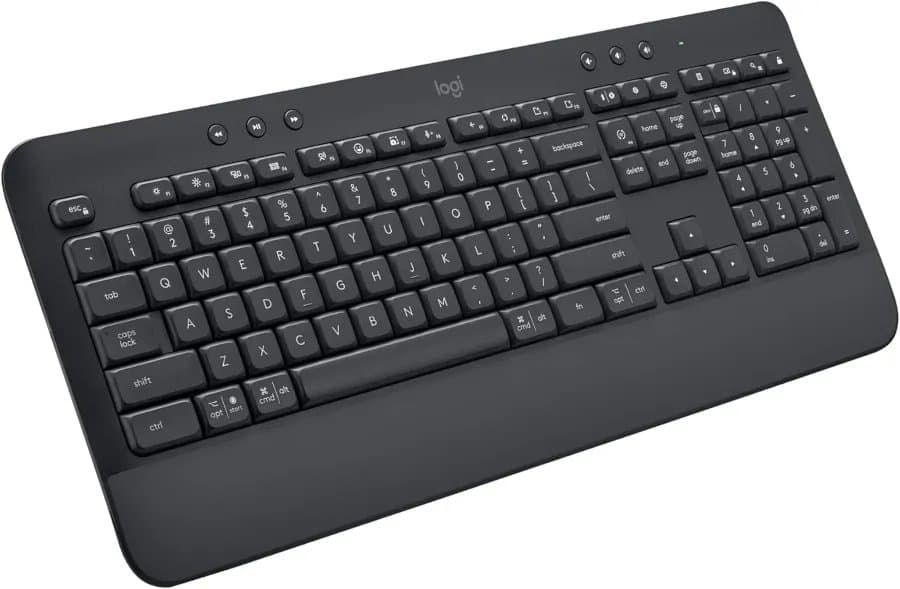
The upcoming Linux 7.1‑rc4 release brings two key HID subsystem updates: full HID++ functionality for a broad set of new Logitech Bluetooth keyboards and a comprehensive sanitization patch that protects against malicious input devices. These changes mean homelab builders can now manage battery life, firmware updates, and advanced configurations on newer Logitech keyboards directly from Linux, while the kernel gains stronger defenses against rogue HID hardware.
Linux 7.1 Adds Full HID++ Support for the Latest Logitech Bluetooth Keyboards & Tightens Input Sanitization
The Linux 7.1 release candidate is on the horizon, and the HID subsystem has received a hefty dose of new functionality and security hardening. The changes are split into two main areas:
- Expanded Logitech HID++ support for a wide range of recent Bluetooth keyboards.
- Enhanced input sanitization to guard against malicious HID devices.
1. Logitech HID++ – Full Control Over New Bluetooth Keyboards
The logitech‑hidpp driver now recognises a host of newer Bluetooth keyboards. Adding the device IDs was straightforward, but the payoff is substantial: users can now access the full range of HID++ features on these keyboards from Linux.
What HID++ Gives You
- Battery monitoring and management – see real‑time battery levels and trigger low‑power modes.
- Firmware updates – push new firmware directly over the air.
- Advanced configuration – remap keys, adjust lighting, and tweak repeat rates.
- Non‑standard HID features – such as custom keysets for gaming or productivity.
Supported Keyboards
| Keyboard Model | Key Features | HID++ Enabled? |
|---|---|---|
| Logitech Signature K650 & B2B | Compact, low‑profile | ✅ |
| Logitech Pebble Keys 2 K380S | Ultra‑thin, multi‑device | ✅ |
| Logitech Casa Pop‑Up Desk & B2B | Desk‑mounted, ergonomic | ✅ |
| Logitech Wave Keys & B2B | Wave‑style layout | ✅ |
| Logitech Signature Slim K950 & B2B | Slim profile, RGB | ✅ |
| Logitech MX Keys S & B2B | Premium keys, RGB | ✅ |
| Logitech Keys‑To‑Go 2 | Portable, hot‑key support | ✅ |
| Logitech Pop Icon Keys | Iconic keys, media controls | ✅ |
| Logitech MX Keys Mini & B2B | Compact, silent | ✅ |
| Logitech Signature Slim Solar+ K980 B2B | Solar charging, RGB | ✅ |
| Logitech Bluetooth Keyboard K250/K251 | Classic layout | ✅ |
| Logitech Signature Comfort K880 & B2B | Comfortable key travel | ✅ |
These additions were merged overnight into the mainline kernel, and the commit history shows that only device IDs needed to be added – no major driver rewrites. That means the changes land cleanly and are ready for testing in the upcoming 7.1‑rc4.
Build Recommendations
If you’re assembling a homelab or a custom workstation and want to take advantage of HID++ on Linux, consider the following:
| Component | Recommendation | Why |
|---|---|---|
| CPU | Any recent x86‑64 or ARM Cortex‑A72 | HID++ is CPU‑light; modern CPUs handle it comfortably |
| Kernel | 7.1‑rc4 or later | HID++ support is only in 7.1+ |
| Firmware | Keep Logitech firmware up‑to‑date via hidpp tools |
Prevents compatibility regressions |
| Power | Use a UPS or battery backup | HID++ allows battery monitoring – useful for portable setups |
The hidpp utilities (hidpp-tool, hidpp-update) are available in most distributions’ repositories and provide a CLI interface to query battery status, update firmware, and tweak key mappings.
2. Input Sanitization – Defending Against Malicious HID Devices
The second major change in the HID merge window is a set of core patches aimed at sanitizing input data from HID devices. The kernel now performs stricter validation on reports, ensuring that malformed or malicious data cannot trigger undefined behavior or security holes.
Why It Matters
- Hardware attacks: A rogue keyboard could send malformed reports to crash the kernel or trigger privilege escalation.
- USB‑to‑Bluetooth bridges: Devices that forward input over Bluetooth can be abused if the kernel trusts the data blindly.
- Supply‑chain security: As more peripherals are shipped with pre‑installed firmware, ensuring the kernel can reject tampered reports is critical.
What the Patch Does
- Validates report lengths against the descriptor.
- Checks that report IDs are within the supported range.
- Rejects reports that exceed the maximum packet size.
- Adds kernel logs for suspicious activity (useful for audit trails).
These changes are part of a broader effort to harden the HID subsystem, and they complement the new HID++ support by ensuring that only well‑formed data reaches the driver.
Build Recommendations
For a hardened homelab:
| Component | Recommendation | Why |
|---|---|---|
| Kernel | 7.1‑rc4 or later with CONFIG_HID_INPUT_SANE enabled |
Sanitization patches live in the core HID code |
| Monitoring | auditd or syslog with high verbosity for HID events |
Detect suspicious reports early |
| Firmware | Verify device firmware hashes | Prevent tampered devices from being accepted |
Conclusion
The Linux 7.1 release candidate brings practical improvements for everyday users and a solid security boost for administrators. With full HID++ support for a wide array of Logitech Bluetooth keyboards, you can now manage battery life, firmware, and key layouts directly from Linux. At the same time, the kernel’s enhanced input sanitization protects against malicious HID hardware, a critical layer of defense in an era where peripherals can be weaponised.
If you’re building a homelab or a custom workstation, these changes mean you can rely on Linux to give you both flexibility and security out of the box.
{{IMAGE:2}}
Comments
Please log in or register to join the discussion