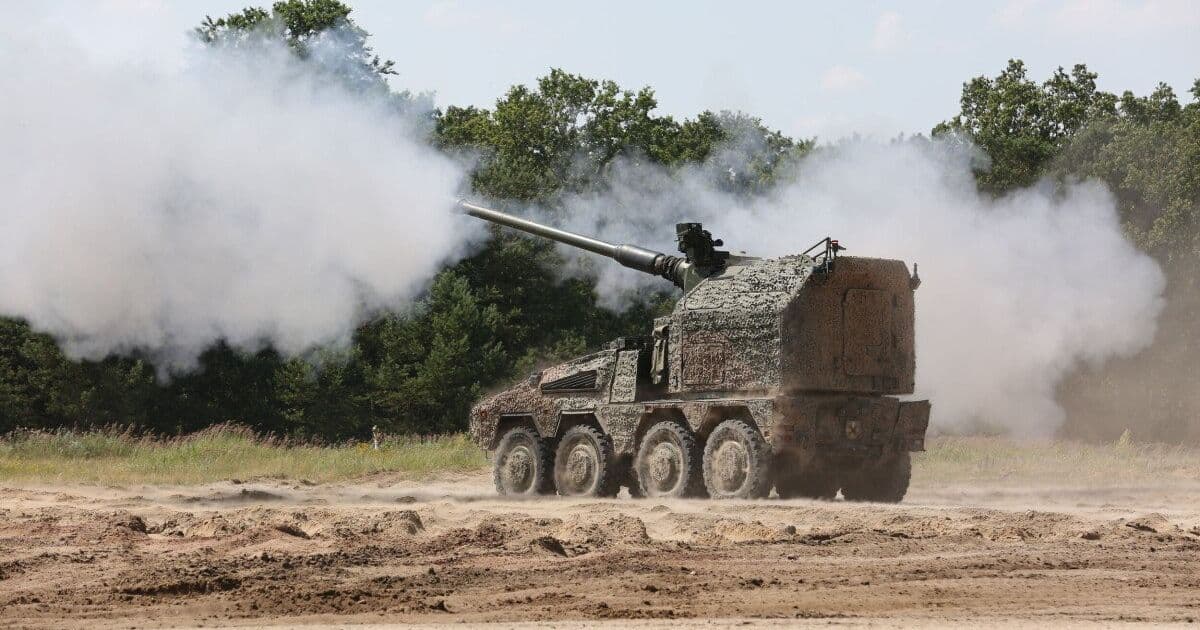
The British Army will receive 72 Boxer‑mounted RCH 155 remote‑controlled howitzers from 2028, a £1 billion contract that replaces the ageing AS‑90 fleet and creates a new domestic supply chain for high‑calibre artillery.
UK reloads artillery plans with £1 B remote‑control howitzer order
The Ministry of Defence (MoD) has signed a £1 billion contract to deliver 72 next‑generation mobile artillery units to the British Army. Each unit consists of a Rheinmetall RCH 155 remote‑controlled howitzer module mounted on a Boxer 8×8 armoured vehicle. First deliveries are slated for 2028, with a minimum deployable capability expected before the end of the decade.
What the contract entails
- System composition – The RCH 155 is a 155 mm, auto‑loading gun housed in a turreted module. It can fire up to eight rounds per minute and engage targets out to 70 km (44 mi). Integrated fire‑control computers perform real‑time ballistic calculations, while a radio data link connects the gun to a remote artillery control system.
- Vehicle platform – The gun is mounted on the Boxer armoured vehicle, an 8×8, all‑terrain platform that supports multiple mission modules. The British Army will use the troop‑carrier variant for the artillery role, with additional Boxer variants (ambulance, command) retained for other tasks.
- Industrial split – Barrel, breech, recoil system and trunnions will be produced by Rheinmetall at its large‑calibre facility in Telford, using British steel supplied by Sheffield Forgemasters. The Boxer chassis, engine and drivetrain will be built by KNDS UK in Stockport. The MoD estimates a total of 623 Boxer vehicles will be manufactured for the Army under this programme.
- Funding and timeline – The £1 billion contract follows a £52 million early‑capability demonstrator signed in December 2025. The demonstrator validated the remote‑control concept and the integration of the RCH 155 module onto the Boxer chassis.
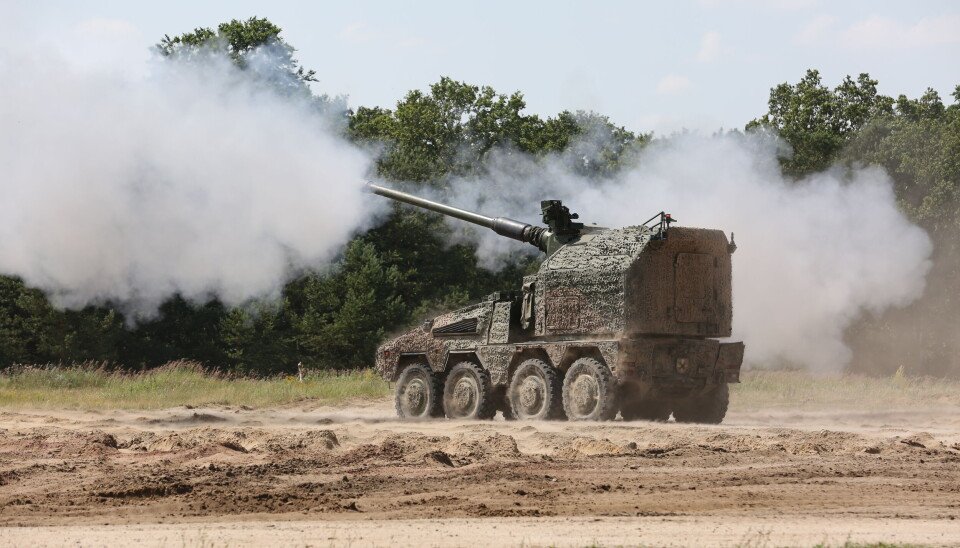 Caption: RCH 155 mobile artillery system mounted on a Boxer chassis
Why the RCH 155 is needed now
The British Army’s existing AS‑90 self‑propelled howitzers have been phased out over the past three years, with the final units donated to Ukraine to support its defence against Russia. The AS‑90’s tracked chassis and turret‑mounted gun made it a heavy, maintenance‑intensive platform. By contrast, the Boxer‑mounted RCH 155 offers:
- Increased mobility – The wheeled Boxer can travel faster on road networks and requires less logistical support than a tracked system.
- Remote operation – Operators can remain protected inside the vehicle or a command post, reducing crew exposure to counter‑battery fire.
- Higher firepower – An eight‑round‑per‑minute rate of fire and 70 km range exceed the AS‑90’s capabilities, providing longer reach and faster target engagement.
- Future‑proofing – The modular design allows upgrades to fire‑control software, ammunition types and networking standards without replacing the whole vehicle.
Impact on the UK defence industry
The contract is framed as a dual‑benefit investment: strengthening NATO’s forward firepower while creating skilled jobs in Britain. Key outcomes include:
- Domestic supply chain – Manufacturing critical barrel components and the vehicle chassis in the UK reduces reliance on foreign suppliers and secures a strategic industrial base.
- Technology transfer – Rheinmetall’s partnership with Sheffield Forgemasters introduces advanced metallurgy techniques to British steel producers.
- Export potential – Once in service, the Boxer‑RCH 155 combination could be offered to other NATO members seeking a rapid‑deployment artillery solution.
Defence Secretary John Healey highlighted these points, stating that the programme “delivers for the battlefield and for Britain’s economy.”
How the system will be fielded
The MoD plans a phased introduction:
| Phase | Milestone | Approx. Date |
|---|---|---|
| 1 | Delivery of first 12 RCH 155 units (training and evaluation) | 2028 |
| 2 | Full operational capability for the initial 72‑unit batch | 2030 |
| 3 | Integration of additional Boxer variants (command, ambulance) into artillery battalions | 2031‑2033 |
During Phase 1, crews will train on the remote‑control interface and on networked fire‑control procedures. Phase 2 will see the units assigned to mechanised infantry brigades, providing a mobile, network‑centric fire support element capable of rapid displacement and shoot‑and‑scoot tactics.
Context within UK artillery procurement
The RCH 155 order follows a short‑term stop‑gap purchase of 14 Archer mobile artillery systems, which are 155 mm guns mounted on a 6×6 articulated truck chassis. The Archer provided an interim capability while the longer‑term solution was evaluated. The RCH 155 now represents the definitive replacement for the AS‑90 fleet, aligning with the UK’s broader Modernisation Programme that emphasizes digitised, networked weapons systems.
What this means for NATO
With Russia’s continued aggression in Eastern Europe, NATO allies are prioritising longer‑range, precision‑guided artillery. The RCH 155’s 70 km reach, combined with the ability to fire precision‑guided munitions, enhances the alliance’s deep‑strike capacity. The remote‑control feature also aligns with NATO’s push for crew‑protected fire support, reducing casualties in high‑intensity conflict.
The RCH 155 remote‑controlled howitzer represents a significant step forward for the British Army’s firepower, industrial base, and contribution to collective defence.
Comments
Please log in or register to join the discussion