A new terminal session manager called Agent of Empires helps developers organize and monitor multiple AI coding agent sessions using tmux and a Rust-based TUI.
As developers increasingly incorporate AI coding assistants like Claude Code and OpenCode into their workflows, managing multiple concurrent sessions has become a practical challenge. Enter Agent of Empires (aoe), a new open-source tool that brings structure to AI agent sessions through terminal multiplexing.
Developed by Nick Brake and written in Rust, Agent of Empires acts as a wrapper around tmux to create persistent workspaces for AI coding agents. Each session becomes a managed tmux environment, allowing developers to organize projects hierarchically across different profiles. This approach addresses the common pain point of disorganized terminal tabs and lost sessions when working with multiple AI tools simultaneously.
The core functionality centers around its terminal user interface (TUI), which provides a dashboard for session management:
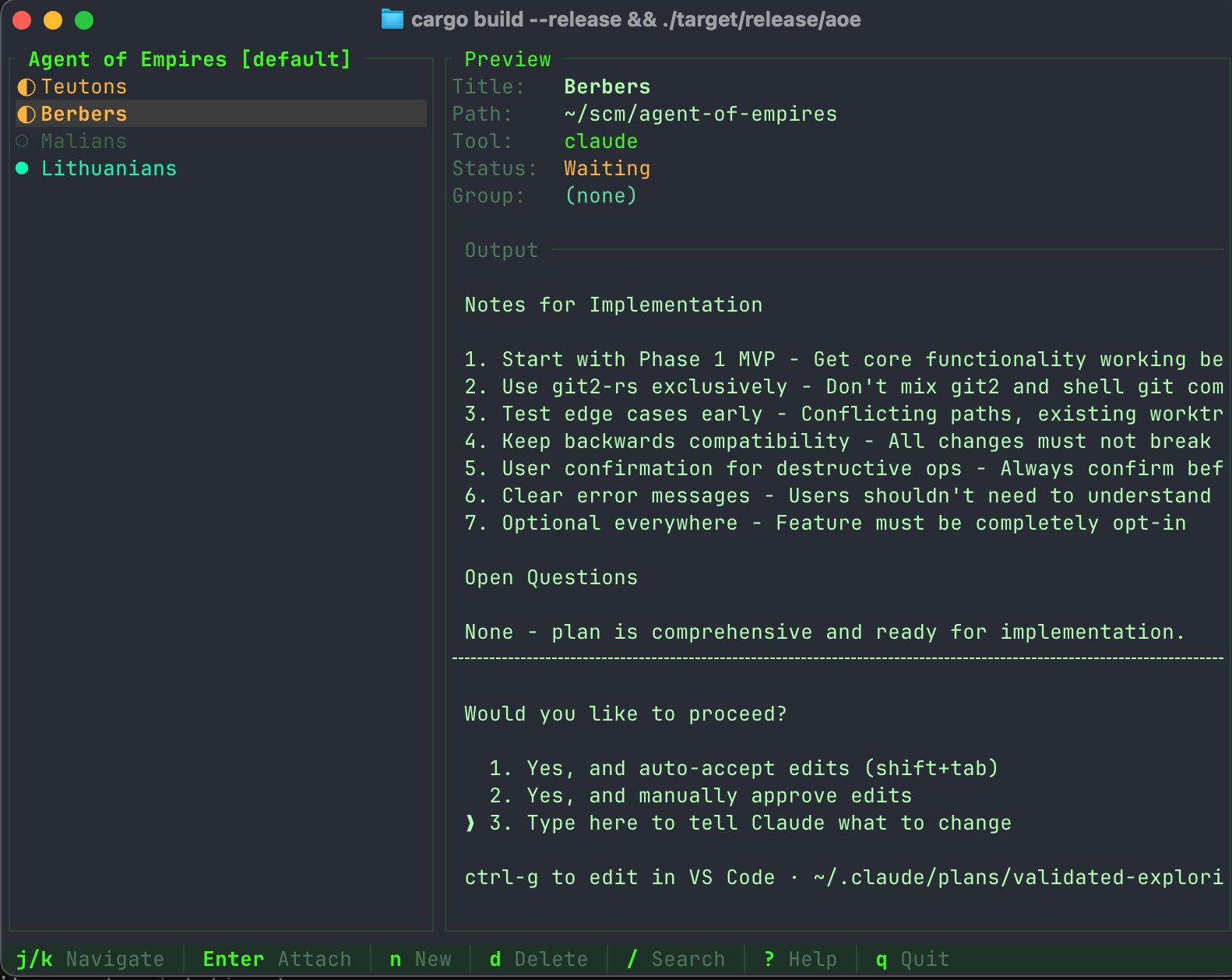
- Profile Isolation: Separate workspaces for different contexts (e.g., work vs personal projects) with dedicated configuration files
- Session Persistence: tmux-backed sessions survive application restarts
- Agent Awareness: Automatic detection of Claude Code and OpenCode sessions
- Hierarchical Organization: Folder structures for grouping related sessions
Installation is straightforward via Homebrew (brew install njbrake/aoe/aoe) or a one-line shell script. The tool's architecture stores configurations in ~/.agent-of-empires/, with separate JSON files maintaining session data and group structures per profile.
For developers using mobile SSH clients like Termius, the documentation recommends nesting Agent of Empires within a primary tmux session to maintain session control. The project also transparently notes compatibility limitations, such as the known Claude Code flickering issue unrelated to aoe.
Positioned as a practical workflow organizer rather than an AI innovation, Agent of Empires adopts tmux's reliability while adding session visualization and management features. The MIT-licensed project joins a growing ecosystem of tools addressing the operational challenges of working with AI assistants, offering a focused solution for developers managing multiple concurrent coding sessions.
Comments
Please log in or register to join the discussion