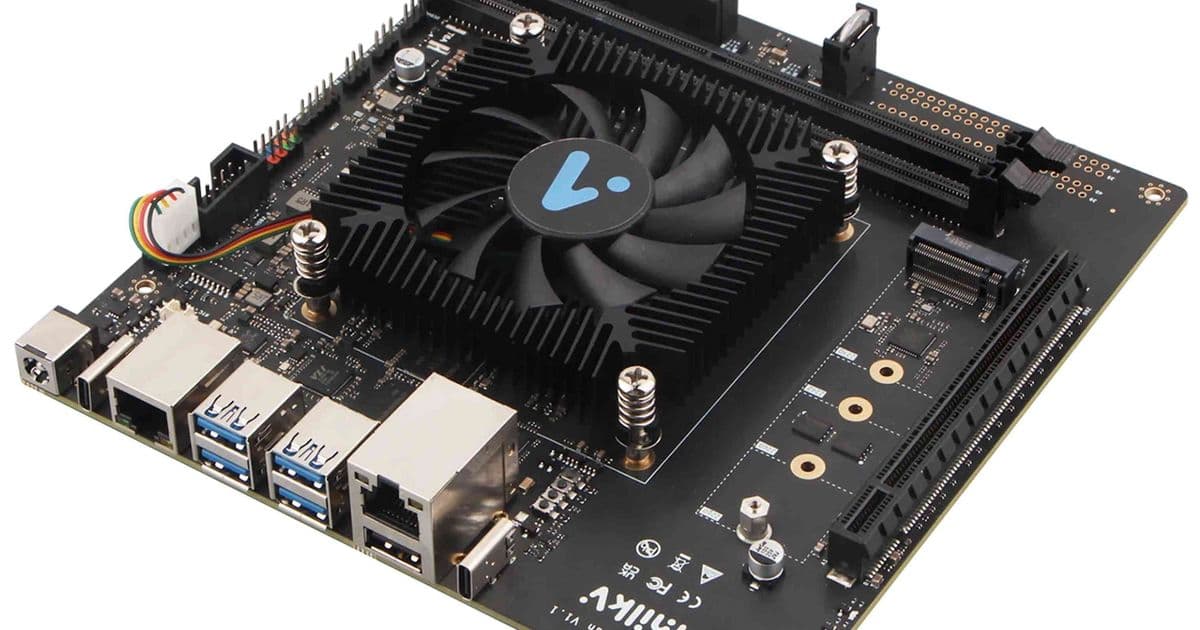
The $329 Milk-V Titan Mini-ITX board combines RISC-V architecture with desktop-grade features like PCIe 4.0 graphics support and 64GB ECC memory, targeting developers and hardware enthusiasts.
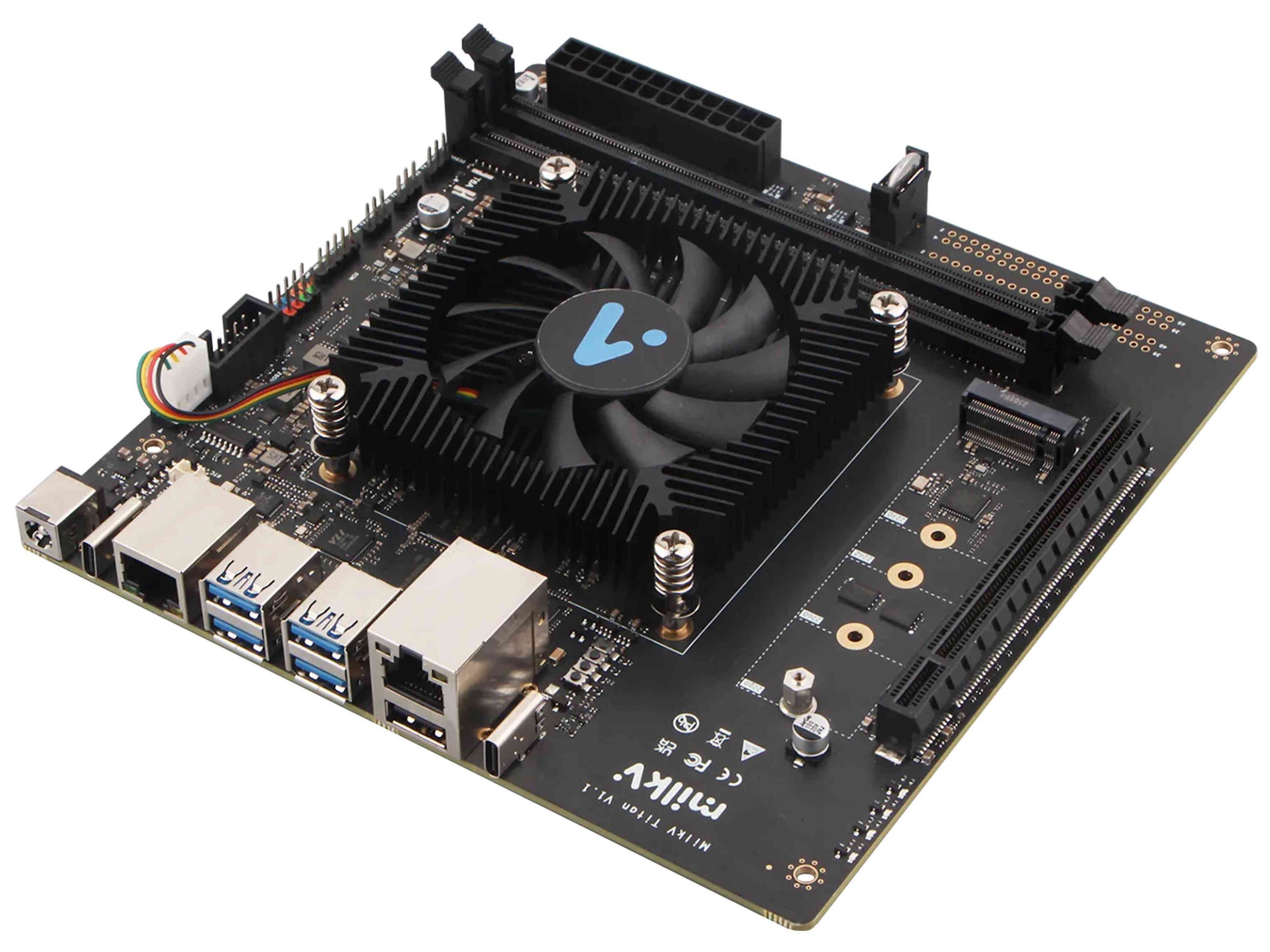
The Milk-V Titan represents a significant evolution in RISC-V computing, packing desktop-grade hardware capabilities into a Mini-ITX form factor. At $329 via Arace, this board ships with the UltraRISC UR-DP1000 processor featuring eight RISC-V cores clocked up to 2GHz - a substantial leap over previous RISC-V development boards limited to embedded applications.
What sets the Titan apart is its unprecedented expansion capabilities for RISC-V architecture. The PCIe 4.0 x16 slot enables discrete GPU installation, while dual DDR4 slots accommodate up to 64GB of ECC memory - features typically reserved for x86 workstations. Storage gets a modern interface too, with a PCIe 4.0 x4 M.2 slot delivering sequential speeds up to 8GB/s. Connectivity includes four USB 3.2 Gen1 (5Gbps) ports and Gigabit Ethernet, though the absence of Wi-Fi or 2.5GbE may disappoint some users.
Compared to ARM-based alternatives like Raspberry Pi 5 or Turing RK1, the Titan offers superior expansion potential but requires technical investment. RISC-V's software ecosystem remains developing, though Ubuntu support provides a foundation. Performance expectations should be tempered against x86 counterparts - while the octa-core design looks competitive on paper, real-world application performance depends heavily on software optimization for the emerging architecture.
The implementation presents practical considerations. Preorders require patience with 30-45 day shipping windows, and international buyers should budget for import fees. Power efficiency metrics remain unverified, though the Mini-ITX format suggests standard ATX PSU compatibility.
This board specifically targets:
- RISC-V software developers needing desktop-class hardware for testing
- Hardware enthusiasts exploring alternative architectures
- Educational institutions teaching computer architecture principles
- Niche applications where open-source hardware advantages outweigh mainstream compatibility
For these users, the Titan delivers unique value. The combination of ECC memory support and GPU expansion enables workstation-class experimentation impossible on previous RISC-V boards. Documentation and community resources appear centralized on Milk-V's GitHub, though newcomers should expect steeper learning curves than mature platforms.
While not replacing mainstream desktops, the Titan bridges RISC-V's capability gap between embedded controllers and full computing platforms. Its success ultimately depends on software maturation, but as a hardware foundation, it enables exploration previously unavailable in the ecosystem. For developers committed to RISC-V's open-source future, this board provides essential desktop-scale testing capabilities at a reasonable entry price.
Comments
Please log in or register to join the discussion