A developer leveraged Claude and OpenAI's vision API to automate his decade-long struggle to catalog 460 books, transforming tedious execution into a showcase of AI's potential. The project highlights how AI agents handle coding grunt work, freeing humans to make nuanced decisions on design and quality.
For years, developers have grappled with personal projects stalled by execution bottlenecks—tasks too tedious to prioritize despite their technical simplicity. One developer's journey to catalog his 470-book collection exemplifies this friction, and how AI agents are reshaping the developer workflow by offloading implementation while amplifying human judgment.

The challenge was deceptively straightforward: create a digital catalog of a diverse library, including Romanian editions and obscure antiquarian finds. Traditional tools like ISBN scanners and Goodreads failed on non-standard entries, yielding partial data that felt "worse than no data at all." After multiple abandoned attempts, the solution emerged not from a new tool, but from AI-driven automation. Using Claude, the developer wrote a Python script that processed photos of book spines through OpenAI's vision API, extracting metadata like title, author, and publisher into a JSON file:
{
  "id": "ZfEPBCMZDaCKm6k0NVJ8F",
  "title": "Simulacre și simulare",
  "author": "Jean Baudrillard",
  "publisher": "Colectia Panopticon",
  "source": "dataset/83.jpg"
}
The script achieved 90% accuracy, with failures attributed to poor lighting or damaged covers. Crucially, the developer decided against chasing perfection—fixing the remaining 10% manually was a deliberate choice prioritizing efficiency over completeness. As he noted, "That was the first moment where my role became clear."
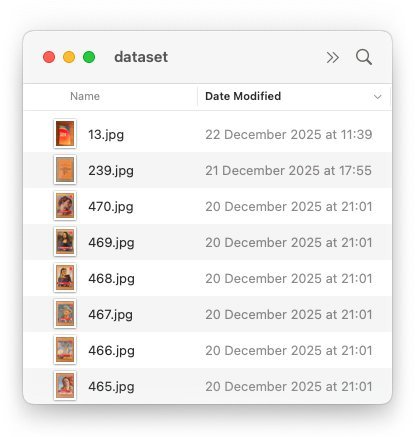
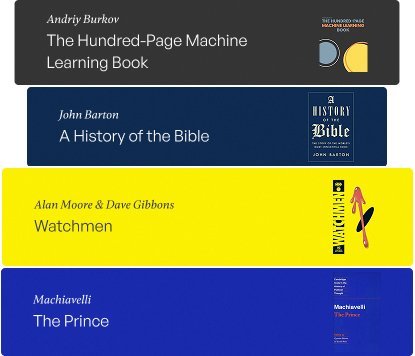
Next, Claude automated cover image retrieval via Open Library's API, supplementing gaps with Google Images and SerpAPI. Only ten covers required manual Photoshop edits, reinforcing that AI handles scale while humans resolve edge cases. The UI development further illustrated this partnership: rejecting a generic grid layout, the developer envisioned a dynamic bookshelf mimicking physical spines. Claude executed the code for color quantization, spine-width mapping based on page counts, and scroll-tilt animations using Framer Motion.
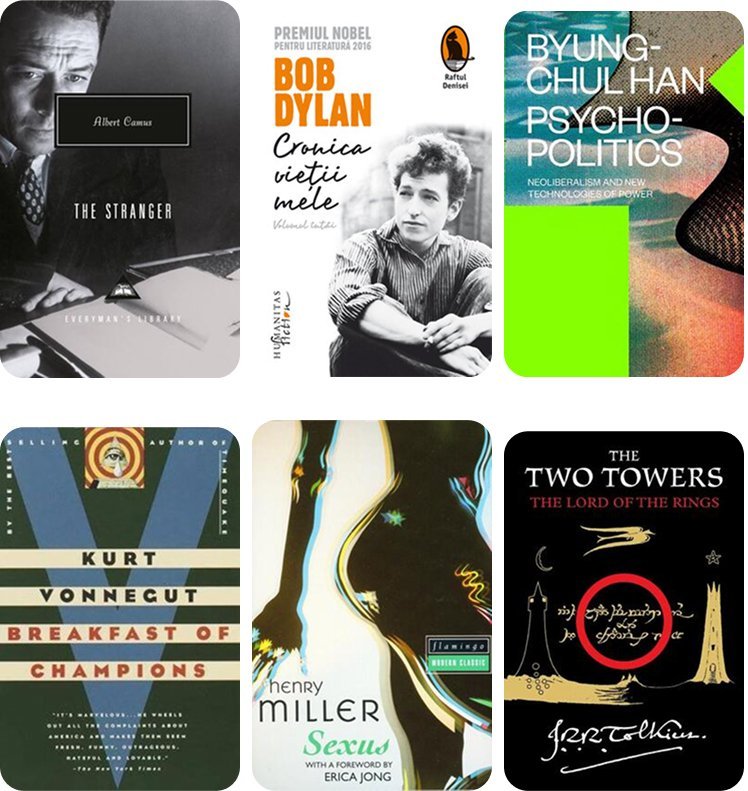
Technical hiccups arose, like janky infinite scroll, but the developer axed the feature not due to bugs but because it contradicted user experience needs—460 books didn't require optimization. Similarly, a mobile-friendly stack view was seamlessly added by repurposing existing code patterns.
This project underscores a pivotal shift: AI agents like Claude reduce the cost of execution to near zero, enabling developers to focus on taste-driven decisions—whether it's aesthetic refinements, usability trade-offs, or accepting "good enough" data. As execution commoditizes, the human role evolves toward curating quality and intent, a transformation with profound implications for software development workflows.
Source: Original article
Comments
Please log in or register to join the discussion