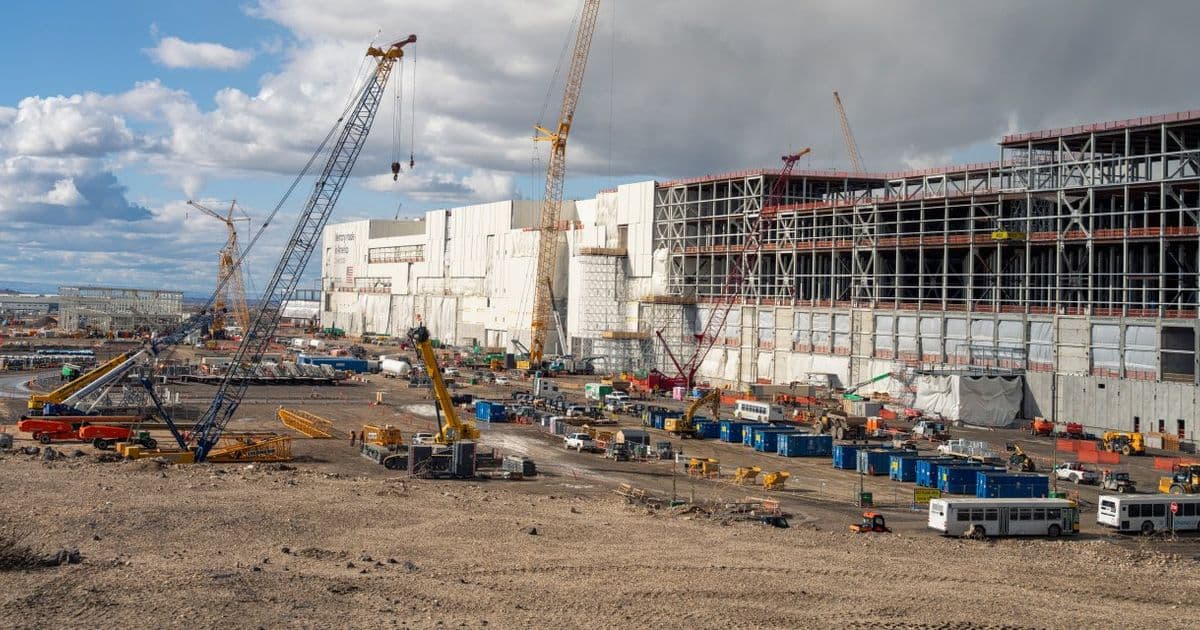
Micron Technology reports fulfilling just 50%-66% of demand from strategic customers as AI workloads create unprecedented pressure on memory supply chains, despite its ongoing $200B U.S. manufacturing expansion.
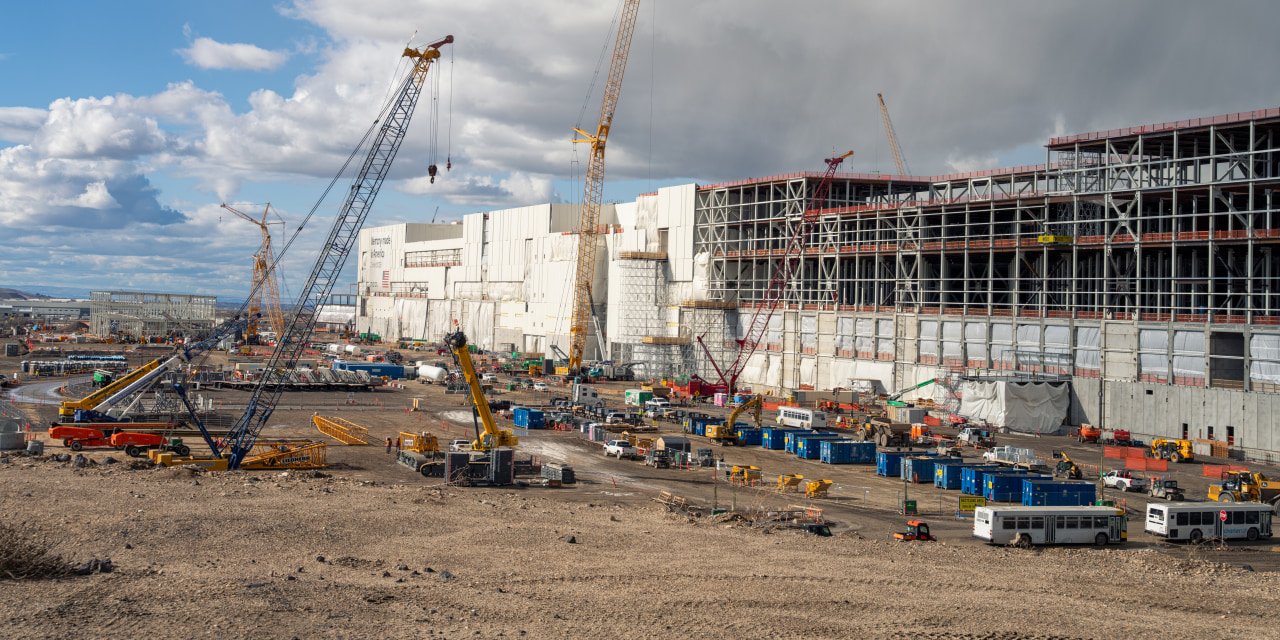
The relentless surge in artificial intelligence adoption is exposing critical bottlenecks in semiconductor supply chains, with memory chip manufacturer Micron Technology revealing it can currently satisfy only 50%-66% of demand from key customers. This supply gap persists despite Micron's ongoing $200 billion U.S. manufacturing expansion plan, underscoring the seismic shift in memory markets traditionally viewed as low-margin commodities.
According to Robbie Whelan's Wall Street Journal report, data centers' insatiable appetite for high-bandwidth memory (HBM) and advanced DRAM to power AI training and inference workloads has fundamentally altered market dynamics. Where memory chips were once interchangeable components traded on thin margins, they’ve become strategic assets with supply constraints directly impacting AI deployment timelines.
Micron’s disclosure quantifies the tangible impact of the AI infrastructure buildout. The company’s $200 billion U.S. expansion—spanning new fabrication plants in New York, Idaho, and other states—represents one of the largest private industrial investments in American history. Yet even this massive capacity increase cannot immediately close the demand gap for advanced memory optimized for AI accelerators. Industry analysts note that lead times for HBM modules now exceed 40 weeks, forcing hyperscalers like Google, Amazon, and Microsoft to compete aggressively for allocation.
The shortfall carries significant business implications:
- Pricing Power Shift: Memory suppliers now operate from a position of unprecedented leverage. Contract prices for DDR5 and HBM3E memory rose 18-23% quarter-over-quarter in Q4 2025, with further increases projected throughout 2026.
- System Design Pressures: Hardware manufacturers face tradeoffs between performance targets and material costs. Some GPU makers are exploring alternative architectures or cache configurations to mitigate memory dependency.
- Geopolitical Manufacturing Race: Micron’s U.S. expansion—heavily supported by CHIPS Act funding—highlights the national security dimension of advanced memory production. Currently, over 90% of cutting-edge HBM comes from Korean suppliers Samsung and SK Hynix.
Technical constraints exacerbate the challenge. Producing HBM involves stacking DRAM dies vertically using through-silicon vias (TSVs), then packaging them alongside processors using advanced techniques like wafer-on-wafer bonding. Yield rates for these complex assemblies remain below those of conventional memory, limiting output scalability even as demand skyrockets.
Micron expects its new facilities to gradually alleviate pressure starting late 2026, with CEO Sanjay Mehrotra stating that "AI-driven demand represents a multi-year growth vector." However, the immediate reality sees cloud providers and AI startups rationing GPU access based partly on memory availability—a scenario unthinkable five years ago when memory was considered a buyer's market. This supply-demand imbalance now serves as a key indicator of AI infrastructure maturity, with Micron’s capacity figures offering a rare public benchmark for the industry’s scaling challenges.
Comments
Please log in or register to join the discussion