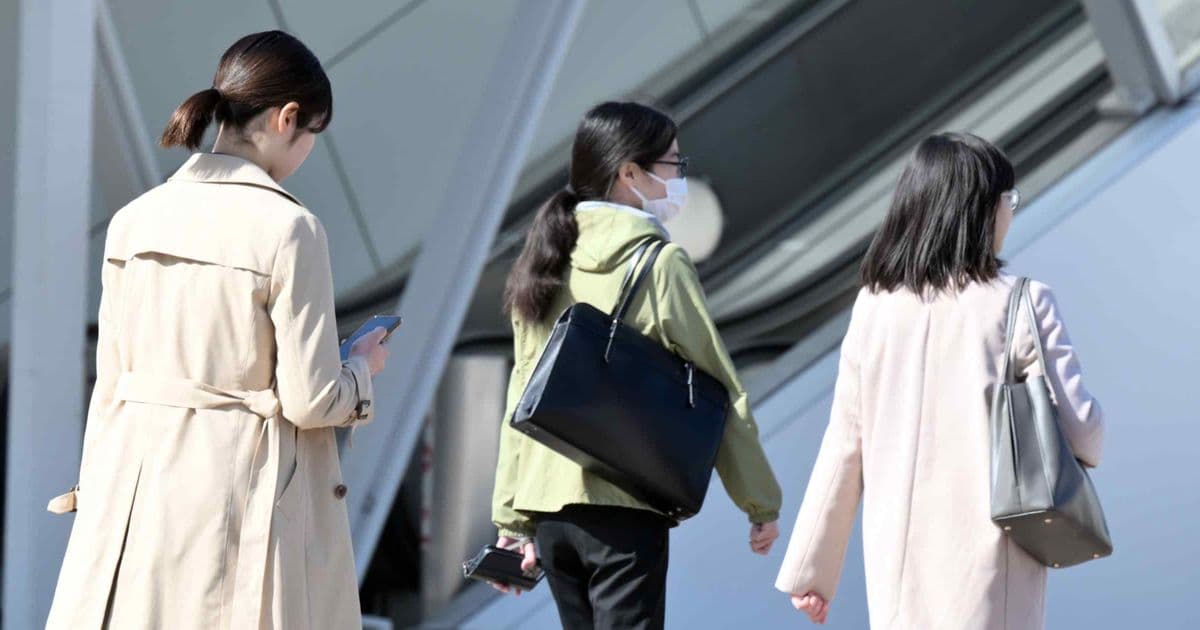
Japan’s latest labour statistics show a 94.1% employment rate for university graduates, the highest in a decade, but rising AI adoption is prompting firms to reconsider hiring volumes, potentially curbing the near‑full‑employment trend.
Near‑record hiring for new graduates
Japan’s Ministry of Health, Labour and Welfare released its latest graduate‑employment survey on Friday, showing that 94.1% of university graduates secured full‑time positions within three months of graduation. This marks the highest rate since the 2013‑14 cohort and represents a modest rise from the 93.4% recorded a year earlier. The data covers 1.2 million graduates across the country, with the strongest uptake in the Kansai and Kanto regions.
Market context: AI‑driven workforce reforms
While the headline figure suggests a seller’s market for young talent, a growing number of corporations have signalled a shift in hiring strategy as artificial‑intelligence tools become mainstream. Recruit Holdings, the parent of Indeed Japan, raised its FY2026 profit forecast by 12% after reporting that AI‑enabled candidate screening cut recruitment cycle times by 30% and reduced per‑hire costs from ¥1.2 million to ¥850,000. Similarly, Mizuho Financial Group announced plans to automate routine underwriting tasks, projecting a reduction of up to 5,000 back‑office positions by 2028.
These moves are occurring against a backdrop of chronic labour shortages. The overall unemployment rate sits at 2.4%, well below the OECD average, and firms continue to report difficulty filling mid‑level technical roles. However, AI is reshaping the definition of “skill‑shortage.” Companies such as Sony and TSMC are already co‑investing in AI‑driven image‑sensor design, a field that traditionally required large engineering teams. Early pilots suggest a 20‑30% productivity lift per engineer, prompting senior managers to reconsider head‑count targets for the 2027 fiscal year.
What it means for graduates and employers
- Hiring caps may appear – Several large manufacturers, including Oji Holdings, have publicly stated they will freeze new graduate intake for the 2027 hiring season, opting instead to up‑skill existing staff with AI‑training programs. This could blunt the near‑full‑employment trend for the next cohort, especially in sectors where automation yields immediate cost savings.
- Skill premium shifts – The demand for data‑science, machine‑learning, and prompt‑engineering expertise is rising sharply. Salary surveys from Recruit indicate that starting salaries for AI‑related roles have jumped 8% year‑over‑year, outpacing the 3% average increase for non‑technical positions.
- Policy implications – The Ministry of Education has responded by accelerating AI curricula in universities, allocating ¥45 billion over the next three years for new labs and faculty hires. The goal is to align graduate output with the emerging “AI‑augmented” job market.
- Long‑term labour dynamics – If AI continues to compress routine tasks, the total number of full‑time equivalents needed in Japan could decline by 1.2% annually after 2027, according to a joint study by the Japan Institute for Labour Policy and the University of Tokyo. That translates to roughly 150,000 fewer jobs by 2032, a figure that will pressure both policymakers and firms to manage transition pathways for new entrants.
Bottom line
Japan’s graduate employment rate remains historically high, but the rapid diffusion of AI tools is already prompting a recalibration of hiring volumes. Graduates who can demonstrate AI fluency will likely retain a competitive edge, while those in more traditional streams may face tighter entry points as firms balance labour shortages against automation‑driven efficiency gains.
Comments
Please log in or register to join the discussion