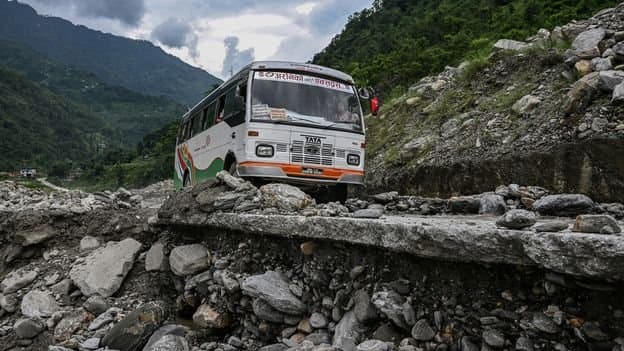
Machine learning is enabling scientists to map thousands of high-risk slopes globally, potentially saving lives and infrastructure by predicting where landslides may occur.
Geologists are using artificial intelligence to identify thousands of slopes around the world that are at high risk of slipping, potentially saving lives and preventing billions of dollars in damage from landslides and avalanches. The technology analyzes data from satellites and ground-based sensors to create detailed risk maps that would be impossible to produce manually.
The BBC reports that sudden and unexpected landslides claim thousands of lives each year and cause billions of dollars in damage globally. Traditional methods of identifying at-risk areas have been limited by the sheer scale of the task - there are millions of slopes worldwide that need monitoring.
AI systems can now process vast amounts of satellite imagery and sensor data to detect subtle changes in slope stability that humans might miss. The technology looks for warning signs like ground movement, changes in vegetation patterns, and water accumulation that could indicate an impending slide.
This approach represents a significant advance over previous methods, which relied heavily on local knowledge and occasional field surveys. By analyzing data continuously from multiple sources, AI can identify risks in remote areas that might otherwise go unnoticed until a disaster occurs.
The technology is particularly valuable in developing regions where landslide monitoring infrastructure is limited. It can help governments and aid organizations prioritize where to focus resources for prevention and early warning systems.
While the AI systems are not perfect and cannot predict every landslide, they significantly improve the ability to identify high-risk areas. This gives communities more time to prepare evacuation plans, reinforce vulnerable slopes, or relocate at-risk populations.
The work builds on advances in computer vision and pattern recognition that have made it possible to analyze complex geological data at a scale that was previously impractical. As the technology continues to improve, it could become an essential tool for disaster prevention worldwide.
This application of AI demonstrates how machine learning can address real-world problems beyond the typical tech industry use cases, potentially having a direct impact on public safety and disaster preparedness.
Comments
Please log in or register to join the discussion