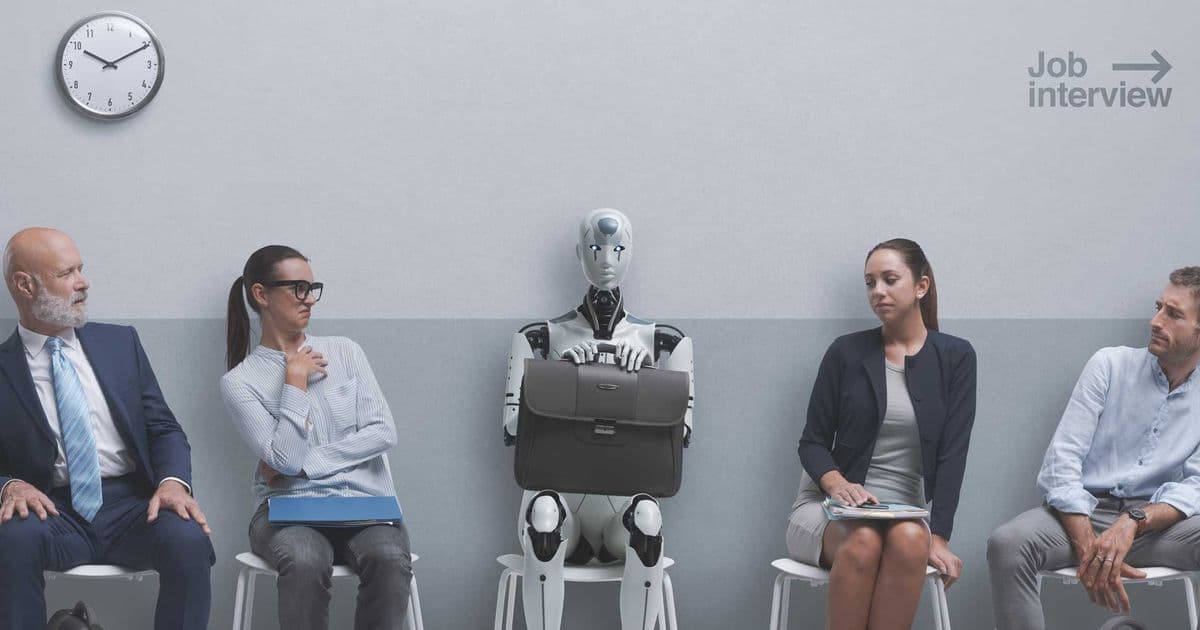
New research challenges the narrative that AI is eliminating jobs wholesale, arguing instead that AI is breaking jobs into smaller, lower-paid tasks while leaving human workers to handle only the most complex or irreplaceable components.
A new research paper is challenging the widespread narrative that AI will eliminate millions of jobs through wholesale automation. Instead, the authors argue that AI is quietly "unbundling" jobs into smaller, lower-paid chunks - reshaping work rather than simply replacing workers.
The paper, written by Luis Garicano of the London School of Economics along with Jin Li and Yanhui Wu from the University of Hong Kong, pushes back against the idea that more AI exposure automatically means fewer jobs. The researchers argue that the real question isn't how many tasks a model can perform, but whether those tasks can actually be split out without breaking the role entirely.
The Bundle Theory of Jobs
Jobs, the authors contend, aren't neat lists of tasks - they're bundles. Radiologists, for example, don't just read scans. They interpret edge cases, talk to clinicians, and sign off on decisions that people act on. Replace the image-reading bit, and you haven't necessarily replaced the job.
This distinction between what the authors call "weak bundles" and "strong bundles" is crucial. Weak bundles can be split apart without much fuss, but strong bundles can't without losing value. "In weak-bundle occupations, AI automates some tasks and narrows the boundary of the job… In strong-bundle occupations… AI improves performance inside the job, but does not remove the human from the bundle," the authors argue.
The Hidden Cost of Efficiency
In weak-bundle jobs - think churning through support tickets or knocking out predictable bits of code - AI doesn't just replace a task; it reshapes the job. The human is left doing whatever the machine can't, often a narrower slice of the original role.
Once AI takes over part of the work, the human stops dividing their time. They go all-in on what remains, which means output per worker jumps, prices fall, and suddenly you don't need as many workers as before. In other words, the hit to employment doesn't come from AI doing the job outright, but from humans becoming too efficient at the leftovers.
Why This Matters
This analysis squares with what we're seeing so far. AI is reshaping jobs, not wiping them out. Tasks move around, productivity may go up, yet employment and hours haven't shifted much - at least yet. In many cases, the bundle is still holding.
It also explains why the doom predictions and the techno-optimism can both be right at the same time. If you're in a strong-bundle job - something heavy on judgment, context, or responsibility - AI is more likely to make you faster and better paid. If you're in a weak one, it may quietly hollow out your role until there's not much left to defend.
The paper's findings suggest that the AI impact on employment isn't about mass job elimination, but rather about the gradual unbundling of work into smaller, more specialized tasks - often with lower pay and reduced job security for the humans who remain.
For workers and policymakers, this means the challenge isn't just about whether AI will take your job, but about how it might fundamentally restructure what that job means - and what it pays.
Comments
Please log in or register to join the discussion