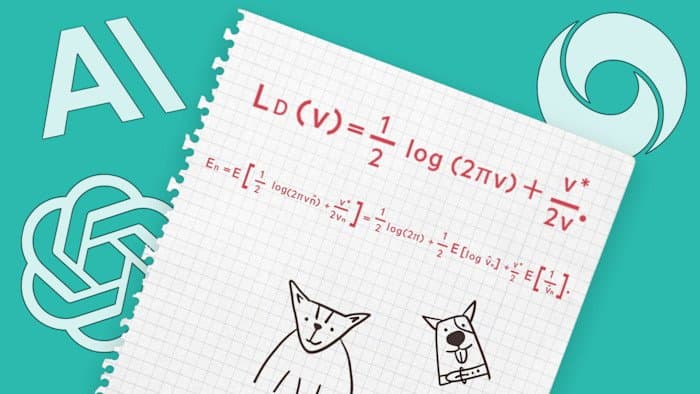
Recent advances in AI reasoning capabilities have transformed how these systems approach mathematical problems, with researchers increasingly turning to mathematics as a rigorous benchmark for measuring AI progress. This shift represents a maturation in AI evaluation beyond superficial benchmarks.
The conversation around AI progress has increasingly turned to mathematics as a critical testing ground, with top researchers from organizations like OpenAI, Google DeepMind, and Anthropic arguing that the latest generation of "reasoning" models demonstrates significantly improved capabilities in mathematical domains. This represents a notable evolution in how we evaluate and understand AI progress.
The Mathematical Turn in AI Evaluation
Mathematics has always been considered a challenging domain for AI systems due to its requirement for precise logical reasoning, symbol manipulation, and abstract thinking. Recent developments suggest that AI models are finally making meaningful progress in this area.
The shift toward mathematics as an evaluation benchmark reflects a maturation in the field. Early language model evaluations focused on relatively superficial metrics like perplexity or performance on specific NLP benchmarks. While these provided some indication of capability, they often failed to capture genuine reasoning ability. Mathematics offers a more rigorous testing ground where incorrect answers are unambiguous and reasoning paths can be more precisely evaluated.
Technical Advances Enabling Mathematical Progress
Several technical developments have contributed to AI's improved mathematical capabilities:
Chain-of-thought prompting: This technique encourages models to articulate intermediate steps in their reasoning process, rather than jumping directly to answers. Research from Google DeepMind has shown that explicitly prompting models to reason step-by-step significantly improves mathematical performance.
Self-consistency: Rather than relying on a single forward pass, this approach generates multiple reasoning paths and selects the most consistent answer. This technique, developed by researchers at Princeton and Google, has demonstrated substantial improvements on mathematical reasoning tasks.
Specialized architectures: Models like OpenAI's GPT-4 and Anthropic's Claude 3 have incorporated architectural improvements specifically designed to enhance reasoning capabilities. These include better attention mechanisms and more sophisticated tokenization approaches that handle mathematical notation more effectively.
Enhanced training data: The latest models have been trained on larger, more diverse datasets that include significant amounts of mathematical content, ranging from elementary school arithmetic to advanced university-level proofs.
Concrete Examples of Mathematical AI Progress
Several specific examples illustrate the current state of AI mathematical capabilities:
GPT-4's performance on mathematical competitions: OpenAI's GPT-4 has demonstrated the ability to solve problems from the American Invitational Mathematics Examination (AIME) and the International Mathematics Olympiad (IMO), though with accuracy rates still well below human experts at the highest levels.
DeepMind's AlphaGeometry: This system, which combines neural networks with symbolic reasoning, has made notable progress on geometry problems, achieving performance comparable to human gold medalists on the IMO geometry problems.
Anthropic's Claude 3: Claude 3 has shown improved ability to follow complex mathematical proofs and generate novel proofs for theorems, particularly in areas like number theory and combinatorics.
Google's Gemini Ultra: This model has demonstrated strong performance on mathematical reasoning benchmarks, particularly when combined with specialized prompting techniques.
Why Mathematics Matters as an AI Benchmark
Mathematics serves as an excellent benchmark for AI progress for several reasons:
Precision requirements: Mathematical problems have objectively correct answers, eliminating the ambiguity that plagues many language evaluation tasks.
Multi-step reasoning: Mathematical problems typically require multiple steps of reasoning, testing a model's ability to maintain context and follow logical chains.
Generalization: Success on mathematical problems requires the ability to generalize from training examples to novel problems, a key indicator of true understanding.
Symbol manipulation: Mathematics heavily relies on symbolic reasoning, which tests models' ability to manipulate abstract representations—a crucial capability for advanced reasoning.
Limitations and Challenges
Despite the progress, significant limitations remain:
Scaling issues: While performance improves with model size, the relationship between model scale and mathematical capability appears to be sublinear. Doubling model size doesn't double mathematical ability.
Training data dependence: Current models heavily rely on patterns in their training data rather than genuine mathematical understanding. They struggle with problems significantly different from those seen during training.
Verification challenges: Unlike humans, AI systems cannot easily verify their own mathematical reasoning. They may produce confident but incorrect answers, particularly on problems that require novel insights.
Computational requirements: Training and running these large models requires substantial computational resources, limiting accessibility and raising sustainability concerns.
Practical Applications and Implications
Beyond serving as evaluation benchmarks, improved mathematical capabilities have several practical applications:
Automated theorem proving: AI systems are beginning to assist mathematicians by suggesting proof strategies and verifying proofs.
Educational tools: AI tutors can provide step-by-step guidance for students learning mathematical concepts.
Scientific research: Improved mathematical reasoning could accelerate progress in fields like physics, engineering, and economics that rely heavily on mathematical modeling.
Code generation: Strong mathematical reasoning translates directly to improved code generation, particularly for algorithms and numerical methods.
The Road Ahead
The field is still in early stages of developing AI systems with genuine mathematical reasoning capabilities. Future research will likely focus on:
- Developing more efficient architectures that require less computational resources
- Improving verification mechanisms to ensure mathematical correctness
- Enhancing the ability to generalize to novel mathematical problems
- Creating better evaluation benchmarks that capture genuine mathematical understanding
As AI systems become increasingly capable in mathematics, we may see new forms of human-AI collaboration in mathematical research, with AI handling routine calculations and humans providing creative insights and high-level guidance.
The shift toward mathematics as a key evaluation metric represents a maturation in how we approach AI development. It suggests that the field is moving beyond simply generating plausible text toward developing systems with more structured, logical reasoning capabilities. While significant challenges remain, the progress so far indicates that AI is beginning to develop a more sophisticated relationship with mathematics—one that may eventually lead to new discoveries and insights in this fundamental human endeavor.
Comments
Please log in or register to join the discussion